
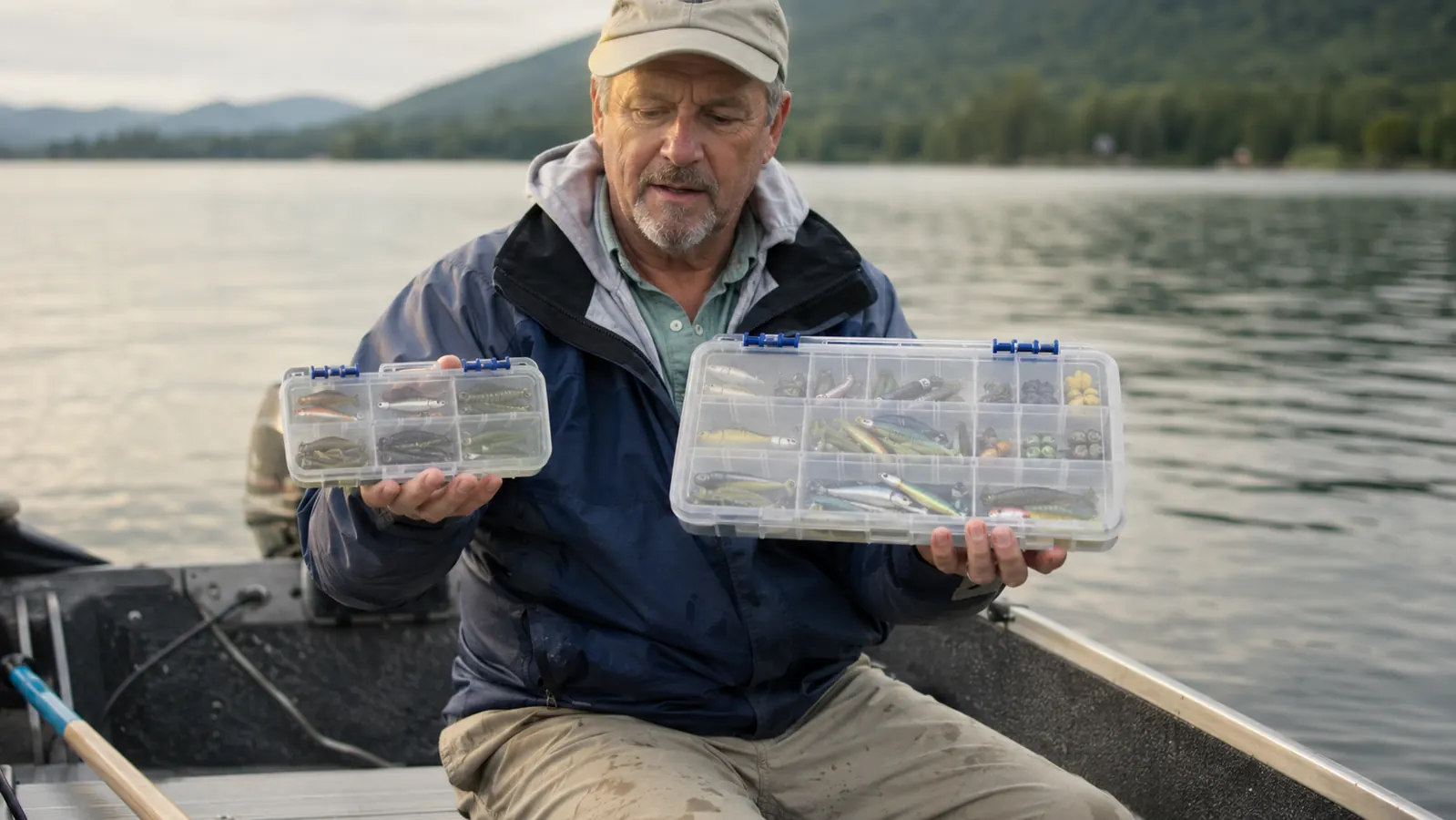
I own three KastKing utility trays right now, which is one more than I actually planned on buying. I picked up my first one two summers ago after my old foam lined box finally quit on me, grabbed a second one because I liked the first one enough to want a spare for the truck, and then bought a third almost by accident when I ordered the wrong size online and didn't feel like sending it back. That third box taught me more about how these trays actually work than the other two combined, because it's the one that exposed every question I wish somebody had answered before I clicked buy the first time. This isn't a rundown of hinges and latches after a year of use, I've already written that piece. This is the stuff nobody tells you before you own one.
A tackle tray is one of those purchases where the box itself looks almost identical to five other options online, same shape, same latch, same divider system, and the marketing copy for all of them promises waterproof storage and rugged construction. What actually separates a KastKing 3600 from a KastKing 3700, or a KastKing tray from a Plano tray sitting next to it on the shelf at the bait shop, doesn't show up in a five star rating. It shows up after you've owned one for a season and started asking the questions that don't occur to you until you're standing at your truck tailgate with a tray full of melted skirts or a wet compartment you swore was sealed.
The Quick Verdict
A genuinely good value tray once you understand the sizing, the seal, and which baits not to store in it long term. The buying mistakes here are more common than the durability ones.
Amazon Check Today's Price →Tired of guessing whether you need the 3600 or the 3700 before you even click buy?
I own three of these trays now, and I got the size wrong on my first order. If you fish crankbaits, spinnerbaits, or anything bulky, size up to the 3700. If it's finesse tackle and light spinning gear, the smaller 3600 is plenty. Check today's price on Amazon and read the dimensions before you order.
Amazon Check Today's Price on Amazon →How I've Used It
My home water is Lake Winnipesaukee and the Merrimack River, and my boat is a 16 foot aluminum hull with a tiller outboard, no rod lockers, no built in tackle storage, just open bench seats and whatever I stack under them. That setup is exactly why a tray box like this matters more to me than it might to somebody running a bass boat with dedicated rod and tackle compartments built in. Everything I carry has to survive sliding under a bench seat, bouncing across chop, and getting hauled in and out of the truck bed on the drive to the launch. My brother in law Ray fishes with me most weekends, and between the two of us we probably open a KastKing tray four or five times on an average Saturday, swapping baits, restocking hooks, digging for the right jig head.
I also make a handful of trips each summer down to the New Hampshire and southern Maine coast for striper, which meant I got to see how these trays performed outside their most obvious use case, in a boat, on a lake, with mostly freshwater bass and pickerel gear. The honest review angle here isn't about tracking wear over a calendar year, I've covered that ground elsewhere. It's about the decisions I got wrong the first time I bought one of these, the ones that had nothing to do with durability and everything to do with picking the right size, the right number of boxes, and understanding what the specs on the listing actually promise versus what they mean once you're standing on the water with the lid open.
The 3600 vs 3700 Confusion Nobody Explains
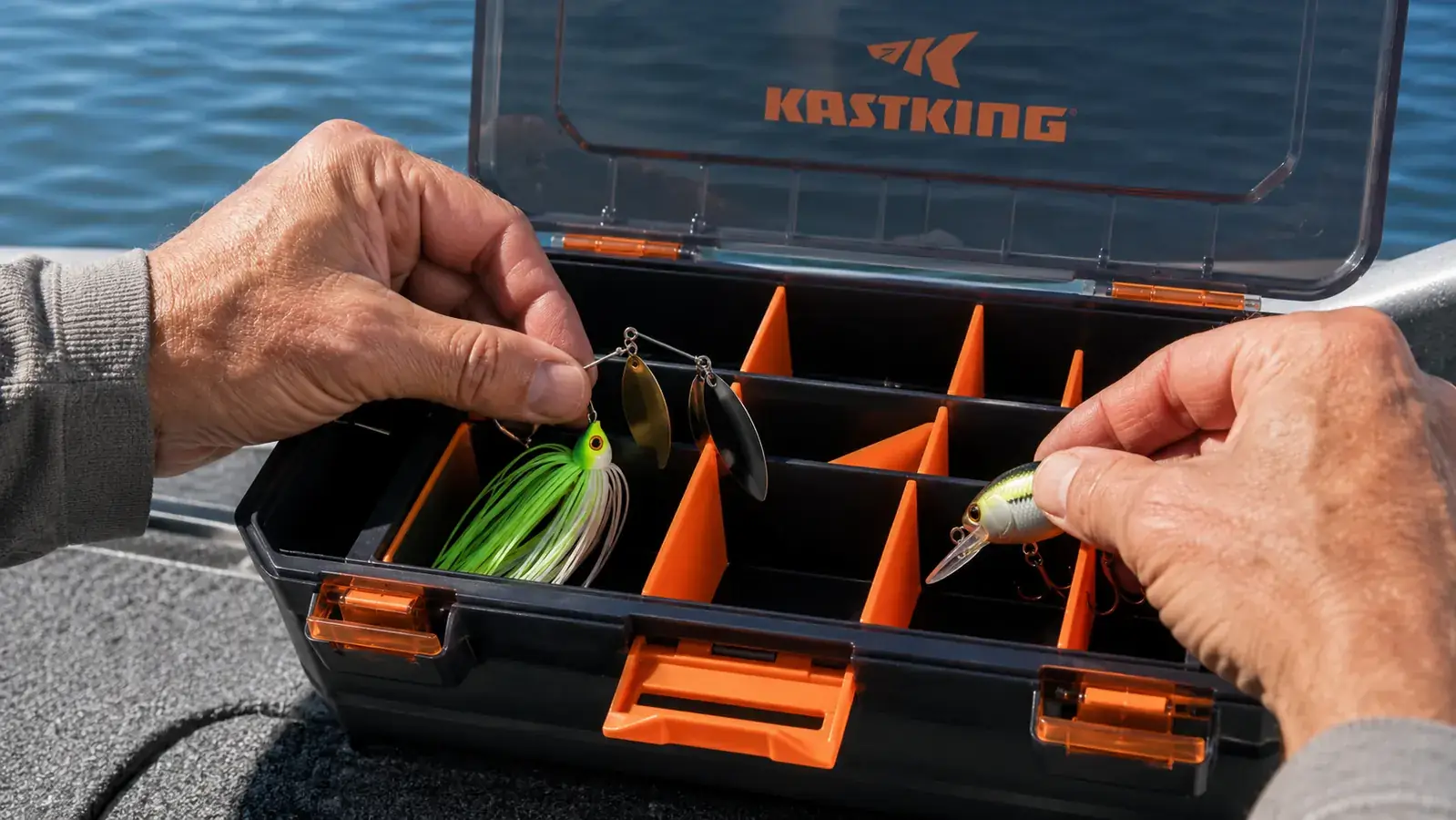
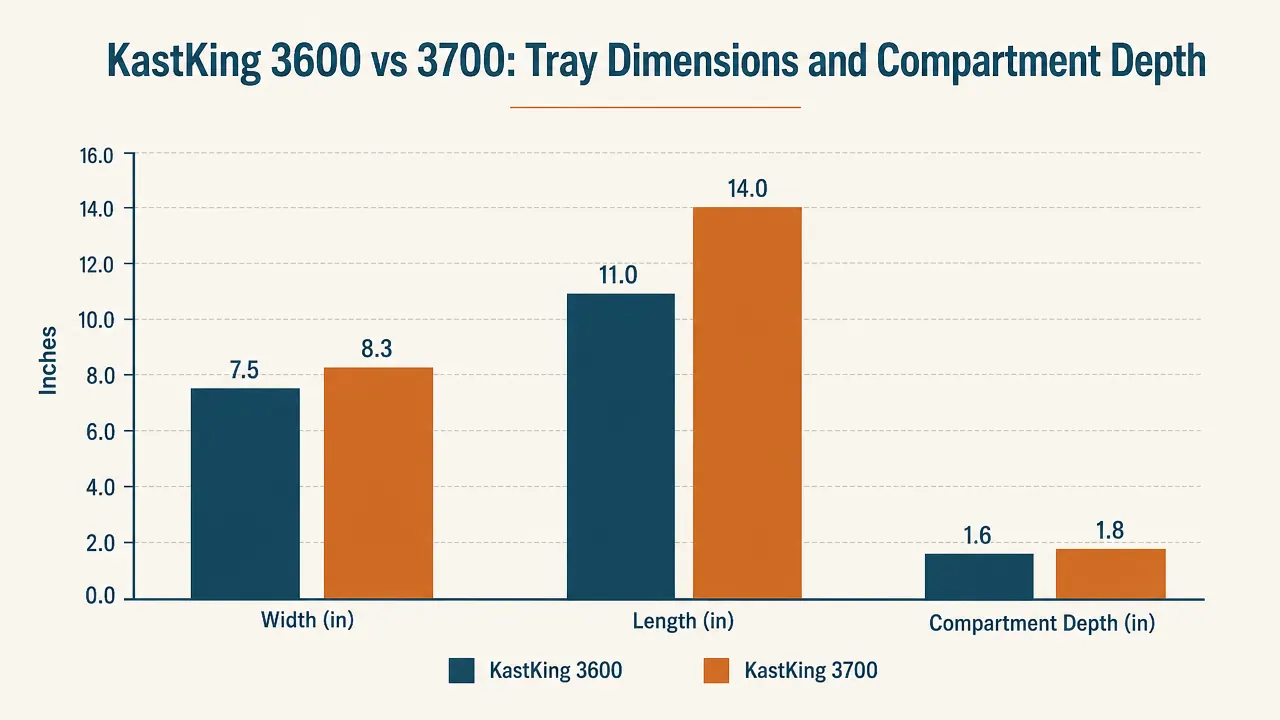
Here's the first thing that trips people up, and it tripped me up too. KastKing sells this utility tray in two sizes, the 3600 and the 3700, and the listing photos on Amazon often show both sizes stacked together without making the difference obvious unless you read the dimensions carefully. The 3600 is the smaller, shallower tray, closer to 9 by 5 inches with shorter compartment walls, built for smaller terminal tackle, hooks, swivels, split shot, small jig heads. The 3700 is the bigger cousin, roughly 14 by 9 inches with deeper compartments, built to hold bulkier stuff like spinnerbaits, larger crankbaits, or soft plastics that need room to lie flat without curling against a compartment wall.
I ordered a 3600 my first time around thinking I was buying the standard size, and I ended up with a tray too shallow for half the crankbaits I wanted to store in it. It wasn't a bad tray, it was the wrong tray for what I needed it to do. If you fish mostly finesse presentations, small jigs, drop shot rigs, light spinning tackle, the 3600 is probably the right call, and it's a little easier to tuck into a smaller bag or under a bench seat. If you're running crankbaits, spinnerbaits, swimbaits, or anything with real bulk to it, size up to the 3700 before you order, not after.
How Many Trays You Actually Need Versus How Many You Think You Need
Once you understand the sizing, the next mistake is buying too many trays at once because the price is low enough that it feels harmless. At under 25 dollars a tray, it's tempting to order four or five and build out a full system the way the product photography suggests, color coded by species or by bait type. In practice, most weekend anglers who fish one or two home waters need two trays, not five. One that lives in the boat or the truck permanently with the gear you use on almost every trip, and one smaller backup you can load differently for a specific outing, say a striper trip down the coast where you want stainless hooks and heavier leader material instead of your everyday bass gear.
I own three now, and if I'm honest, the third one sits in a closet more than it sits in the boat. It gets used maybe once a month, when Ray and I decide last minute to chase something different than our usual water. For most guys reading this, buying one 3700 to start, using it for a full season, and only adding a second tray once you've actually run out of room in the first one, is the smarter way to spend the twenty five dollars than ordering three on day one because the price makes it feel like a rounding error.
What 'Waterproof' Actually Means on a Tray Like This
The word waterproof gets used loosely on tackle box listings, and it's worth being precise about what it actually covers on a tray like the KastKing utility box. What you're getting is a gasket seal around the lid that keeps out splash, rain, and the general dampness of sitting in a wet boat. That's a real feature and it works well in that context, I've had these trays sit under a soaked bench seat on a rainy morning on the Merrimack and opened them later to find everything bone dry inside. What you are not getting is a tray rated for submersion, and you're not getting a tray sealed against sustained saltwater spray the way a purpose built saltwater box would be.
That distinction matters more than people expect, because it changes how you should actually use the tray. If your box goes overboard in three feet of water on the lake, don't assume it floats sealed and dry, most plastic trays like this will let water in eventually if they're fully submerged rather than just splashed. And if you fish saltwater more than a couple times a summer, know that the seal is built for freshwater use first, coastal use second. A quick rinse and dry after a coastal trip is enough to keep a KastKing tray in good shape, but I wouldn't lean on the word waterproof to mean it can live in a wet environment indefinitely without some care on your part.
The Baits That Will Ruin Any Plastic Tray, KastKing Included
This one surprised me the first time it happened, and nobody warns you about it before you buy. Certain soft plastic baits, especially the softer, more heavily oiled ones and anything scented with garlic or other strong attractants, will react with the plastic in almost any tray box over time, including this one. I had a bag of scented tube baits melt slightly into the tray floor of my 3600 after they sat there through a hot week in the truck cab, leaving a soft, tacky spot that never fully went away. It's not a defect in the KastKing tray specifically, this happens with Plano trays and every other plastic tray I've owned too, it's a chemistry problem between certain bait formulas and certain plastics, not a manufacturing flaw.
The fix is simple once you know to look for it. I now keep my most heavily scented soft plastics in their original packaging or a separate zip bag rather than loose in a tray compartment, and I only load loose soft plastics into the tray for the day I'm actually fishing them, then bag them back up before they sit in a hot truck for a week. If you fish garlic or heavily scented plastics regularly, budget for one tray you treat as disposable for that purpose rather than expecting your everyday KastKing box to hold up to constant contact with the worst offenders.
Bag or Box: The Decision Most Guys Get Backwards
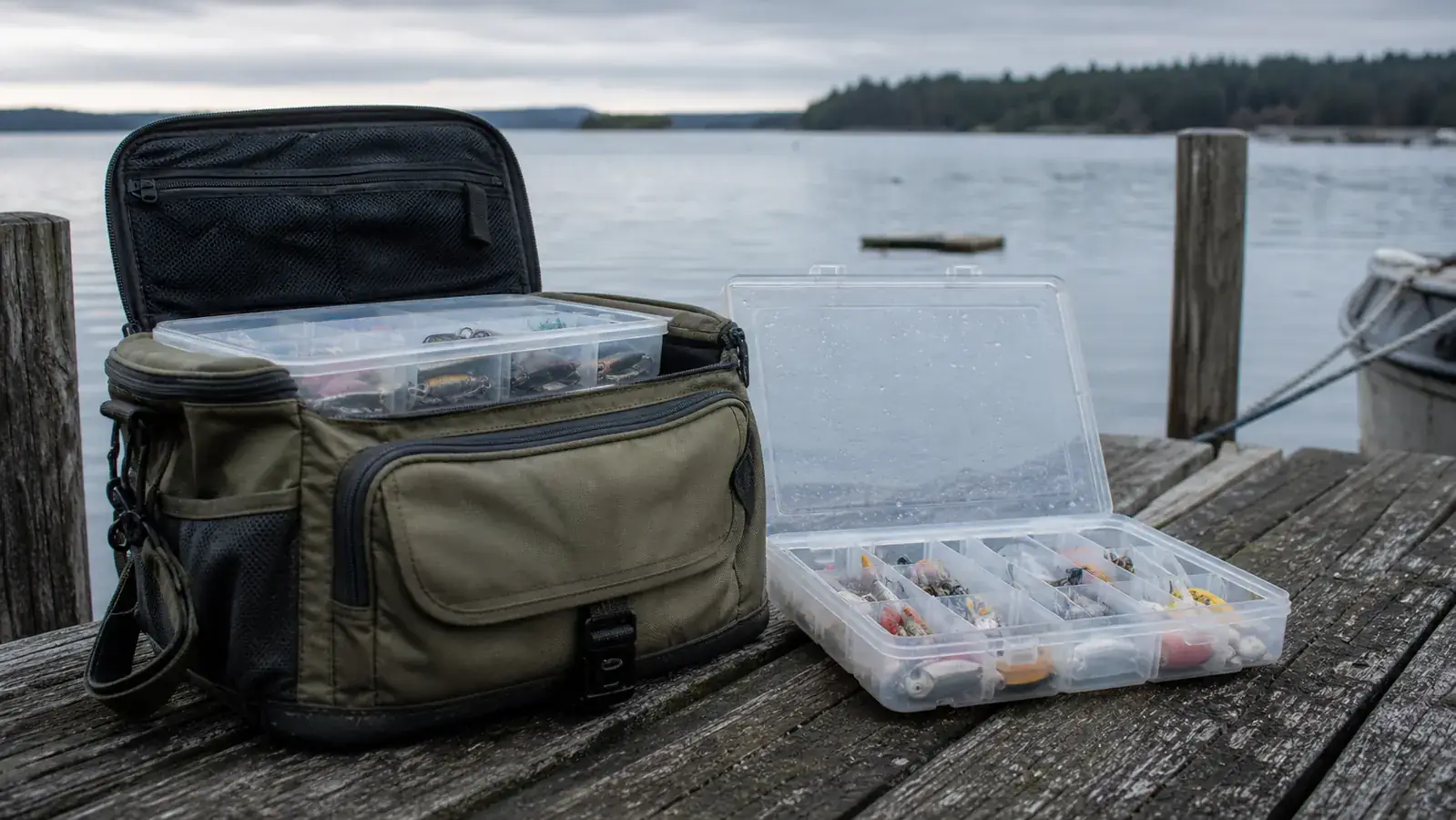
The last thing nobody explains clearly is when a soft tackle bag actually beats a hard tray box, because plenty of guys buy a hard box out of habit when a bag would serve them better. If you fish out of a boat with fixed storage, like my aluminum hull with open bench seats, a hard tray like the KastKing box is the better call, it stacks predictably, it stays put under a seat, and it protects the gear inside from getting crushed. If you're a bank angler or you walk into multiple spots along a river the way some guys fish the Merrimack, a soft bag with several tray inserts is often lighter and easier to carry than three hard boxes stacked in a backpack.
My own answer has ended up being both, a soft bag for the trays I carry when I'm on foot along the river, and hard boxes that stay in the boat full time. If you're trying to decide between a bag system and a hard box system before you've bought either one, think about how you actually get to the water more than what looks organized in a photo. A hard tray box like this one is a great foundation, but it isn't automatically the right container for every way you fish, and buying it because it's what everyone else on the dock carries is how a lot of guys end up with gear they never use.
What I Liked
- Priced low enough to buy the right size the first time without feeling like a big gamble
- The 3700 size comfortably holds bulkier baits like spinnerbaits and swimbaits without curling them against the wall
- Gasket seal genuinely blocks rain and boat splash, gear stays dry through wet mornings on the lake
- Compartment layout is flexible enough to reorganize by species or by trip without fighting the tray
- Stacks predictably in a boat with fixed storage like my aluminum hull's open bench seats
- Affordable enough to run a dedicated tray for scented or oily soft plastics instead of risking your main box
Where It Falls Short
- The 3600 and 3700 sizing isn't explained clearly on the listing, easy to order the wrong one
- Seal is built for freshwater splash first, not for sustained saltwater spray or submersion
- Certain scented or heavily oiled soft plastics can react with the tray plastic over time, this isn't unique to KastKing but it happens
- A soft bag setup is often smarter than a hard tray if you fish on foot along a river bank
- It's easy to over-buy trays at this price point when two would genuinely cover most anglers
The tray itself is a good, honest piece of gear. The mistakes I made buying and using it had nothing to do with KastKing and everything to do with questions nobody thought to answer before I clicked buy.
Who This Is For
This tray is a smart buy for exactly the angler I am, someone fishing freshwater lakes, ponds, and rivers most weekends out of a boat with open storage or a truck bed, who occasionally makes a coastal trip and is willing to rinse gear afterward rather than expecting the box to shrug off saltwater spray on its own. It's also a good fit if you're buying your first real tackle tray and want something priced low enough that getting the size wrong isn't a disaster, as long as you read the dimensions before you order rather than assuming the 3600 and 3700 are interchangeable. For the price, once you know what size to buy and how many you actually need, it's hard to find a better value in a tray box.
Who Should Skip It
If you fish inshore saltwater as your primary water rather than an occasional summer trip, skip this one and look at a tray built and sealed specifically for saltwater duty from the start. I'd also skip loading a single tray with heavily scented soft plastics as permanent storage, since that's asking for the melting problem I described regardless of which brand's tray you're using. And if you're a bank angler who walks between spots more than you fish from a boat, think carefully about whether a soft bag with tray inserts fits your day better than a stack of hard boxes before you buy three of these the way I did.
Ready to stop buying tackle boxes you have to guess about?
Between the sizing, the seal, and which baits to keep out of it, this tray earns its spot in my boat once you know how to buy and use it right. Check the current price on Amazon below.
Amazon Check Today's Price on Amazon →