
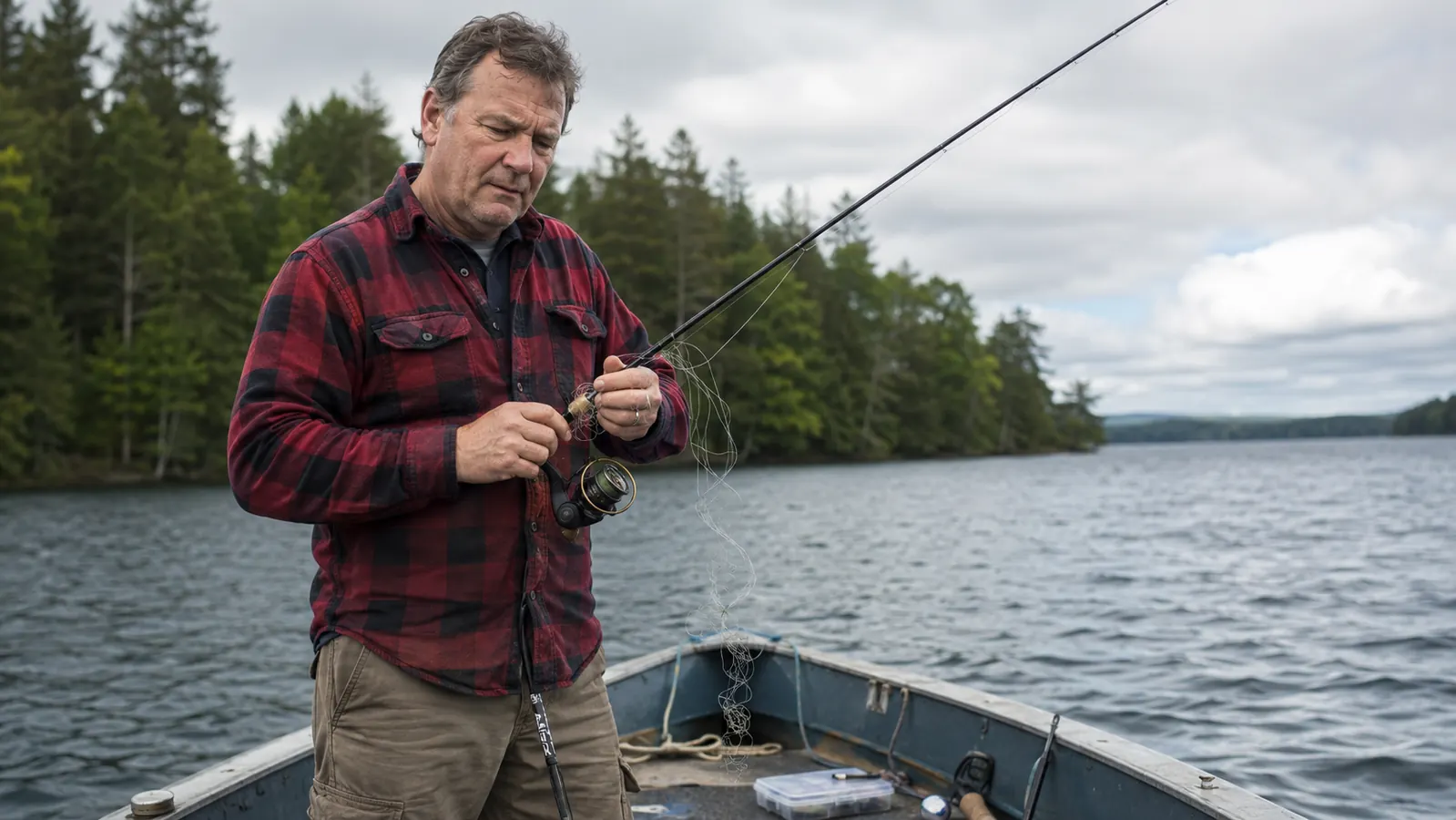
I've untangled more twisted line than I care to admit, most of it on the bow of my own boat while my brother-in-law Ray sat in the back trying not to laugh at me. Line twist on a spinning reel is one of those problems that sneaks up on you a little at a time until one day your whole spool is a coiled mess that won't cast past twenty feet and keeps looping back on itself every time you set the rod down. If that's where you're at right now, the good news is line twist is almost always fixable, and once you know where it's coming from, it's almost always preventable too.
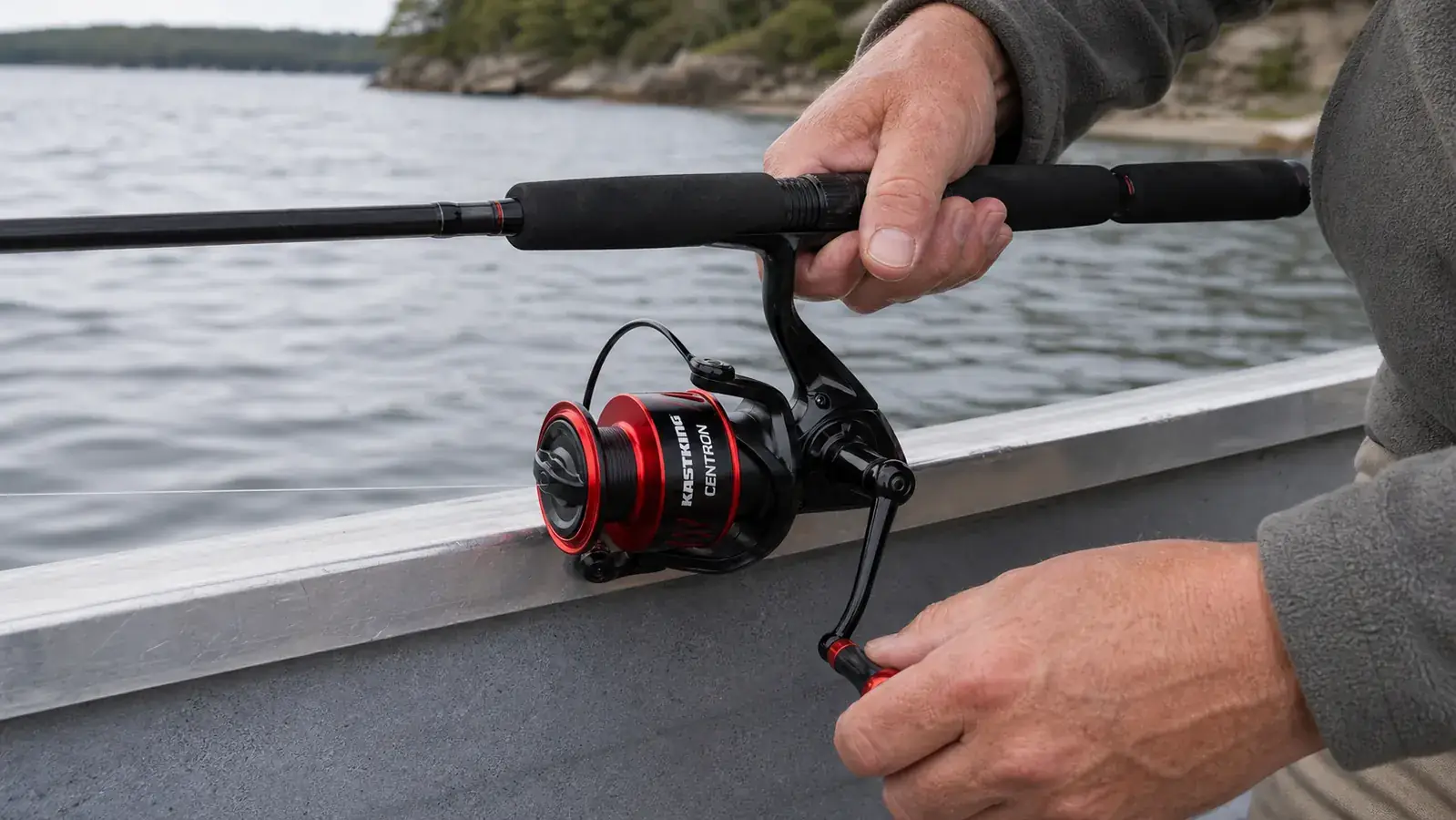
I fish spinning reels almost exclusively, on Lake Winnipesaukee, up the Merrimack River, and on the light tackle inshore trips I take most summers chasing striped bass off the New Hampshire coast. Most of that fishing happens with a KastKing Centron tied on, since it's the reel I trust enough to actually test these fixes on instead of babying a fancier one. Every one of those settings can put twist into a spinning reel in a slightly different way, and over the years I've had to work through the same coiled-line headache more times than I'd like to count. This is the exact process I use to diagnose it and fix it, step by step, so you can get back to fishing instead of fighting your own line all afternoon.
Tired of fighting a reel that fights you back?
A rough bail or an inconsistent drag makes every line twist habit worse, because you end up cranking harder out of frustration. The KastKing Centron is the spinning reel I reach for on my own boat, and its smooth drag and dependable bail closure make the fixes below actually stick. Check today's price on Amazon before you respool.
Amazon Check Today's Price on Amazon →Step 1: Find Out Where the Twist Is Actually Coming From
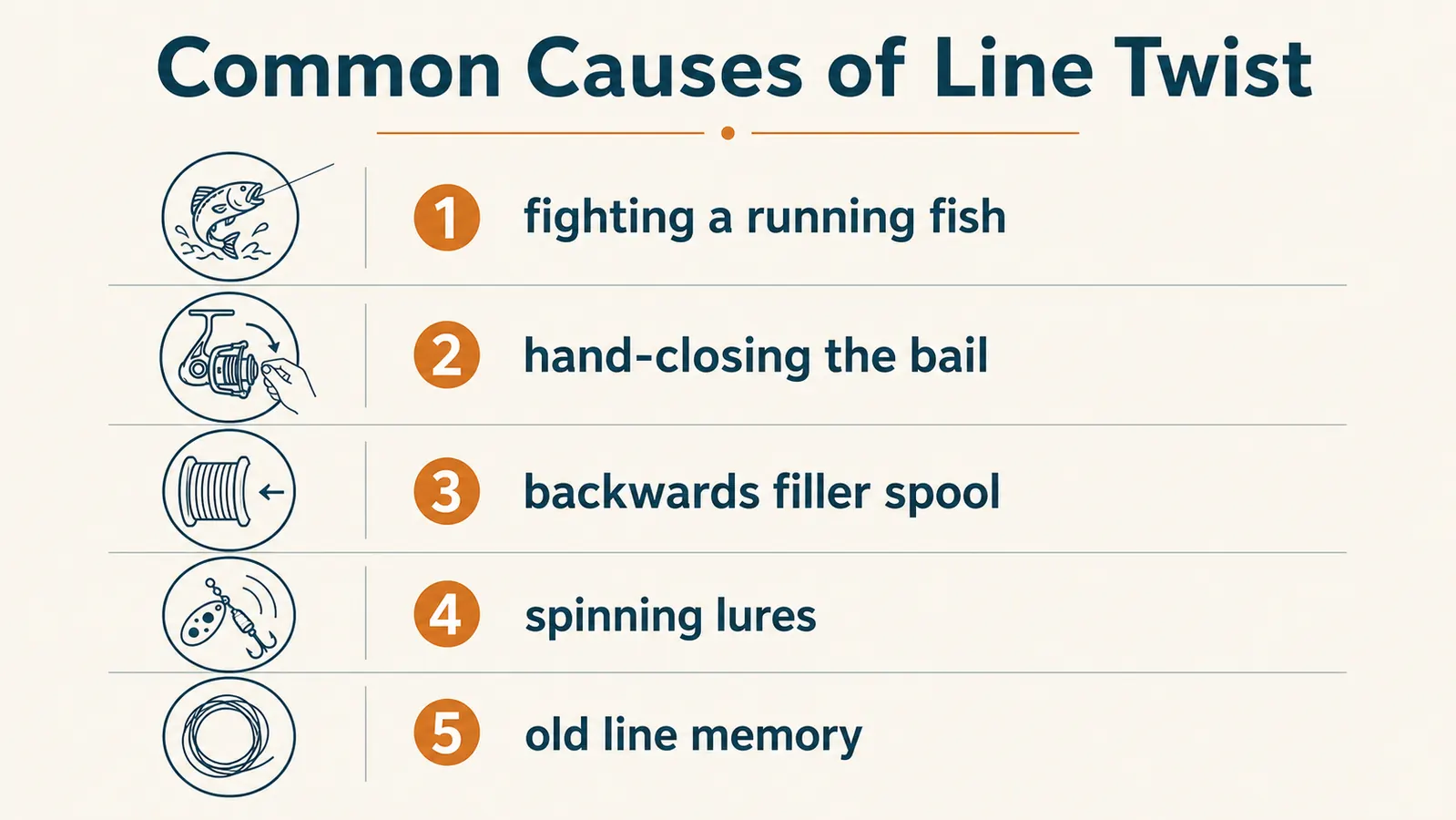
Before you fix anything, you need to know why your spinning reel is putting twist into your line in the first place, because respooling won't help if the underlying habit is still there. There are really only a handful of common causes. One, cranking the reel handle while a fish is taking line against the drag, which winds the bail around line that isn't actually being retrieved and twists it with every rotation. Two, closing the bail by hand instead of turning it shut with the handle. Three, a spinning lure, inline spinner, or any bait that kicks and rotates on the retrieve, twisting the line a little more with every single cast. Four, spooling new line onto the reel backwards off the filler spool. Five, line that's simply sat on the spool too long and developed memory, which can look like twist even when it technically isn't.
On my own boat, the two culprits I see most are reeling against a running fish and closing the bail by hand, in that order. I run a KastKing Centron on most of my spinning setups, and even a reel with a smooth drag like that one will twist line fast if you keep cranking the handle while a striper is taking drag out on a hard run. The reel isn't the problem in that case, the technique is, but a reel with a jerky or inconsistent drag makes the habit worse, because you find yourself cranking harder out of frustration than you would on gear you actually trust.
Step 2: Strip the Twisted Line and Let It Unwind Behind the Boat
If you're already dealing with a spool full of twisted line, the fastest fix doesn't involve buying anything new. Tie off the lure or hook, or better yet remove it entirely, open the bail, and let out fifty to a hundred feet of line behind a slow-moving boat. The water resistance and the boat's forward motion unwind the twist naturally, the same way pulling a twisted phone cord straight lets it spin itself loose. Once you've let it trail for a few minutes, close the bail by turning the handle and reel it back in under light thumb tension so it lays back onto the spool evenly instead of loosely.
I've done this exact thing on Winnipesaukee more times than I can count, usually after a long afternoon of casting a spinner without a swivel, and Ray has learned to just idle the boat along slow while I let line trail out the back. If you don't have a boat, you can get close to the same result from a dock or a bridge over moving current, or by walking a stretch of shoreline with the bail open and the line dragging behind you in the water. The point is the same either way: let the water take the twist out before you try to fish it again.
Step 3: Stop Closing the Bail by Hand, Use the Handle Instead
This is the single most avoidable cause of line twist on a spinning reel, and it costs nothing to fix, it just requires breaking a habit. Every time you flip the bail closed with your fingers instead of turning the reel handle, you put a small amount of twist into the line, because the bail arm rotates independently of the spool's normal oscillation. It feels harmless on any one cast. Do it a few hundred times over a season and that twist compounds fast, especially when it's stacked on top of the other causes on this list.
The fix is simple: after every cast, close the bail by giving the handle a quarter turn, and let the mechanism snap it shut on its own. It takes about the same amount of time as flipping it by hand once you're used to it, and I had to consciously retrain myself out of the hand-flip habit years ago. It's an easy thing to let slide when you're excited and a fish just blew up on your topwater, but it's worth the discipline if you want your spinning reel to stay twist-free.
Step 4: Respool With the Line Coming Off the Filler Spool the Right Way
When you buy new mono or braid, it comes wound on a small filler spool, and how you position that spool while loading your reel matters more than most anglers realize. Lay the filler spool down wrong and the line comes off with a built-in twist before it's even touched your reel. The fix is to test it before you commit: crank on ten or fifteen feet, then let the line hang slack between the rod tip and the reel with the bail open. If it stays relatively straight, you've got it oriented correctly. If it immediately starts forming loops or curls on its own, flip the filler spool over and try again.
I do this every time I respool my KastKing Centron, since it takes about thirty seconds and saves an entire season of fighting twist that never should have been there in the first place. Fill the spool to about an eighth of an inch from the rim, no higher. Overfilling a spinning reel spool is its own separate problem, since it lets loose coils jump off during the cast, but it doesn't help to underfill it either. Get it close to the lip and you'll get long, clean casts without adding any extra twist in the process.
Step 5: Add a Quality Swivel Above Any Lure That Spins
Inline spinners, small spinnerbaits, some crankbaits that kick sideways on the retrieve, and even certain bottom rigs that rotate in current will all put twist into your line cast after cast if there's nothing between the lure and your main line to absorb that rotation. A small ball-bearing barrel swivel tied eighteen to twenty-four inches above the lure breaks that spin before it ever reaches your spinning reel. Cheap swivels that don't actually spin freely under load don't help much here, so it's worth spending a little more on a real ball-bearing swivel instead of the bargain multi-packs.
I learned this one the hard way fishing small inline spinners up the Merrimack for smallmouth, running my line straight to the lure with no swivel at all, and wondering why I was dealing with line twist by lunch every single trip. Adding a barrel swivel above the spinner solved it almost completely. It's a two-minute fix that a lot of anglers skip because it seems unnecessary, right up until they're standing on the bank picking apart a bird's nest for the third time in a week.

Step 6: Ease Off the Drag and Stop Cranking Against a Running Fish
When a fish makes a hard run, resist the urge to keep turning the handle while line is still peeling off the spool against the drag. That's one of the biggest causes of line twist there is, because the bail keeps rotating around line that isn't actually coming back onto the spool, twisting it with every turn while the fish takes drag. Instead, stop cranking the second you feel the fish start to run, let the rod and the drag do the work, and only start reeling again once you're actually gaining line back. Set your drag to roughly a third of your line's rated strength so a fish can take line smoothly instead of you needing to fight the reel mid-battle.
This is where the reel itself starts to matter, because a smooth drag is a lot easier to trust and to leave alone during a run. My KastKing Centron has a carbon fiber drag stack that stays consistent under pressure, which makes it easier for me to hold off on cranking and just let the fish take line, instead of panicking and grinding the handle the way I used to on cheaper reels with jerky, unpredictable drag.
Step 7: Match Your Line to the Spool and Don't Let Old Line Sit Too Long
Sometimes what looks like line twist on a spinning reel is actually line memory, the tight coils mono especially takes on after sitting wound on a spool through a long winter in a cold garage. It's a different problem with a similar look, and the fix is different too: stretch the line under steady tension before you fish it, either by pulling a long length taut by hand a few times or running it behind the boat the same way described in Step 2. It's also worth checking that your line diameter actually matches what your spinning reel's spool is rated for, since line that's too heavy for the spool can pack down oddly and behave the same way twisted line does.
What Else Helps
Beyond the steps above, a few habits keep line twist from becoming a recurring problem instead of a one-time fix. Check your swivels every few trips to make sure they're still spinning freely and haven't corroded shut, especially if you fish saltwater the way I do on my summer striper trips. Give your line a quick visual check before a big day on the water, letting a few feet hang off the rod tip to see if it curls on its own before you ever make a cast. And if you fish a lot of spinning lures, keeping a rod already rigged with a swivel saved and ready to go means you're not tempted to skip that step when the fish are actively biting and you don't want to stop and re-rig.
Most line twist isn't the reel's fault. It gets built one bad habit at a time, and it comes out the same way, one habit at a time.
Ready to stop babysitting a reel that keeps twisting on you?
A reel with a smooth, consistent drag and a bail that closes cleanly makes every one of these fixes stick a lot better. Check today's price on the KastKing Centron and see if it's the upgrade your spinning reel setup has been needing.
Amazon Check Today's Price on Amazon →