
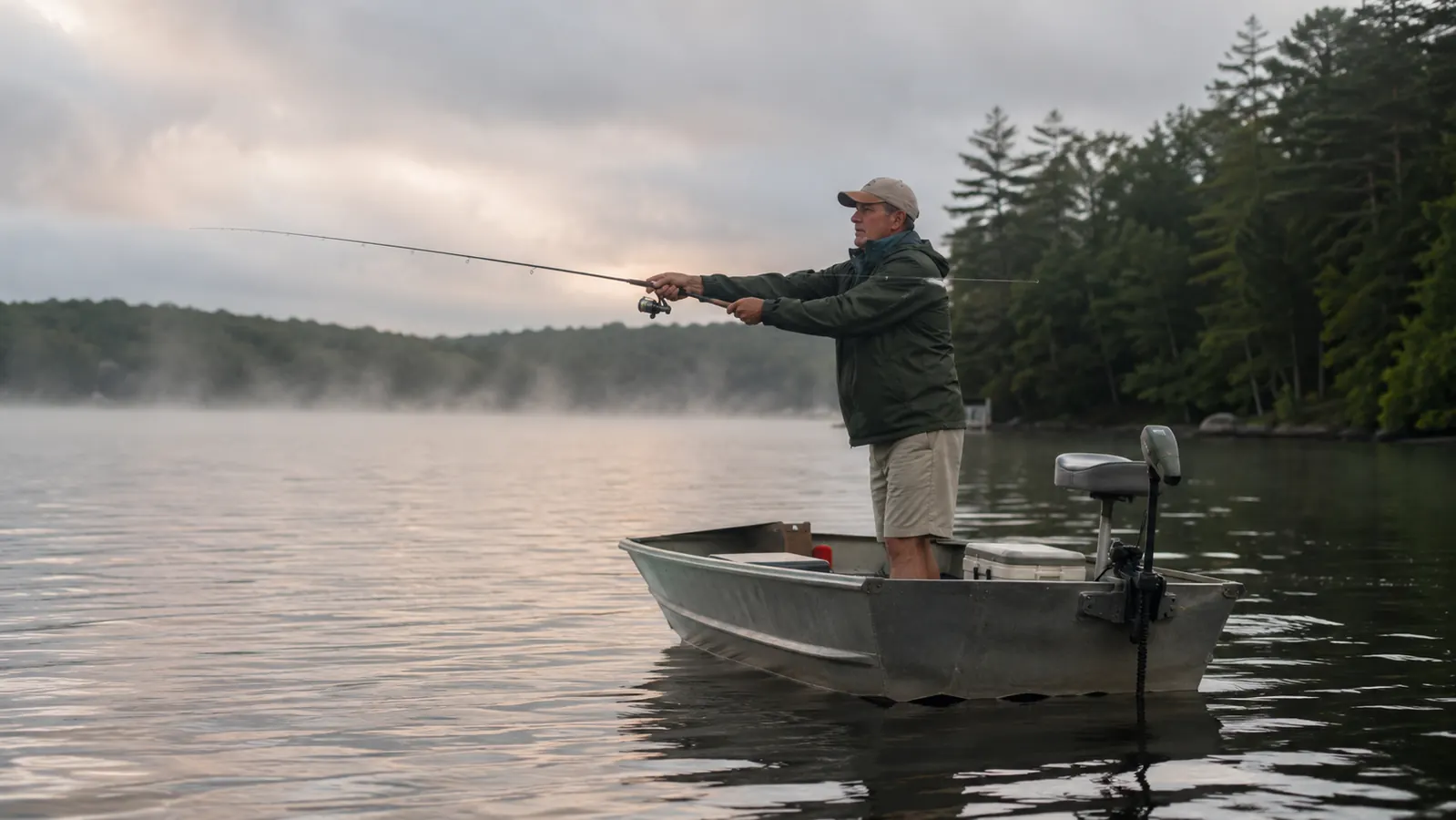
Ray asked me last month at the Weirs Beach launch if the reel he keeps seeing all over Amazon, the KastKing Centron, is actually as good as the reviews make it sound, or if we're all just telling each other what we want to hear. Fair question. I've had one rigged and fishing since the spring before last, mostly casting for smallmouth and pickerel on Winnipesaukee, sometimes drifting worms for catfish down on the Merrimack, and I gave him the same answer I'll give you here. It depends entirely on what you're asking it to do.
This isn't the long-term ownership story, I already told that one, the reel spooled with 10-pound mono that's now going on two full seasons and what it looks like today. This is the other conversation, the one that happens after the box is open and the reel is in your hand for the first time, before you've actually fished it. There's a real gap between what the spec sheet promises, what six thousand plus Amazon reviews average out to, and what happens the first weekend you take it out. I want to walk through that gap honestly, because it's exactly where buyers get surprised, one way or the other.
The Quick Verdict
A genuinely capable reel for the price, but the drag quality drops off right where a demanding angler would notice, and the honest reviews, mine included, say so.
Amazon Check Today's Price →Before You Add It to Cart, See What This Actually Buys You
Check today's price and current availability on the KastKing Centron spinning reel before deciding if it fits how you actually fish.
Amazon Check Today's Price on Amazon →How I've Used It
I run three of these reels total. One on a 6-foot medium rod for finesse worming smallmouth around the docks on Winnipesaukee, one on a slightly heavier 7-foot rod Ray uses off the bow for pickerel and bass, and one that rides along on my summer striper trips off the New Hampshire and southern Maine coast, spooled with 20-pound braid for that work. That spread matters for this review, because the honest truth is the reel performs differently depending on which of those three jobs you hand it.
Fresh out of the box, it casts fine. The bail closes with a solid snap, not a tinny one. The handle turns smooth for the first several dozen casts. If you fished it for twenty minutes in a tackle shop parking lot, you'd walk away impressed, and that's exactly the experience most Amazon reviews are describing. A first impression, not a season.
I mention all three rods because a lot of Centron reviews, mine included until I sat down to write this one honestly, tend to describe one reel in one situation and generalize from there. A reel that's flawless on light spinning gear for panfish can still be the wrong choice bolted to a rod meant for something heavier, and that's not really the reel's fault. It's a mismatch in expectations set before the box ever arrives.
Where the story changes is under load, specifically the drag, and specifically saltwater. More on both below.
What the Spec Sheet Doesn't Tell You
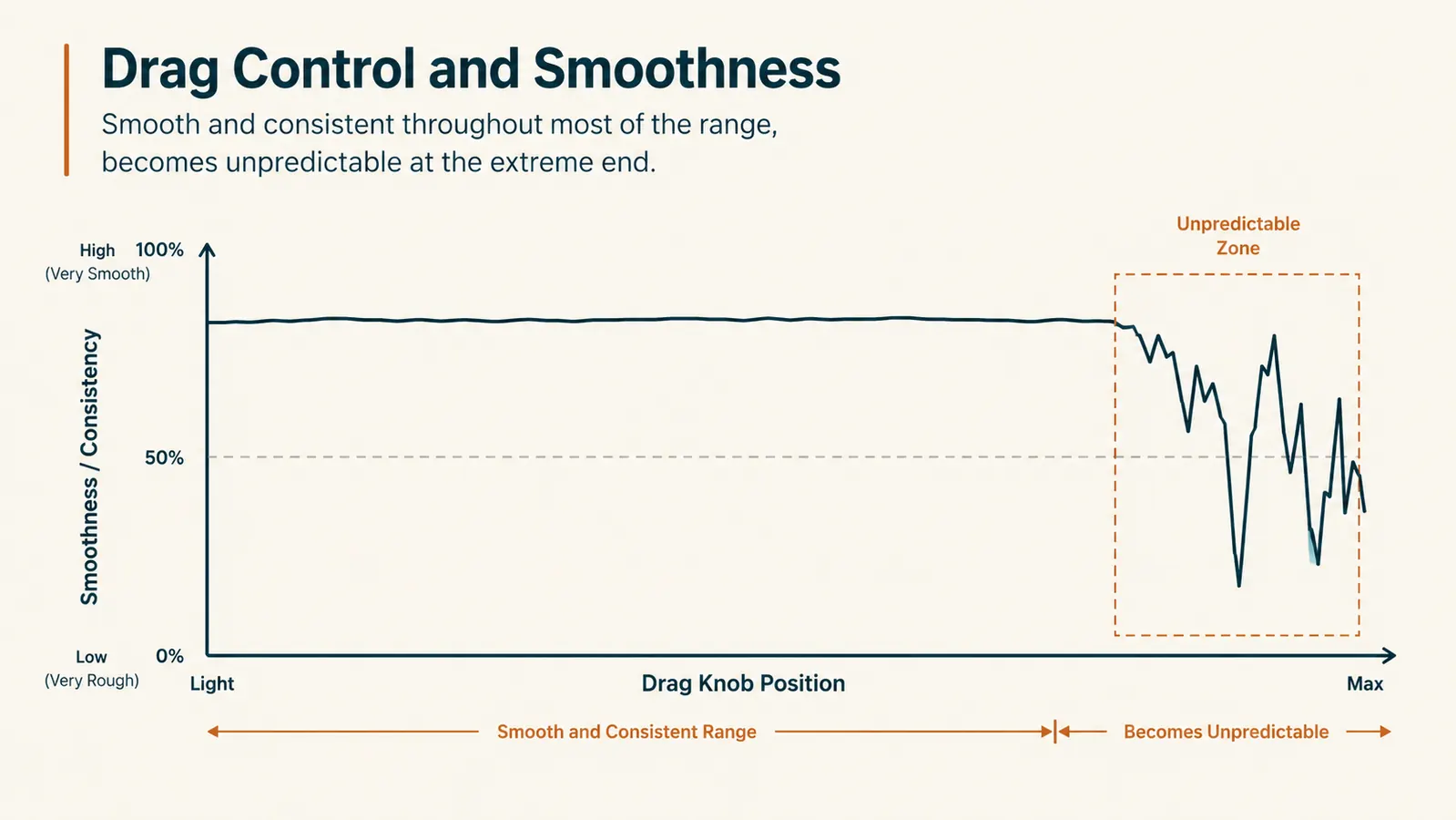
KastKing lists the Centron's max drag at 17.5 pounds. That number is real in the sense that the knob can be cranked down to produce that much resistance on a scale. What the spec sheet doesn't say is that the last quarter turn of that knob gets grabby instead of smooth, meaning the resistance doesn't climb evenly, it jumps. On a 14-inch smallmouth that never matters, you're nowhere near max drag. On a striper pulling line at the boat, or a big pike that surges right at the net, that jump is exactly when a hook pulls or a leader parts.
The gear ratio, 5.2 to 1, is genuinely useful and I'd put it up against reels twice the price on that spec alone. It's a good middle-ground speed for covering water without burning out your arm on a long retrieve. That part of the spec sheet, I'll defend all day.
The line capacity numbers printed on the spool are also technically accurate and practically optimistic. KastKing lists a specific yardage for each line weight, and you can fit that much line on there, but fill it to the stated capacity and you'll get backlash and wind knots on a long cast far more often than if you leave the spool about an eighth of an inch below the lip. That's true of most reels at this price point, but it's the kind of detail that only shows up after you've spooled it, cast it, and wondered why loose loops keep appearing.
What nobody prints on the box is that bearing count doesn't tell you bearing quality. The Centron has enough bearings to feel smooth when new. It doesn't have the shielding or the finish that keeps that smoothness three seasons in, especially in salt air, which is a subject the long-term review covers in full. But even in year one, if you dunk this reel in saltwater and don't rinse it that same day, you'll feel a difference within a couple of trips.
What the Five-Star Reviews Don't Mention
Six thousand plus ratings sitting at 4.5 stars is a genuinely good signal, and I don't want to talk anyone out of trusting it. But a star average hides a selection effect. The angler who buys a $27 spinning reel, catches sunfish and bass on 8-pound line all summer, and never once puts real pressure on the drag is going to leave five stars and mean every word of it. That reviewer isn't lying. They're also not the person deciding whether this reel can handle an inshore striper or a lake trout on wire.
The complaints that do show up, if you sort by one and two stars instead of reading the top comments, cluster around two things. Drag that felt gritty or inconsistent under sustained pressure, and a handle knob that developed a wobble after a few months of hard use. Both are real, both happened to reels I've owned personally, and neither shows up in the first hour with a reel in your hand, which is the review most casual buyers actually read before checking out.
There's also a timing problem baked into any review you read on the product page. Most reviews get written in the first month of ownership, often the first week, because that's when people are excited enough to sit down and type something. A reel that's going to develop a wobble in month four, or grit in the drag after twenty saltwater trips, simply hasn't had time to show that yet when most of those five-star reviews were posted. That's not dishonesty on the reviewer's part, it's just the natural bias of when people write reviews at all.
None of that makes it a bad reel. It makes the five-star average an incomplete picture, which is a different thing entirely.
The One Angler This Reel Will Quietly Frustrate
If you fish light freshwater, panfish, bass, the occasional pickerel, hand this reel to anyone and they'll be happy. Where I've watched it come up short is exactly the angler I become for about six weeks every summer, the one running braid on an inshore trip, fighting stripers in current with the drag set firm.
That angler needs a drag that stays linear from a light setting all the way to nearly locked down, because a striper doesn't ease into a run, it goes from calm to full sprint in about a second, right at the boat, right when you least want any surprise in how the reel behaves. The KastKing Centron's drag is fine through the middle of its range and gets unpredictable near the top of it. For panfish that ceiling never gets tested. For stripers, or big pike, or catfish on heavier gear, it eventually will.
I still keep one rigged for that trip, because I know its limit and I fish around it, mostly by never letting the drag get cranked past about two-thirds of max. That's a workaround, not a fix, and it's worth saying plainly instead of pretending the reel does something it doesn't.
The Question I Get Asked Most: Does It Handle Braid
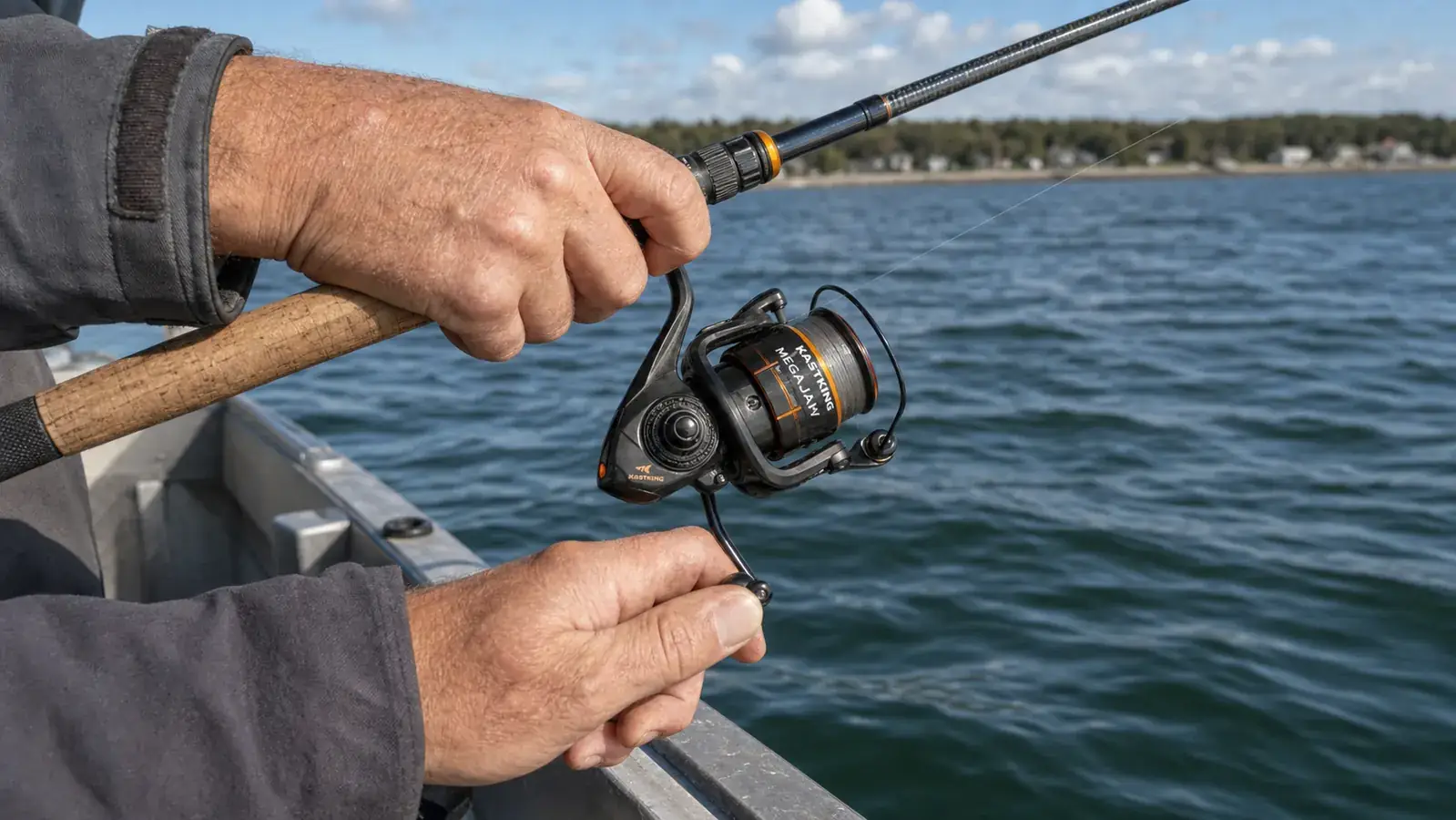
Ray's second question, right after the first one, was whether he could spool it with braid instead of mono for the pickerel he chases in the weed beds. The answer is yes, with a caveat nobody mentions in the product photos. Braid has zero stretch, which means any inconsistency in the drag gets transmitted straight to the rod tip and your wrist instead of being absorbed the way mono absorbs it. On a reel with a perfectly smooth drag, that's a feature, you feel everything. On the Centron, where the top of the drag range gets grabby, braid makes that grabbiness more obvious, not less.
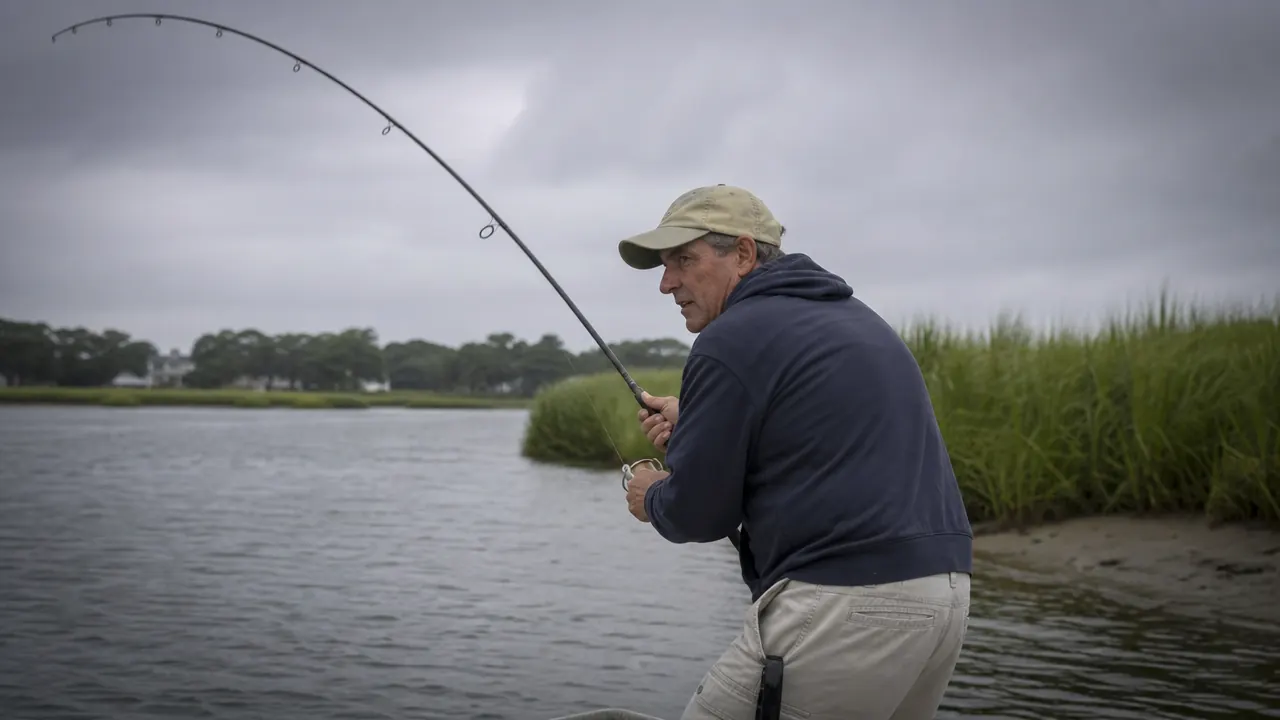
In practice this means braid on the Centron works great for finesse presentations and moderate hooksets, exactly what pickerel in the weeds call for, and gets riskier the moment you're leaning into a fish that wants to run hard. I run 10-pound braid on the rod Ray borrows most, and it's been fine for two seasons of pickerel and bass. I would not spool that same reel with 30-pound braid and expect it to behave the same way under real striper pressure, and that's not a hypothetical, it's the trip where I first noticed the drag jump I described above.
What You're Actually Accepting at This Price
A spinning reel at $27 has to cut corners somewhere, and it's worth naming exactly where instead of leaving it vague. The drag washers are a simpler stack than you'd find in a $90 reel, which is the root of the grabbiness at the top end. The bearing seals are basic, not the sealed stainless you'd get on something built for saltwater from the start. The body is graphite, light and fine for freshwater, but it flexes slightly more under a heavy hookset than a metal-bodied reel would.
None of that is a defect. It's what $27 buys, and to KastKing's credit, they aren't pretending otherwise. The reel isn't marketed as a saltwater workhorse. The mismatch only happens when a buyer reads the spec sheet, sees 17.5 pounds of drag listed, and assumes that means the same thing it would mean on a reel engineered for that use from day one.
When It's Actually Time to Spend More
I told Ray straight, the Centron is the right call if he's fishing what we fish nine months out of the year, freshwater bass and pickerel out of the aluminum boat, worming docks, the occasional pike. For that, spending three times as much buys smoothness he'd never notice and a drag range he'd never use.
Where I'd tell him to spend more is if he wants one reel that covers the striper trips too without a workaround. At that point you're looking at a reel with a better sealed drag stack, and that's a different price bracket and honestly a different review. Buying that reel for panfish and ponds would be the same mismatch in reverse, paying for a ceiling you'll never touch.
What I Liked
- Genuinely smooth for the first several months right out of the box
- 5.2:1 gear ratio is a versatile, well-chosen speed for the price
- Handles freshwater bass, pickerel, and panfish without complaint
- Bail and handle feel solid, not cheap, on first impression
- Price makes it easy to keep a spare rigged and ready to go
Where It Falls Short
- Drag gets grabby instead of smooth near the top of its range
- Not built for sustained saltwater use without diligent rinsing
- Handle knob can develop a wobble under months of hard use
- Bearing seals are basic, not sealed stainless
The five-star average is honest. It's just describing a different fishing trip than the one giving this reel trouble.
Who This Is For
This reel is for the angler doing what most of us actually do most weekends, casting for bass, pickerel, panfish, and catfish on a lake, pond, or river, on line testing under about 15 pounds, without routinely dunking it in saltwater. If that's your fishing, the KastKing Centron does the job well, and the price makes it close to disposable insurance against loss or a bad drop overboard.
It's also a smart pick for the angler who wants a genuine backup rigged and ready in the truck, the kind you don't worry about leaving in a hot cab or dropping on a boat ramp, because replacing it doesn't sting the way replacing a $150 reel would. I keep one exactly for that purpose, spooled and ready for whoever ends up on my boat without their own gear.
Who Should Skip It
Skip it if inshore saltwater is a regular part of your season rather than a few trips a year, if you target species that make hard, sustained runs like striper or big pike on firm drag, or if you've been burned before by a reel that felt great for a month and then didn't. For those anglers, the honest move is to spend more up front on a reel with a better sealed drag stack, rather than buying this one and fighting its ceiling every summer.
I'd also say skip it if you're the kind of angler who fishes hard enough, several times a week, heavy line, aggressive hooksets, that you'd rather buy once and stop thinking about the reel entirely. That angler is paying for a different kind of peace of mind than the Centron is built to sell, and no amount of careful drag management changes that math.
Still the Right Call for Most Weekends on the Water
See current pricing and availability for the KastKing Centron before your next trip to the lake.
Amazon Check Today's Price on Amazon →