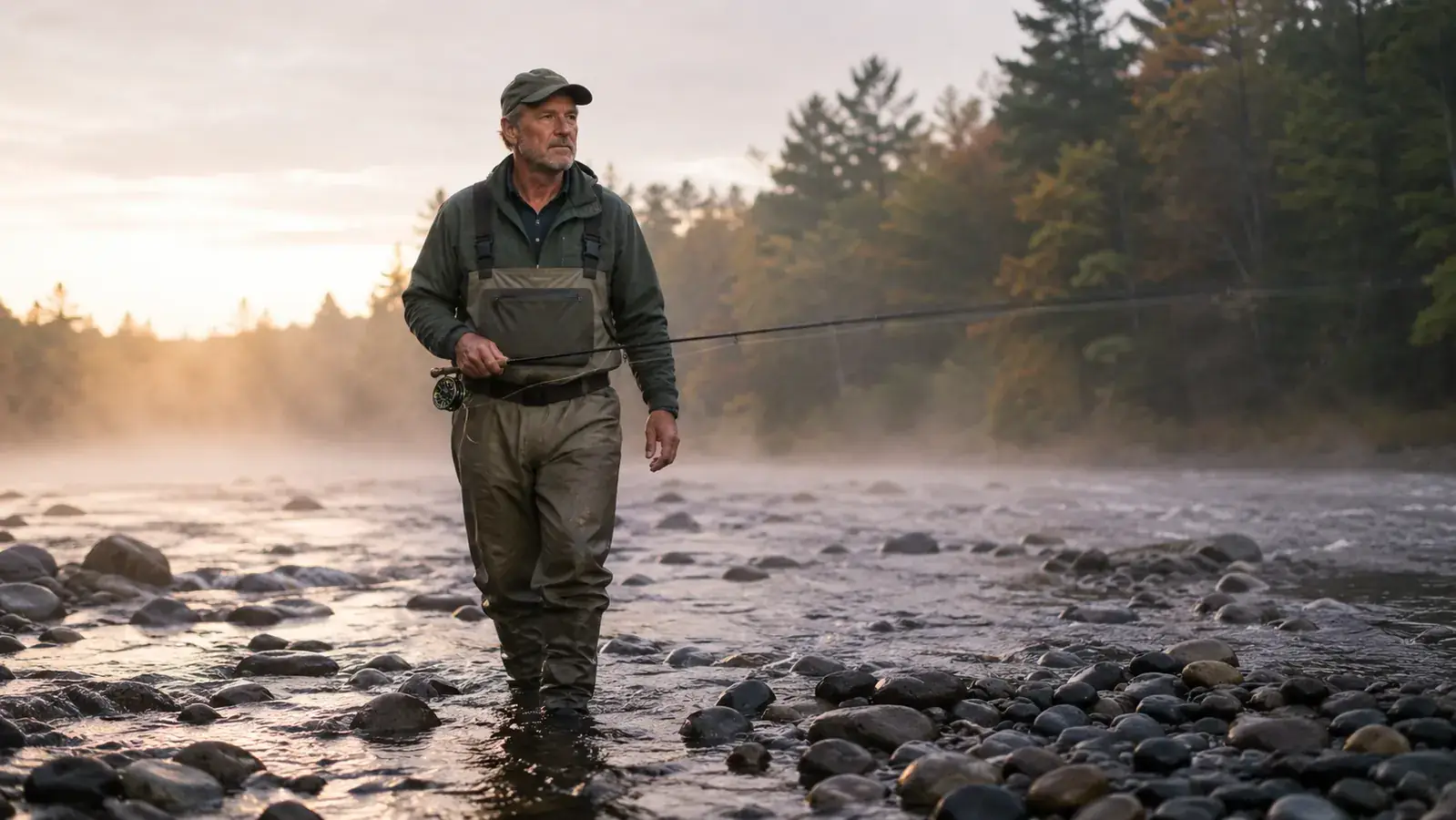
I didn't own real chest waders until I was well into my forties. I fished from my 16-foot aluminum boat on Lake Winnipesaukee, tiller outboard humming along, and left the wading to guys in the fly shop catalogs. Then Ray, my brother-in-law, talked me into a cold spring morning on a Merrimack tributary for trout, and I showed up in borrowed neoprene waders that felt like a wetsuit stuffed inside a garbage bag. I sweated through my shirt before I'd made a single cast.
Chest waders are chest waders until you've worn both kinds side by side. Neoprene has its place, and I'll get to where it still wins before I'm done, but for the fishing most of us do most weekends, breathable waders have quietly become the better default. I've worn a pair of Frogg Toggs Hellbender chest waders for a couple of seasons now, on the Merrimack, on streams that feed Winnipesaukee, and on July mornings wading for stripers off the New Hampshire coast. Here are ten real reasons breathable beats neoprene for everyday wading.
Tired of sweating through your waders before you've made a cast?
That was my old neoprene pair every spring morning. Check today's price on the Frogg Toggs Hellbender chest waders and see if they fit your weekend water.
Amazon Check Today's Price on Amazon →You Can Actually Pack Them Down and Bring Them Along
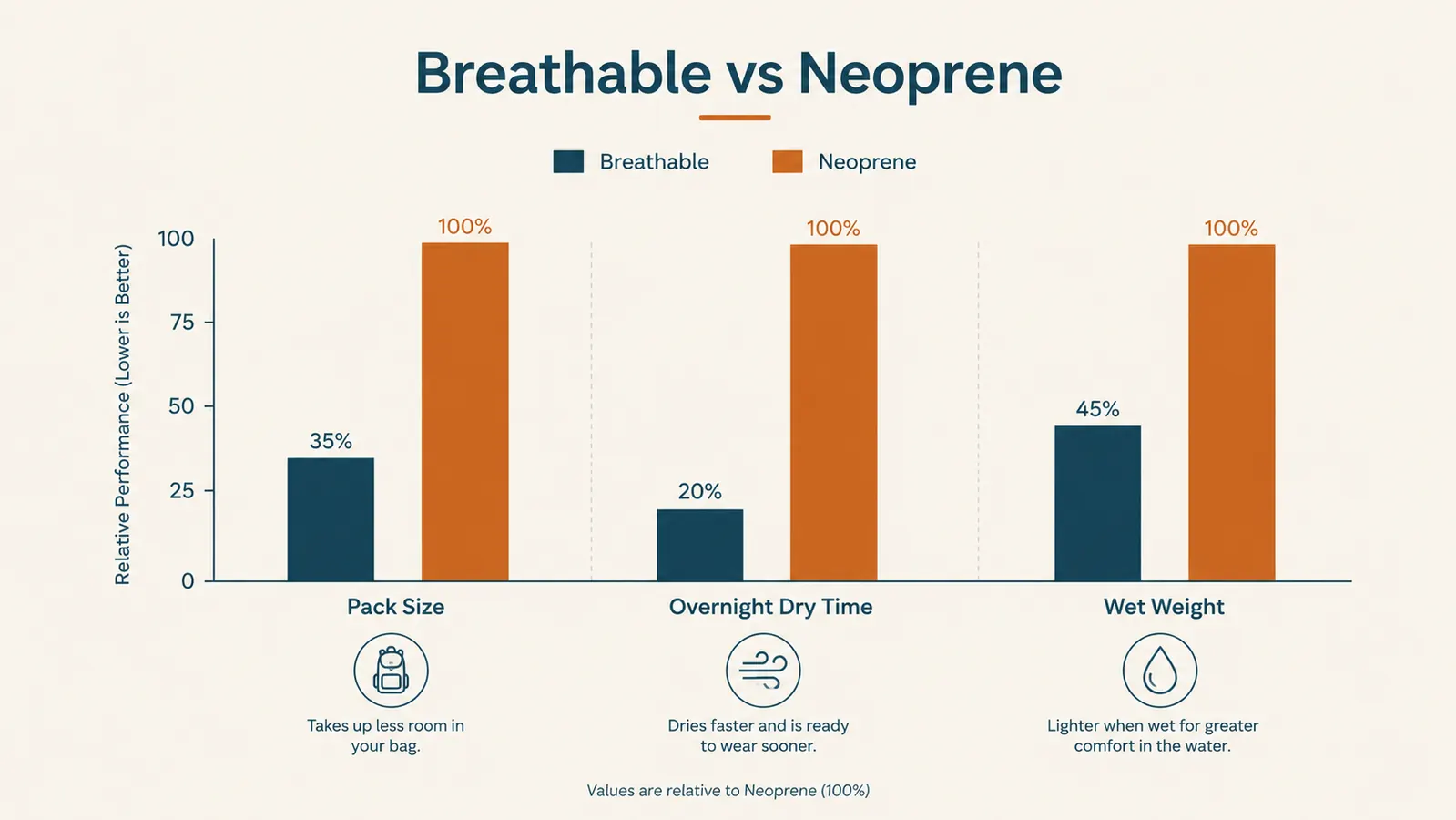
Neoprene waders are bulky enough that a lot of guys leave them home unless a trip is already planned around wading. Breathable waders roll down to about the size of a rolled sleeping bag, small enough that I keep a spare pair of Frogg Toggs Hellbender waders behind my truck seat year round. More than once that's meant fishing a stretch of river I hadn't planned on instead of standing on the bank watching Ray wade out alone because my gear was sitting in the garage.
No More Arriving Soaked Before You've Made a Cast
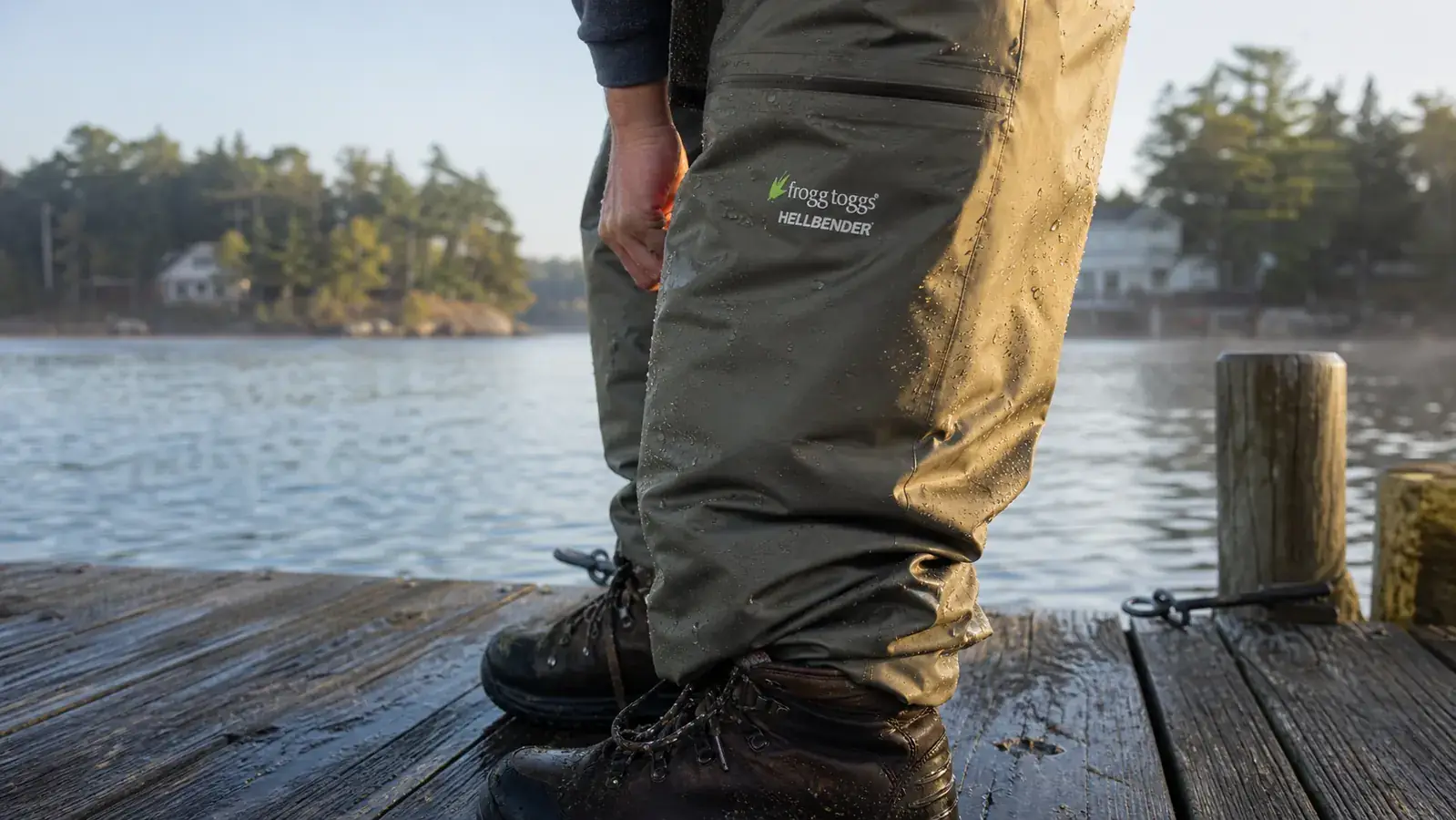
Getting to good water on foot usually means a hike, sometimes a half mile down a trail to a stretch of the Merrimack most people don't bother with. Thick neoprene waders turn that walk into a sauna. I used to arrive at the river already wet through my base layer from sweat alone, a rough way to start a morning that's supposed to be about fishing, not recovering from the hike in. Breathable fabric lets air move, so the walk in doesn't cost you the first hour of comfort.
You Can Layer for a 40-Degree Start That Turns Into 70 by Noon
Spring mornings in the Lakes Region start cold and change fast. I've stood at the truck at six a.m. in a fleece and been down to a t-shirt under my waders by eleven. Neoprene is one fixed thickness, so you're either too warm all morning or too cold once the sun climbs. Breathable waders let me layer light thermals underneath on a cold start and shed a layer at lunch without changing waders at all.
Amazon See the waders built for layering, not one fixed thickness →
They Dry Overnight Instead of Sitting Wet for Days
Neoprene holds water in the material itself, not just on the surface, so a pair soaked on Saturday is often still damp Monday if you fish back to back weekends the way Ray and I usually do. Breathable waders dry from the inside out almost as fast as a windbreaker. Hang a pair of Frogg Toggs waders over a fence rail after a trip and they're bone dry and ready to go again well before the next morning.
You Can Wade Quieter and Spook Fewer Fish
Neoprene is thick and a little stiff, and it makes a distinct rubbery sound and feel moving through brush or against itself with every step. On clear, shallow water where trout and smallmouth spook at the smallest disturbance, that extra bulk and noise matters more than most anglers realize. Breathable fabric is thinner and quieter through streamside brush, and I've noticed fewer fish bolting off a shallow flat since I switched, especially wading slow on calm mornings.
Your Legs Don't Feel Wrecked After a Long Wade
A full day wading, six or seven hours on your feet in current, is tiring no matter what you're wearing, but thick neoprene adds real weight and drag with every step once it's saturated. Breathable waders are lighter dry and don't soak up nearly as much extra weight in the river. By the end of a long Saturday with Ray, my legs feel like I fished six hours, not like I also hauled a wet mattress around a riverbed.
They're Actually Wearable on Hot July Striper Mornings
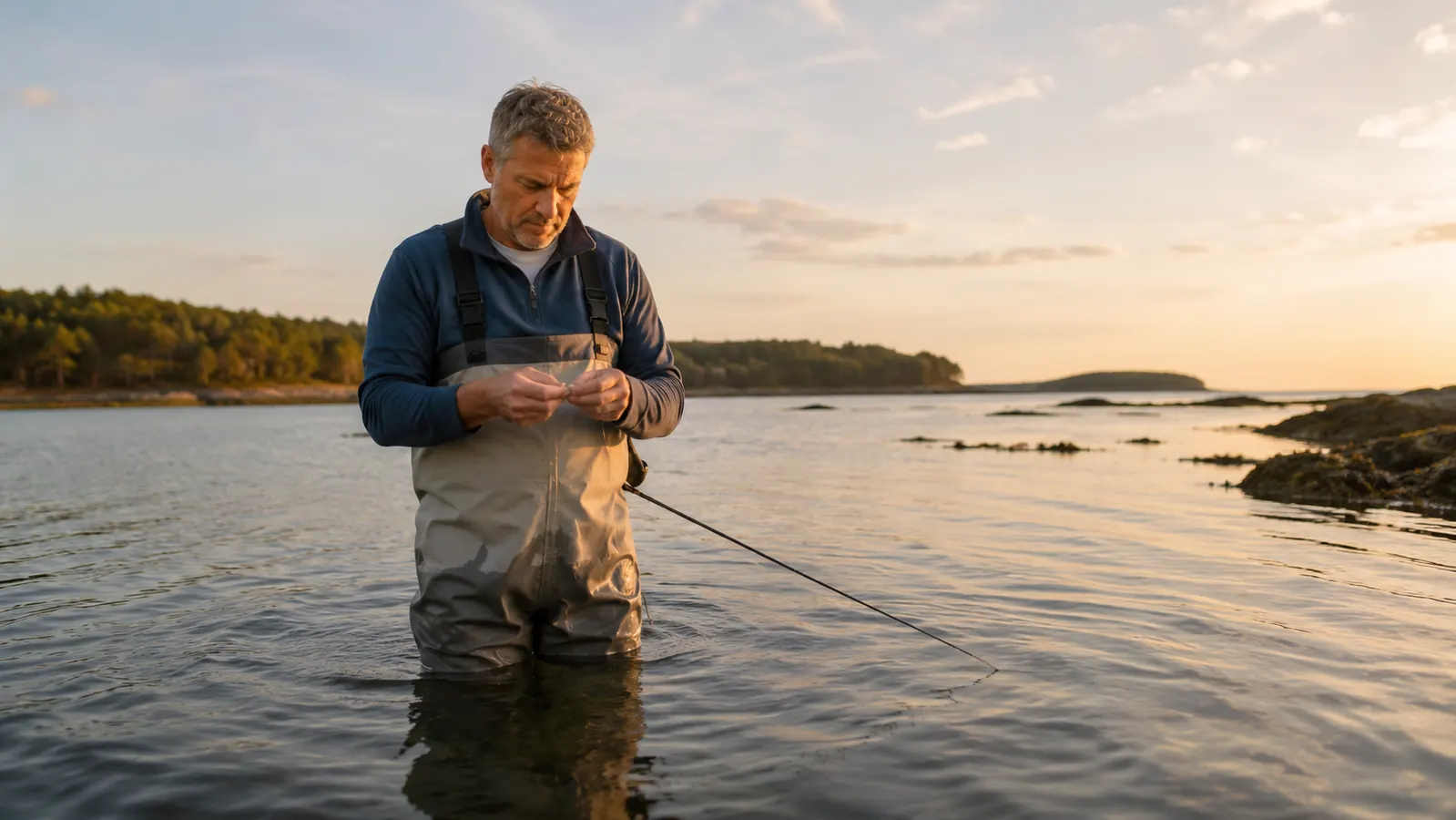
Our summer trips down to the New Hampshire and southern Maine coast for stripers happen in July and August heat, and neoprene waders in that weather are close to unbearable. Breathable waders make it realistic to wear waders on a hot morning without cooking yourself before the tide even turns. I've worn mine wading a flat at first light in July when the air was already pushing seventy degrees, and I stayed comfortable enough to focus on the fish.
Less Trapped Odor and Easier Care Between Trips
Neoprene holds onto the smell of a long day on the water in a way that's hard to fully air out, and after a season a pair can develop a permanent funk no amount of hanging seems to fix. Breathable waders rinse clean easier and don't trap odor the same way, since there's less dense foam for bacteria to live in. A quick rinse and a night hanging in the garage has kept my Frogg Toggs pair smelling like almost nothing after two full seasons.
Amazon See the waders that don't hold onto a season's worth of smell →
Better Range of Motion for Casting, Climbing, and Kneeling
Neoprene's thickness restricts how far you can bend at the knee or reach overhead on a backcast, which you notice climbing over a downed tree or kneeling on a gravel bar to net a fish low to the water. Breathable waders flex more naturally with your body, closer to wearing regular pants than a wetsuit. That extra motion matters more than it sounds like on a real river trip.
The Wading Belt Built Into a Good Pair Adds a Real Safety Margin
Wading safely matters more than any comfort feature on this list. A wading belt cinched at the waist keeps waders from filling with water and dragging you down if you go in over the top, and I wear one every time I'm in current above my knees. The Hellbender ships with a belt included and sits lighter and closer to the body than bulky neoprene, which makes it easier to keep good footing on an uneven bottom. Cold water, filled waders, and bad footing are a genuinely dangerous combination, so the belt goes on every single time, no exceptions.
Amazon See the waders that ship with a wading belt included →
Where Neoprene Still Wins
I don't want to pretend breathable waders are better in every situation, because they're not. If you're wading genuinely cold water deep into November or December, thick neoprene still holds warmth against your skin in a way breathable fabric plus base layers doesn't fully replicate, and duck hunters sitting still in freezing marsh water for hours are usually better off in neoprene for that reason. Neoprene is also more puncture and abrasion resistant against sharp rock and heavy brush, and a basic neoprene wader is often cheaper up front than a breathable pair built around a real membrane. If your wading is mostly cold and mostly standing still, neoprene still has a real case.
What I'd Skip
I'd skip the cheapest breathable waders you can find with no reinforcement at the knees, since that's exactly where a lot of pairs, mine included, develop a leak first. I'd also skip assuming breathable means indestructible, since I've torn a hole in mine on barbed wire the same way I would have with any other pair. And if nearly all of your wading happens in late fall or winter cold, I'd skip breathable altogether and just buy neoprene, since you'd be fighting the fabric's biggest weakness on every trip.
Waders should disappear while you're fishing, not remind you they're there every single step.
Ready to stop dreading the hike in?
If your current waders leave you soaked in sweat before you've made a cast, check today's price on the Frogg Toggs Hellbender chest waders and see if they fit your weekend water.
Amazon Check Today's Price on Amazon →