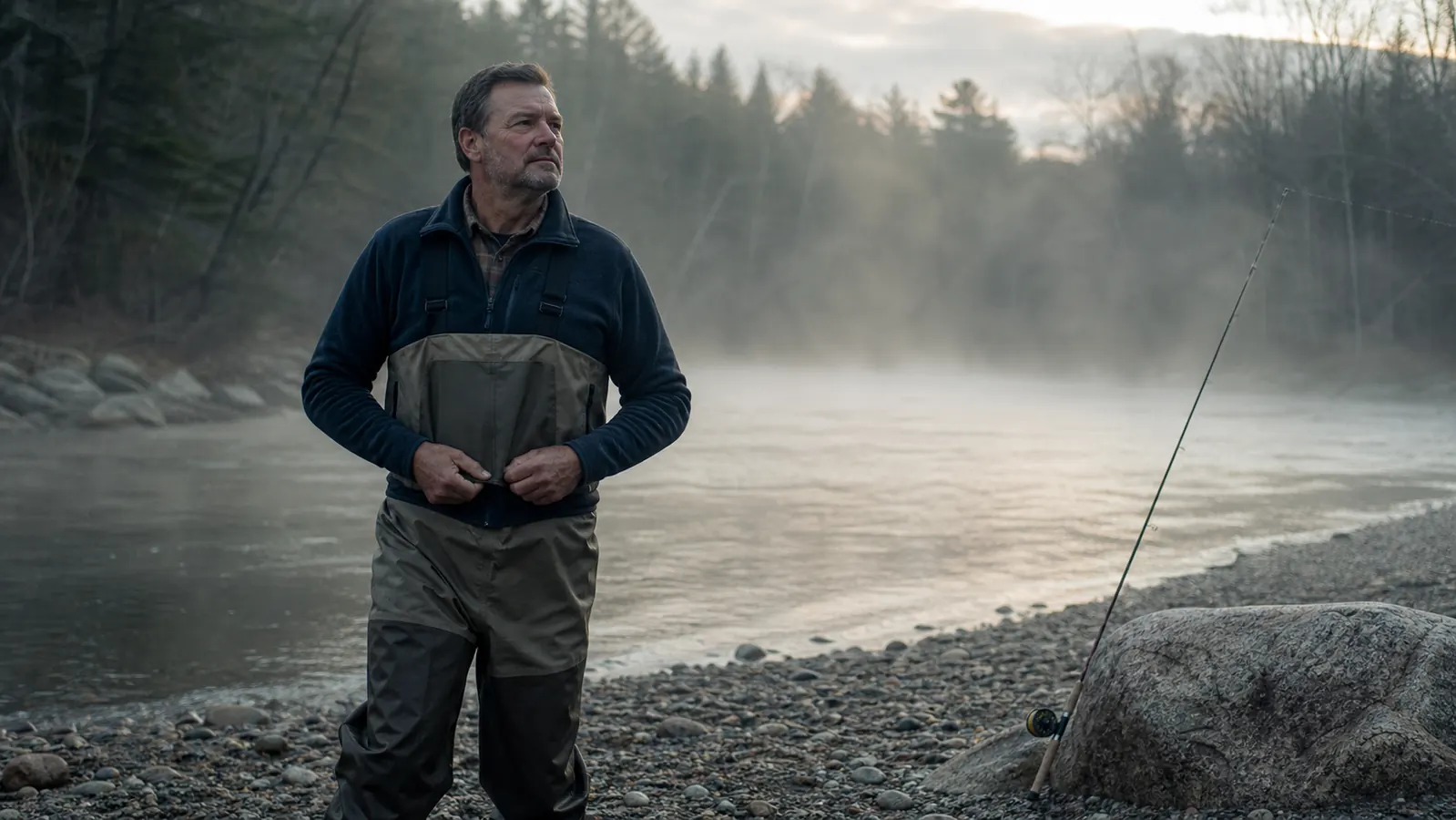
Early April, a couple springs back, I stood on the bank of the Merrimack below the Hooksett dam at seven in the morning with a rod in my hand and my boots planted on dry gravel, watching a good run of water I had no real intention of stepping into. The fish were in there. I could see the seams where the current slowed enough to hold trout, the exact kind of water I used to wade every spring without thinking twice about it. I just stood there instead, cast as far as I could reach from the bank, and thought about Ray, my brother-in-law, who'd have walked right out into that same run in his old Frogg Toggs waders without giving it a second thought.
My own waders had a slow leak along the left knee that I'd patched twice and then given up patching, and standing in forty-five degree water with a wet knee for two hours had stopped being something I was willing to do. So I'd quietly started skipping the water I couldn't reach from shore. I didn't decide this all at once. It happened the way most small giving-ups happen, one cold morning at a time, until I looked up one April and realized I hadn't waded past my ankles in almost two years.
What I gave up without really noticing was the two best stretches of the fishing calendar. Early spring, when the water's still cold and the fish are stacked in the deeper runs before the bugs really get going, and late October into November, when the leaves are down and the river empties out of other people and the fish feed hard before the cold really sets in. Those are the weeks I used to plan around. Somewhere along the way I'd traded them for the safe, warm, crowded middle of summer, and I told myself that was just how it was going to be from here.
Ray noticed before I said anything about it. We fish most Saturdays together, him in his boat clothes and waders, me standing on the bank in sneakers, and one morning in late September he asked, not unkindly, why I hadn't waded a river with him all year. I gave him some answer about my knees or the cold, and he just looked at me and said my knees were fine, my waders were shot, and those were two very different problems with two very different fixes.
He was right, and it needled me enough that I actually looked into it that week instead of putting it off another season. I'd been telling myself new waders were a bigger purchase than they actually are, the kind of thing you research for a month and never pull the trigger on. Ray had been wearing his pair of Frogg Toggs Hellbender waders for a couple seasons at that point and said his hadn't given him a single problem, so I ordered a pair the same week, more out of stubbornness about finally fixing this than any real excitement.
I hadn't waded past my ankles in almost two years, and I'd talked myself into believing that was just how fishing was going to be from here.
Still fishing from the bank because your waders finally quit?
That was me for two years. Check today's price on the Frogg Toggs Hellbender waders and see what two more months of river fishing a year might be worth to you.
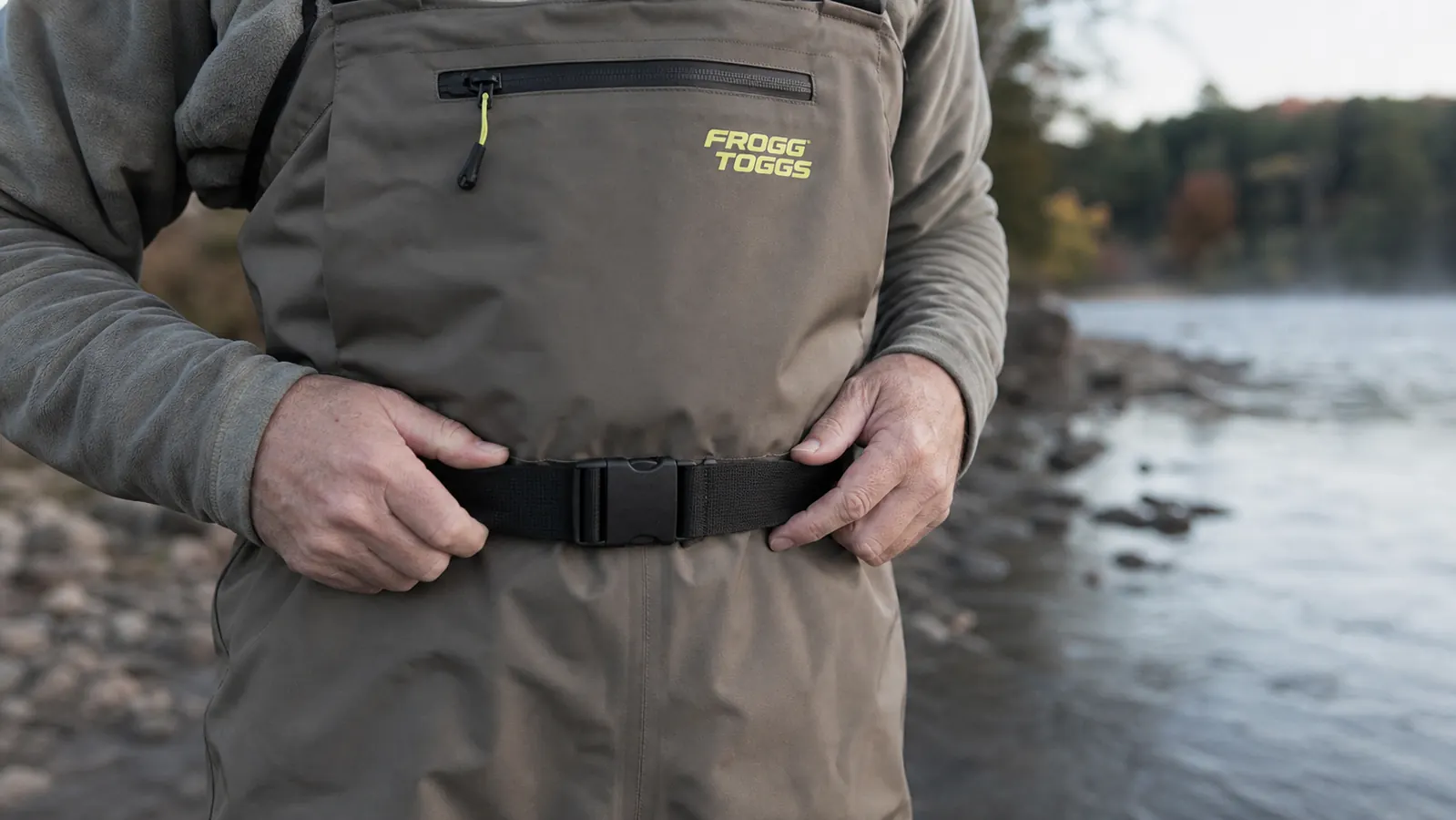
Amazon Check Today's Price on Amazon →The first morning I actually wore them out, I stood on that same gravel bar below Hooksett dam and, for the first time in two years, kept walking past it. I cinched the wading belt tight around my waist before I went in, a habit I'd let slide during those two dry-land years. It's a small thing, a strap that costs about ten dollars, but cold water filling a pair of waders is a real hazard if you go in over the top or lose your footing on a rock, and I'd rather look overly careful than end up floating downstream in April water. Belt cinched, I picked my footing slow across the cobble bottom and out to the seam I'd been casting at from shore for two seasons.
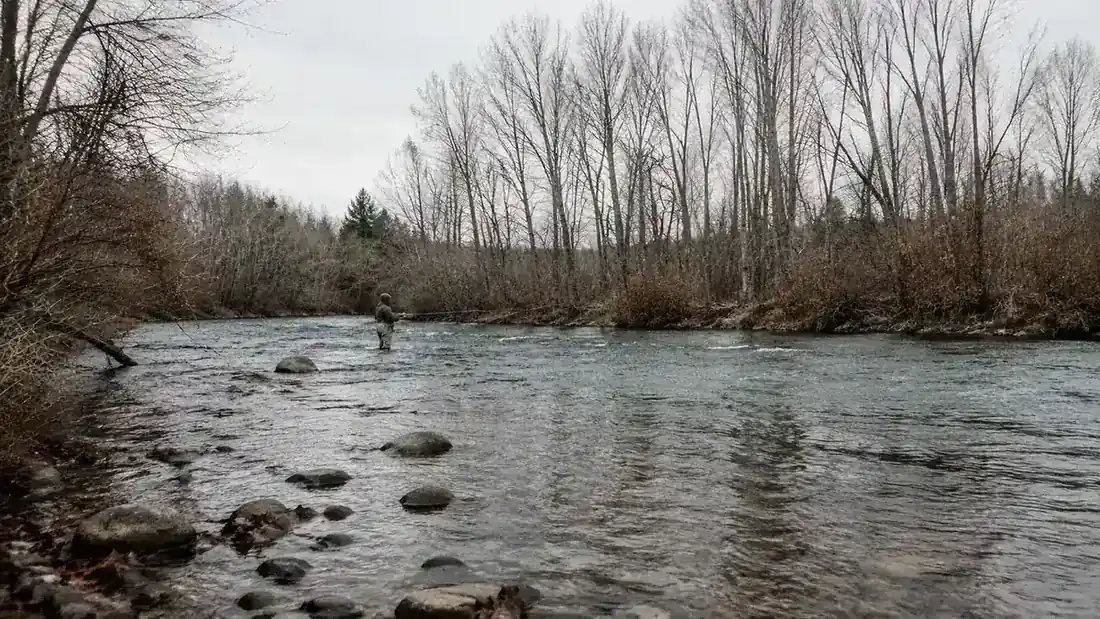
The water came up to my thighs, cold enough to feel through the fabric but nowhere near my skin, and I stood there for almost two hours working that run the way I used to. I caught three decent rainbows out of water I hadn't been able to properly fish since before I owned these Frogg Toggs, and I remember standing there afterward more struck by what I'd been missing than by the fish themselves. Two seasons of April mornings, just gone, over a leak I could have fixed for the price of a decent dinner out.
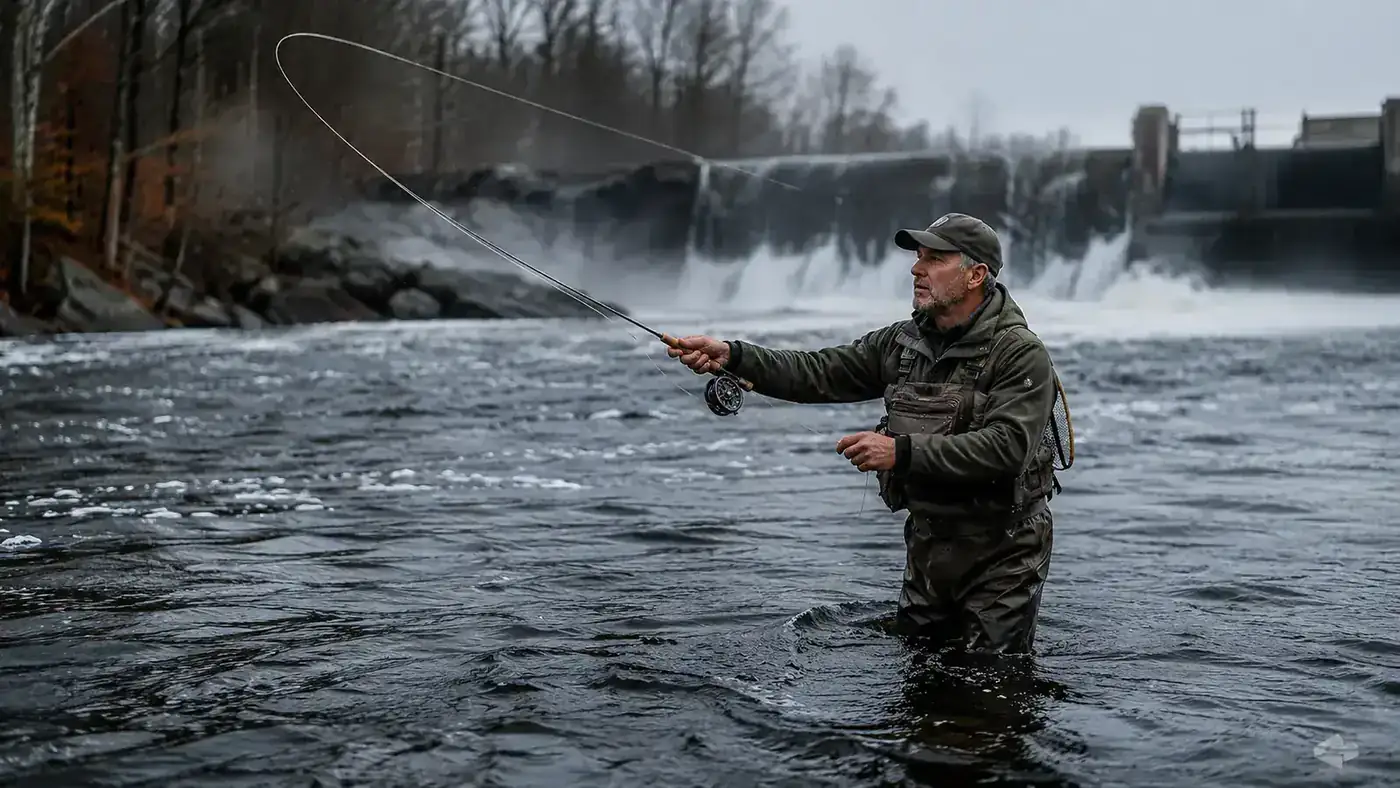
That fall I fished later into November than I had in years, wading a low, clear stretch of the Merrimack on a Tuesday afternoon when nobody else was around, the leaves all down and the water that particular flat gray it gets before the first real cold snap. I wasn't rushing to beat the weather or squeezing in one last trip before giving up on the season. I was just out there, comfortable, in waders that didn't leak and didn't have me thinking about my knee every ten minutes, doing the kind of ordinary fishing I used to take for granted before I let two of the best months of the year quietly slip away.
What I'd Tell You If We Were Sitting at My Kitchen Table
If you asked me straight out whether a pair of waders is worth the money, I'd tell you it depends on what you're actually giving up by not having a good pair, because that's the part I didn't add up for two years. It wasn't just discomfort I was avoiding, it was whole stretches of river and whole months of the calendar I'd quietly written off without ever deciding to. I'm not going to tell you these are the fanciest waders on the market, because they're not, and I still keep an eye on that same knee seam out of old habit. What I will tell you is that today's price and an afternoon spent fixing a problem I'd tolerated for two years gave me back April and November, and I wish I'd done it a season sooner than I did.
Don't let a bad pair of waders quietly cost you a season.
Check today's price on the Frogg Toggs Hellbender waders and get back to the water you've been fishing from the bank.
Amazon Check Today's Price on Amazon →