
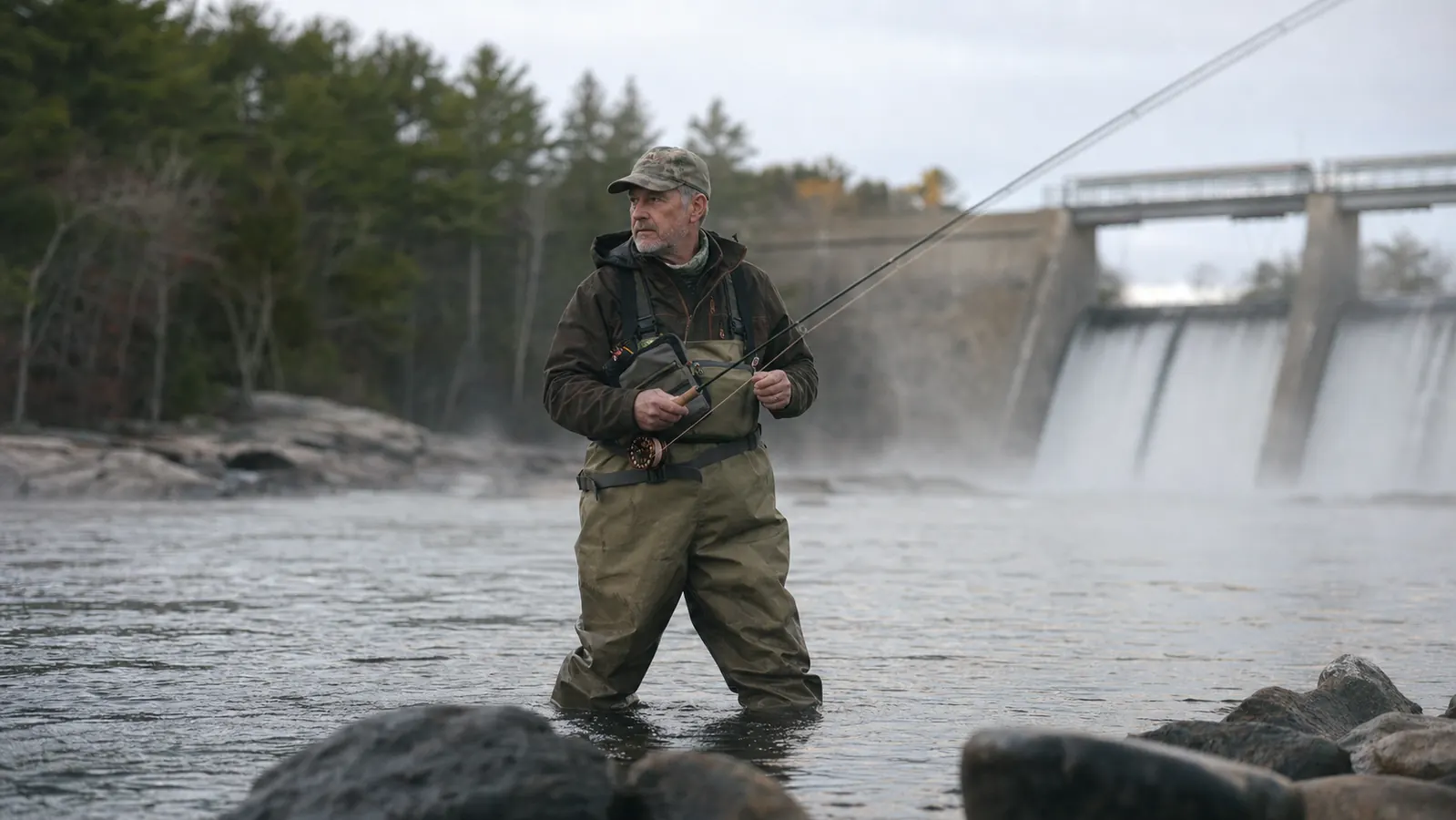
I bought my first pair of Frogg Toggs Hellbender chest waders in the spring of 2019, mostly because the neoprene waders I'd worn for a decade had finally rotted through at the knee and I didn't want to spend another summer sweating through waist-deep crossings on the Merrimack in July. Ray, my brother-in-law, already had a pair and swore by them for the money, so when a set showed up in my size at the local outfitter for under a hundred bucks, I bought them without much more research than that. Seven seasons later I'm still wearing that same pair, patched twice, faded at the knees, and still my go-to waders for anything short of a cold November trip on the coast.
This isn't a review written after a weekend with a product. I've worn these Hellbenders wading the Merrimack below the Hooksett dam, along rocky feeder streams that run into Winnipesaukee, and on shoreline nights working streamers for landlocked salmon when the water was barely above forty degrees. I've dragged them through brush, sat on wet rocks in them more times than I'd like to admit, and stored them wet in the back of my truck more nights than I should have. This review is about what seven seasons, not seven days, actually do to a pair of Frogg Toggs waders.
The Quick Verdict
A genuinely good breathable stockingfoot wader for the price, patchable when it eventually leaks, that's outlasted my expectations across seven seasons of real river and shoreline use.
Amazon Check Today's Price →Tired of waders that turn every crossing into a swim?
That was me before these. Check today's price on the Frogg Toggs Hellbender and see if it's still the same deal it was when I bought mine.
Amazon Check Today's Price on Amazon →How I've Used Them
I run a 16-foot aluminum boat with a tiller outboard on Lake Winnipesaukee, but a lot of my wading happens off the boat entirely, working shorelines and wading out from gravel bars on the Merrimack where the current's slow enough to stand comfortably. I'm in these waders most weekends from ice-out through late fall, and a few times a summer I take a run down to the New Hampshire or southern Maine coast for stripers, though I stay in sneakers and shorts for most of that saltwater work and save the waders for the cold-water river days.
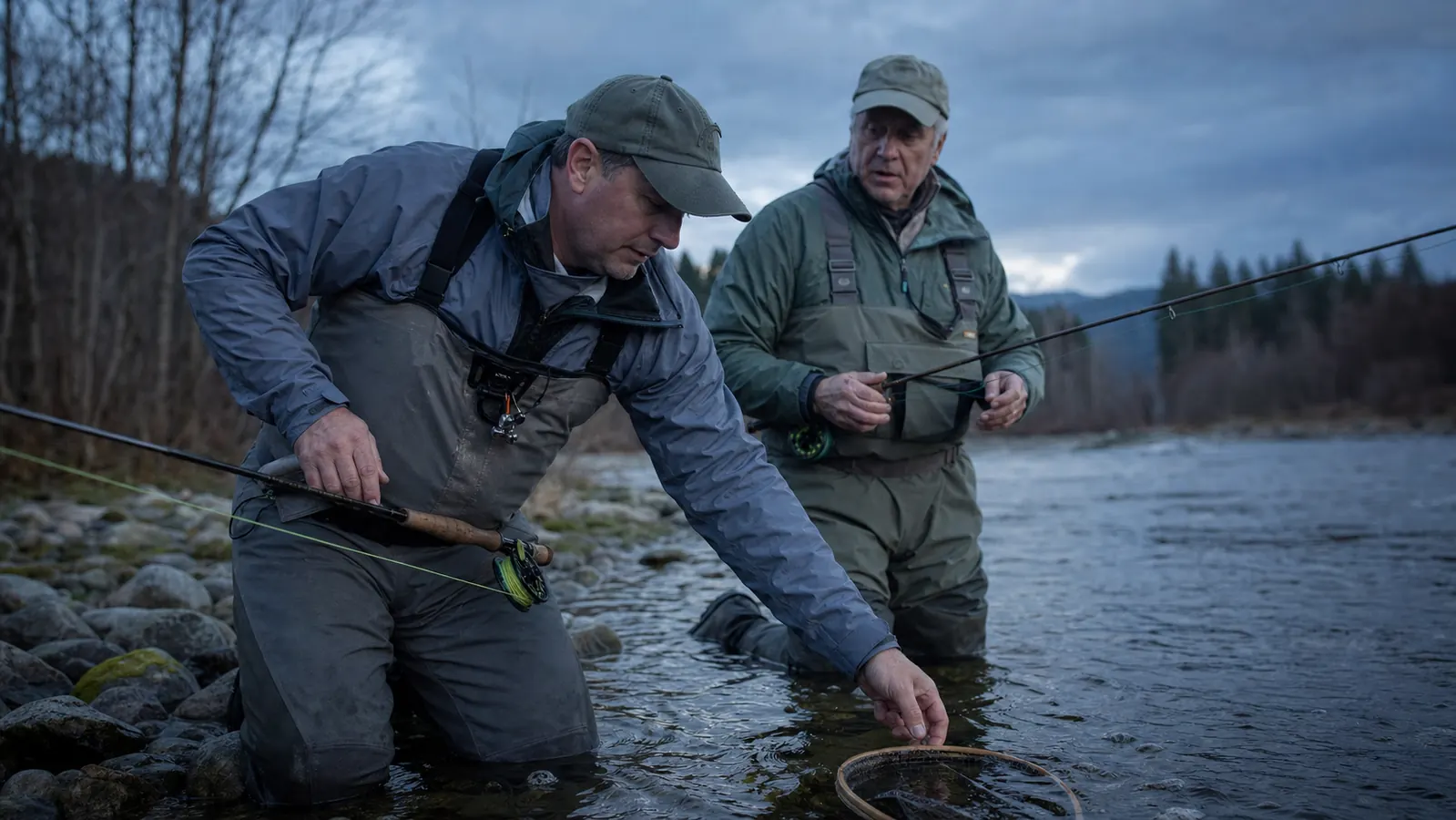
Ray fishes with me most Saturdays, and he's been in his own pair of Hellbenders about as long as I've had mine, so between the two of us we've got a fair amount of combined wear to talk about. I want to say up front, before I get into the specifics, that I always wear a wading belt cinched at the waist when I'm out in current above my knees. Cold water and a filled pair of waders is a genuinely dangerous combination if you go in over the top, and a cheap belt costs less than a tank of gas. It's not a big deal to mention, but it matters, so I'm mentioning it.
Beyond the belt, I treat these the way most weekend anglers actually treat their gear. I don't baby them. They get folded into a duffel bag wet more often than hung to dry properly, and they've been snagged on barbed wire fence twice crossing into a farm field to reach a stretch of river I like below a covered bridge.
Where the First Leak Showed Up
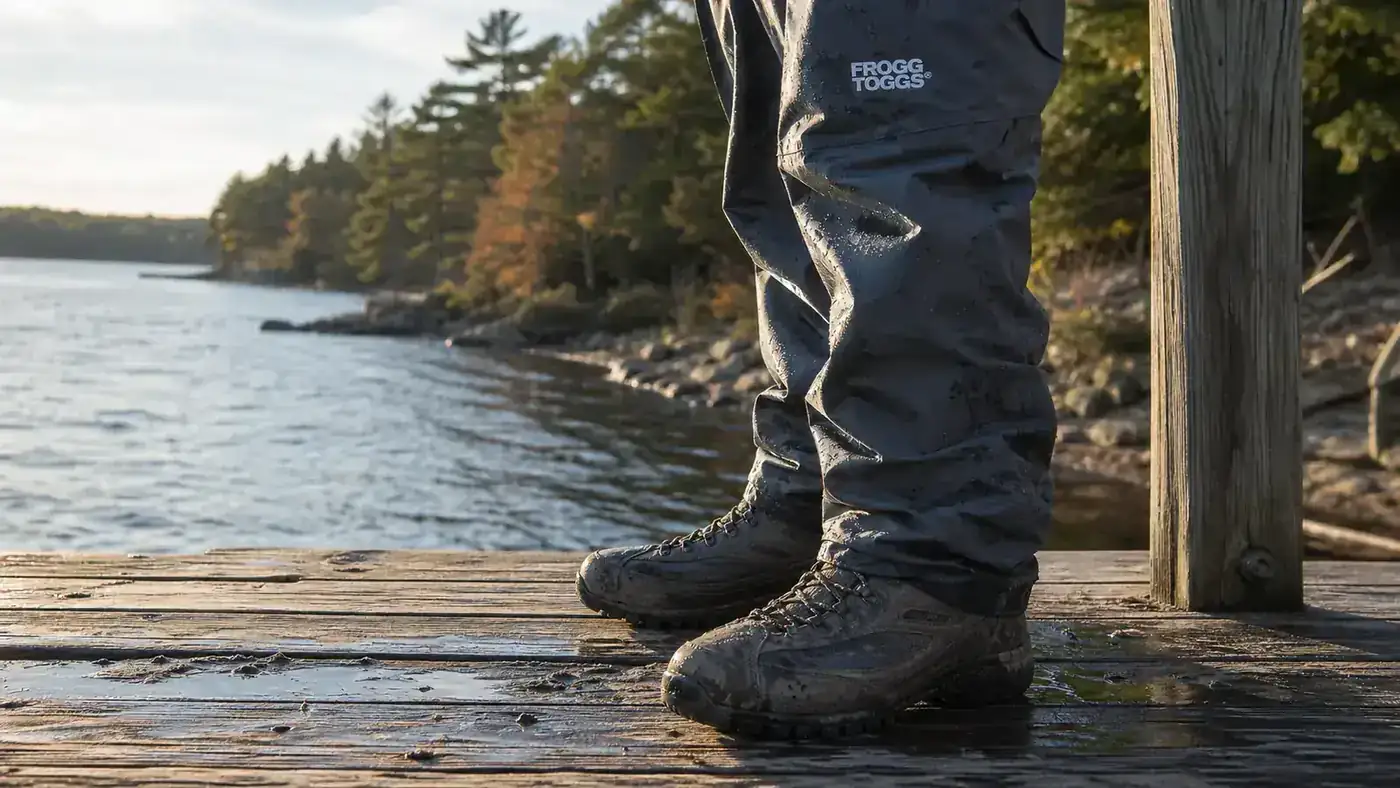
The first leak in my Hellbenders showed up early in season three, right at the inside of the left knee where the fabric folds every time I bend to net a fish or climb over a rock. It wasn't a blowout, just a slow seep that I noticed as a cold spot after about twenty minutes of standing in current. I patched it with the little repair kit Frogg Toggs includes in the box, and that patch has held for four full seasons since, through plenty more kneeling and climbing.
That knee fold is the single most predictable failure point on this style of wader, and it makes sense once you think about how much flexing happens there every time you wade uneven river bottom. Ray's pair developed a nearly identical leak in the same spot, just one season behind mine, which tells me it's not a fluke defect but a real wear pattern anyone buying these should expect eventually.
What I appreciated is that the fix was genuinely simple. No sewing, no special glue beyond what came in the kit, fifteen minutes on the kitchen table and a full day to cure. If you're the kind of angler who panics at the idea of a leak ending a pair of waders for good, that patch kit changes the math considerably. These aren't disposable, they're maintainable, and that's a meaningful distinction after a few seasons of hard use.
The Stockingfoot Inside My Wading Boots
The Hellbender is a stockingfoot design, meaning the wader itself ends in a neoprene sock and you wear a separate wading boot over top, which is the setup I prefer for river work because the ankle support matters on uneven bottom. I've run the same pair of felt-soled wading boots over these for most of the seven seasons, and the neoprene bootie has held up better than I expected given how much friction happens right at the ankle and heel every time you step down on a rock.
There's some wear visible now if you look closely, a thinning of the neoprene right where the boot's heel counter presses against it, but no actual holes or seam failure at the foot. That's the area I worried about most going in, since a lot of budget waders I'd read about online seemed to fail right at the foot seam within a season or two. Mine haven't, and I think part of that comes down to sizing them correctly and not cramming an oversized boot down over a stockingfoot that's already snug.
One thing I'll say honestly is that the stockingfoot does bunch slightly inside the boot on longer wading days, six or seven hours on my feet in current, and by the end of those days I notice it more than I did in year one. It's not painful, just a texture I'm aware of by hour six. Wool socks underneath help a lot, both for the bunching and for warmth in early spring water.
Breathability on Warm Days
This was the whole reason I switched away from neoprene in the first place, and it's held up as the biggest real improvement. On a warm September afternoon wading the Merrimack, the breathable fabric on these Frogg Toggs waders genuinely does move air in a way my old neoprene pair never did. I've stood in eighty-degree sun for a couple hours without the swampy, soaked-from-the-inside feeling that used to end my river days early.
That said, breathable doesn't mean cool. On the hottest days of July I still sweat inside these, just noticeably less than before, and I've learned to fish early mornings and evenings during the peak of summer rather than midday regardless of what waders I'm wearing. If you're expecting these to feel like wearing shorts, they won't. If you're comparing them honestly against thick neoprene, the difference is real and it's the reason I'd never go back.
The tradeoff for that breathability is that the fabric feels less rugged against brush and briars than neoprene did, which circles back to why I've had to patch mine. It's a fair trade for me, since I fish more comfortably through a full season than I lose in occasional repair time, but it's worth knowing going in.
Seam Wear at the Crotch and Knees
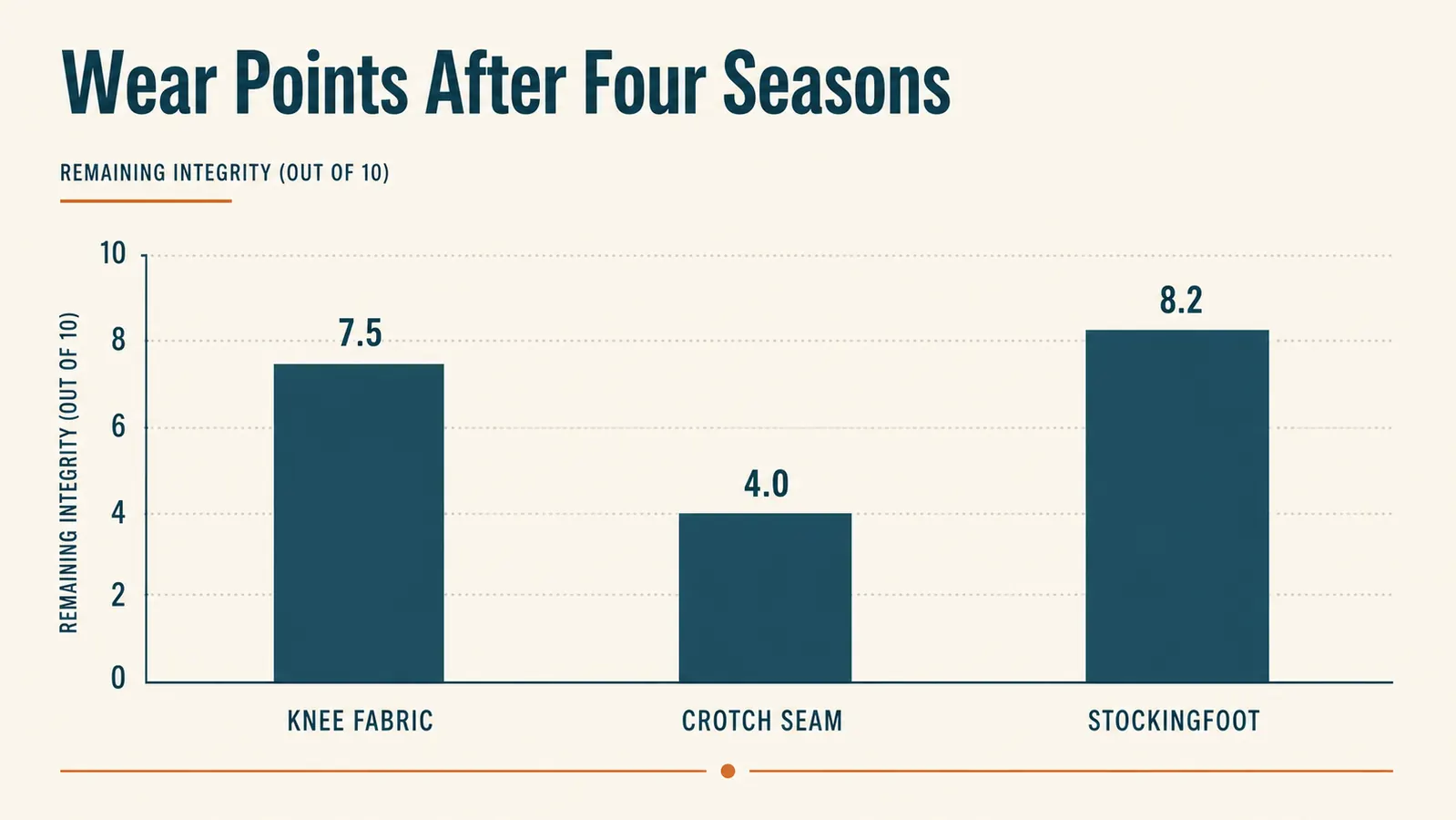
Beyond that first knee leak, the crotch seam is the other spot I keep an eye on, since it takes constant stress every time you climb in or out of the boat or step up onto a riverbank. Mine is still fully intact after seven seasons, no seep, no visible fraying, though I did notice the seam tape starting to lift very slightly at one corner last fall. I re-sealed it with seam grip before it became an actual leak, which took about ten minutes and has held through this spring's high water.
The knees, beyond that first patched spot, show general fabric thinning that you can feel with your fingers if you press on the material while it's stretched, the kind of wear that tells you these won't last forever but also isn't failing yet. I'd estimate I've got another season or two left in this exact pair before I retire them, which for a wader I bought for under a hundred dollars and have worn essentially every week for seven years, feels like fair value.
Ray's pair, being a season behind mine in total wear, still has tighter knee fabric than mine does, which is a useful side-by-side data point. These wear out gradually and predictably rather than failing all at once, which matters if you're trying to plan when to replace a pair before you're caught out in cold water with a real leak instead of a slow seep.
Packing, Storage, and Drying
These pack down small enough to keep a spare pair in the truck, which I've done more than once after forgetting mine at home on a Saturday morning. They roll into a stuff sack about the size of a rolled sleeping bag, nothing like the bulk of my old neoprene waders, which is a genuine convenience for a guy who's already hauling a tackle box, a net, and a cooler down to the water.
Drying has been the one area where I've had to build better habits than I started with. Left folded up wet in a duffel bag, these waders will develop a faint mildew smell within a couple days, especially in humid New England summers. I've gotten better about hanging them inside-out over a fence rail or a boat rail when I get home, which takes maybe two minutes and has mostly solved the smell issue. When I've been lazy about it, a little diluted vinegar rinse handles the smell without hurting the fabric.
Storage over the winter is simple, hung loosely in the garage rather than folded tight in a bag, which I think has actually helped extend the life of the seams by not creasing the same fold lines season after season. It's a small habit that costs nothing and seems to matter more than I expected when I started doing it in year three.
What I Liked
- Breathable fabric is a genuine, noticeable improvement over neoprene on warm days
- Included patch kit makes a leak a fifteen-minute fix, not the end of the waders
- Packs down small enough to keep a spare pair in the truck
- Stockingfoot held up well inside wading boots across seven seasons
- Honest value for a wader worn nearly every week for years
Where It Falls Short
- Inside knee fold is a predictable early wear and leak point
- Fabric feels less rugged against brush and briars than thicker neoprene
- Needs to be hung to dry promptly or it develops a mildew smell
- Stockingfoot bunches slightly inside boots on long six-plus hour days
These aren't disposable waders, they're maintainable ones, and after seven seasons that distinction is worth more to me than a fancier fabric I'd be afraid to patch myself.
Who This Is For
This pair is for the weekend river and pond angler who wades regularly, wants real breathability on warm days, and doesn't mind doing a little basic maintenance to get years out of a budget wader. If you fish the way I fish, most Saturdays on the Merrimack or around Winnipesaukee's feeder streams, with an occasional cold shoreline evening thrown in, the Frogg Toggs Hellbender will hold up for multiple seasons as long as you patch small leaks early and hang them to dry instead of leaving them folded wet.
Who Should Skip It
If you're wading heavy brush and blackberry thickets several times a week, or you're guiding clients and putting these through daily commercial-level abuse, spend more on a heavier, more puncture-resistant fabric built for that kind of punishment. I'd also steer someone away from these if the idea of patching a wader yourself sounds like a dealbreaker rather than a minor chore, since a leak at some point is close to guaranteed with fabric this breathable. For an occasional angler who wades a handful of times a year, a cheaper set might make more sense than paying for durability you won't put to use.
Seven seasons in and still my first pick off the hook.
If your current waders are leaking, stiff, or just miserable on a warm afternoon, check today's price on the Frogg Toggs Hellbender and see if they fit your weekend lineup.
Amazon Check Today's Price on Amazon →