
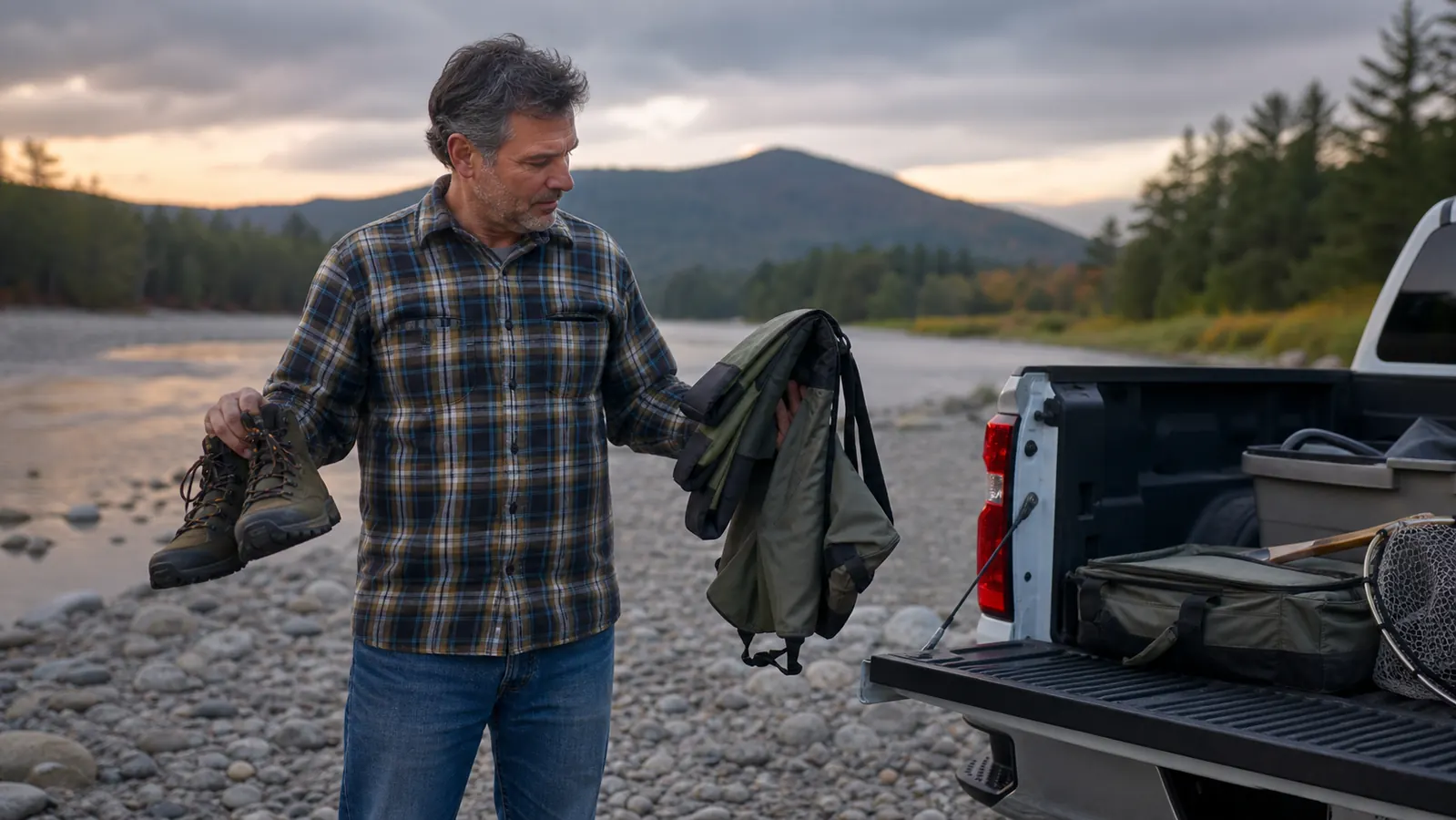
The box showed up on a Tuesday, and I remember standing in my driveway pulling a pair of Frogg Toggs Hellbender stockingfoot chest waders out of the plastic, size XL, figuring I was set for Saturday's trip up to the Merrimack. I wasn't. What nobody mentions in the product listing, and what I didn't think to ask before I ordered my first pair years back, is that stockingfoot waders don't come with boots. You either wade in them barefoot, which nobody serious about river bottoms actually does, or you buy a separate pair of wading boots to lace over that neoprene sock end, and that second purchase adds anywhere from sixty to a hundred and fifty dollars onto what looked like a hundred-dollar wader on the screen. I want to get that out of the way up front, because it's the single most common surprise I hear about from guys who order online instead of walking into an actual tackle shop and having someone walk them through it first, the same way I wish someone had walked me through it before I hit the buy button that first time.
This isn't the season-by-season wear report. I've already written that one, about how these same waders held up through leaks and patches and a stockingfoot that outlasted my expectations. This is the other conversation, the one that happens after the box arrives and the surprises start showing up: the bootfoot-versus-stockingfoot decision that trips up more buyers than it should, the sizing mess that comes from not accounting for what you're actually wearing underneath, what 'breathable' really delivers when it's ninety degrees on the bank in August, and the honest truth about how long any wader in this price range is built to last before it needs a patch or a replacement. None of it is a knock against the product. It's the stuff I wish somebody had told me before I spent my own money, and it's the stuff most listings and most five-star reviews skip right over because it's not flattering, it's just true.
The Quick Verdict
A genuinely capable stockingfoot wader for the price, but budget for wading boots and an eventual patch, since the box alone doesn't cover either one.
Amazon Check Today's Price →Before you order stockingfoot waders, know what else you'll need to buy.
I found out the hard way that wading boots aren't included. Here's what the Frogg Toggs Hellbender actually costs once you factor in everything nobody mentions in the listing.
Amazon Check Today's Price on Amazon →The Boot Question I Got Backwards My First Time
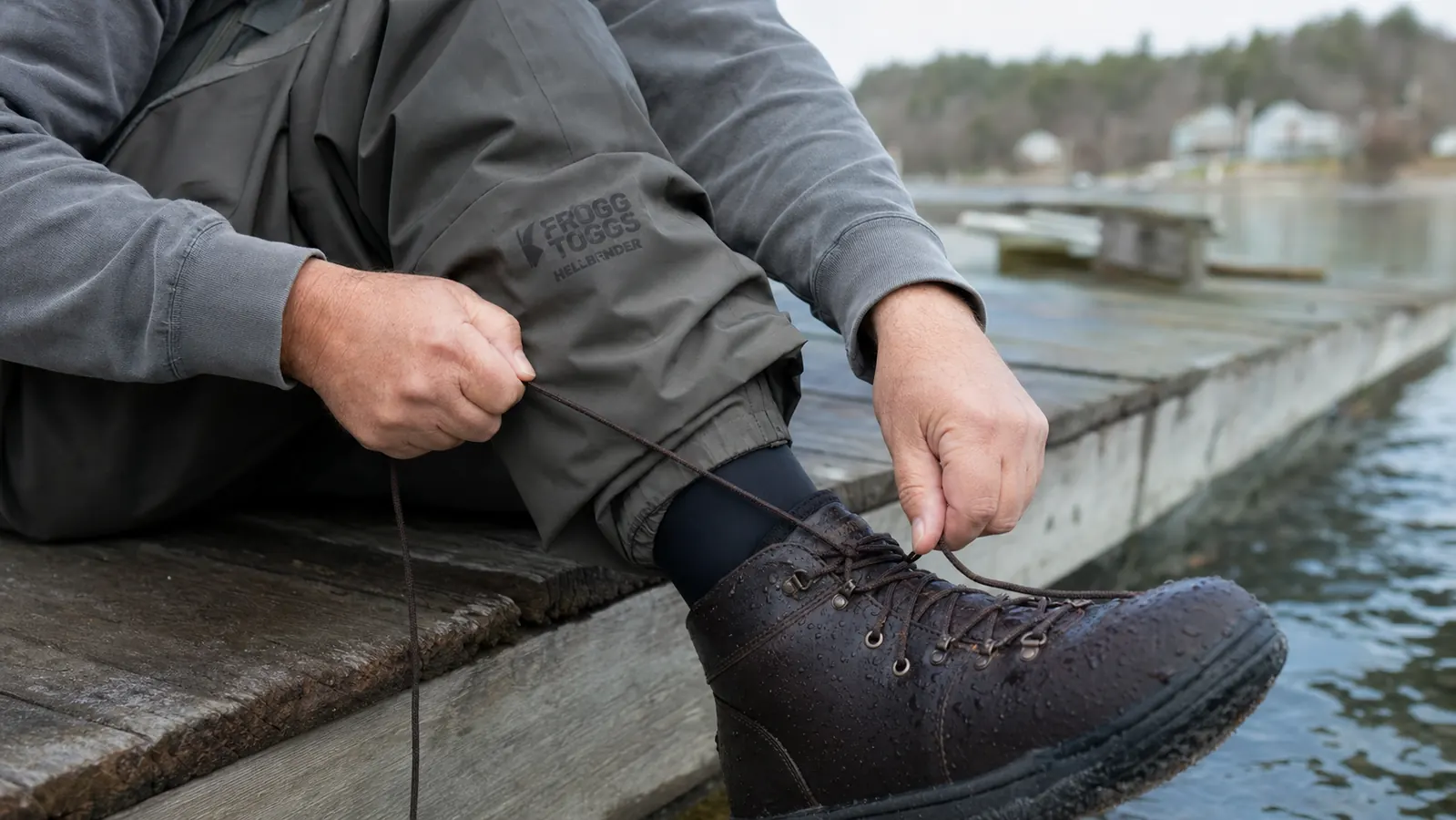
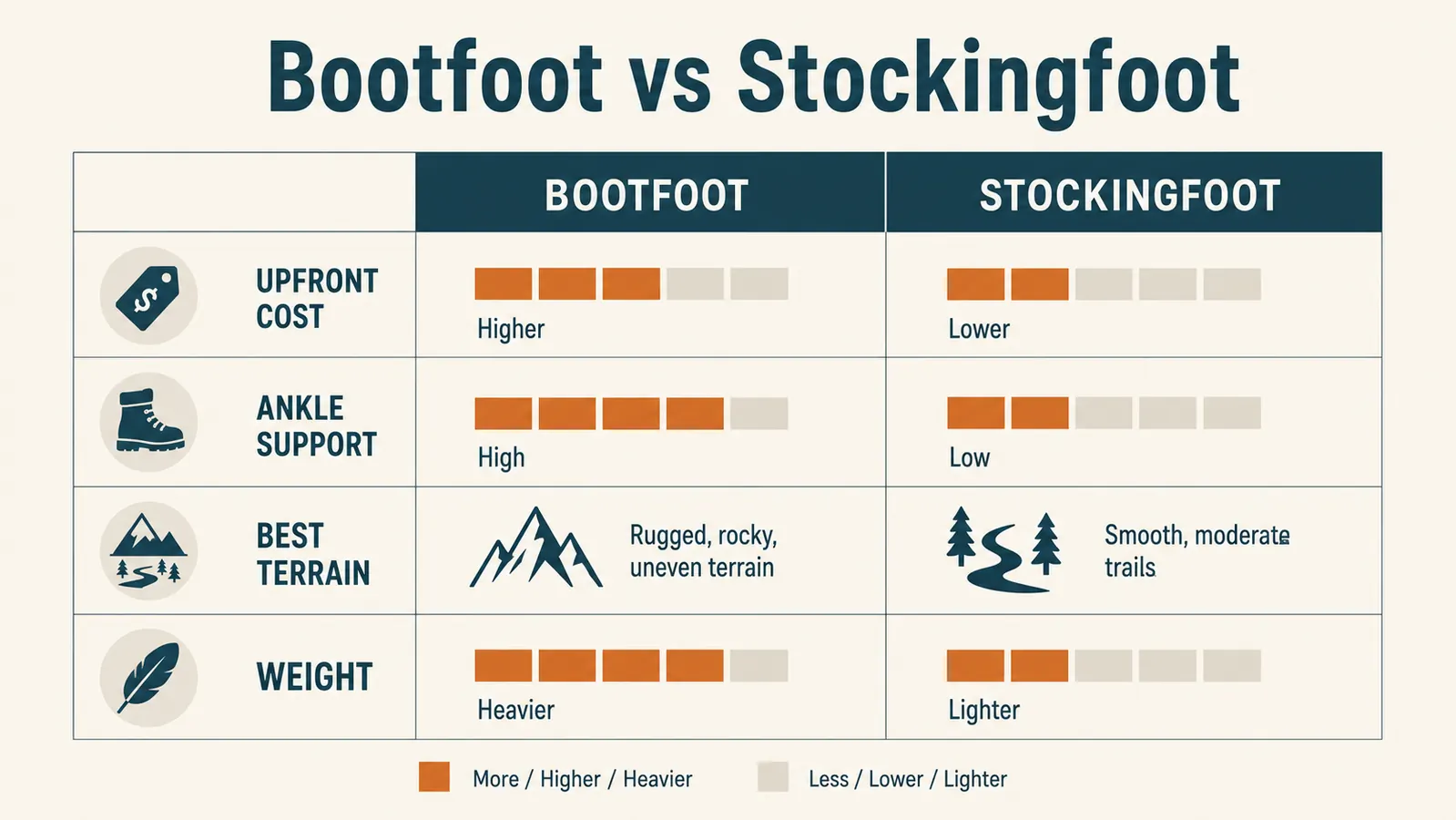
Here's the mistake I made, and the one I still see other guys make at the boat launch. Bootfoot waders have the boot built right onto the wader, one piece, step in and go. Stockingfoot waders, which is what the Hellbender is, end in a neoprene sock and require a separate wading boot laced over the top, the same way a wetsuit bootie needs a dive boot. I bought stockingfoot my first time because it was the cheaper number on the page, without registering that I still needed to spend another sixty or seventy dollars minimum on boots before I could actually get in the water. By the time I added a basic pair of lace-up wading boots to the cart, my hundred-dollar wader purchase had turned into a hundred-and-sixty-dollar outfit, and nothing in the listing had warned me that was coming.
The tradeoff runs the other direction too, and it's worth saying plainly. Bootfoot waders are simpler and cheaper up front, but the boot is molded rubber, heavier, and offers nowhere near the ankle support or traction of a real wading boot with a felt or rubber lug sole. If you're climbing over the rocky stretches below the Hooksett dam the way I do most Saturdays, or working uneven gravel bars where a turned ankle ends your day fast, the stockingfoot-plus-boot combination is worth the extra cost. If you're mostly standing on a soft pond bottom or fishing from a boat and only wading the last twenty feet to shore, bootfoot might be the smarter, cheaper call and nobody needs to talk you out of it.
So the real advice, the thing that would have saved me an extra trip to the outfitter, is to decide on your wading terrain before you decide on your wader style. Rocky river bottom and any real distance on foot, spend the extra money on stockingfoot and a proper boot. Mostly flat, mostly short wades, bootfoot will save you money and hassle. I'll also say this once and move on: I always wear a wading belt cinched snug at the waist any time I'm in current above my knees, because a wader that fills with cold water is a real safety problem and not just a comfort one, and a cheap belt is worth it no matter which style you buy. The Frogg Toggs Hellbender is a fine stockingfoot wader, but fine doesn't matter if you bought the wrong category for how you actually fish.
Sizing Over Whatever You're Actually Wearing Underneath
The other order-and-regret mistake is sizing. Most guys size these the way they'd size a pair of jeans, based on their regular waist and inseam, and end up with waders that fit fine over a t-shirt in the garage and feel like a straitjacket out on the water in November with two base layers and a fleece underneath. Chest waders need room for what you're actually going to wear inside them on a cold morning, not what you're wearing when you try them on standing in your kitchen the day the box arrives.
I run one size up from what the chart would suggest for my bare measurements, and that extra room is the difference between waders I can layer up in for a cold shoreline night working streamers and waders that pin my knees and cut off circulation the second I crouch down to net a fish. Ray made the opposite mistake his first year, ordered snug to save on bulk, and spent two winters wading in a pair he could barely bend in without feeling it pull at his hips, and he never once mentioned the fit until I asked him directly why he always looked like he was wading in cast-iron pants.
If you're between sizes, size up, especially if you fish New England shoulder seasons the way I do, ice-out through late fall, where the swing from a September afternoon to a November dawn means the difference between a t-shirt and three layers. A wader that's slightly loose is a minor annoyance, maybe an extra fold at the waist you cinch down with a belt. A wader that's too tight is a real problem the day you actually need to bend, kneel, or climb over a rock, which in river wading is most days, not just the occasional one.
What 'Breathable' Actually Delivers on a Hot Day
Breathable is the word every wader maker prints on the box, and it's not false advertising, but it's also not what people picture. Breathable fabric moves some water vapor off your skin, which matters, but it doesn't turn a ninety-degree August afternoon into a comfortable day standing in the sun in what amounts to a full-body rubber suit. I've sweat through a shirt underneath these waders plenty of times on hot summer wading trips, and anyone telling you breathable fabric solves that entirely is selling you something.
What it actually does, and does well, is the comparison that matters, which is against old-school neoprene. My previous waders, solid neoprene, turned every warm day into a sauna I could feel dripping down my legs by lunchtime. The breathable fabric on these is a real, noticeable improvement over that, just not a miracle. On a genuinely hot day I still plan around it, fishing early mornings and evenings rather than standing in full sun at noon, and that's true no matter which breathable wader you buy in this price range.
The honest expectation to set is this: breathable buys you comfort on the shoulder-season days, spring and fall mornings where neoprene would have you sweating by nine o'clock, and it buys you a noticeably drier, less clammy feeling on any day compared to rubber. It does not buy you comfort standing in full August sun for six hours straight. Nothing at this price point does, and anyone who tells you otherwise hasn't worn a pair through a real New England summer, sweat-soaked shirt and all.
How Long a Wader in This Price Range Actually Lasts
Nobody wants to hear this, but here it is plainly. No wader in the hundred-dollar range, from any brand, is built to last a decade without a patch. I've owned enough gear at this price point to know the pattern by now: a season or two of hard use before the first small leak shows up, usually at a knee fold or a seam, followed by a patch that buys you several more seasons if you take care of it. That's not a defect, and it's not the Frogg Toggs Hellbender being cheaply made. It's just physics. Breathable fabric that flexes at the knee every time you bend eventually wears thin there, the same way a pair of jeans wears through at the knee before anywhere else.
The mistake I see buyers make is treating a leak as proof they got a bad pair, when a patchable slow leak after a season or two of real use is closer to normal than exceptional. Every wader in this class ships with, or should have you buying, a small repair kit, and learning to use it in the ten minutes it actually takes is worth more than agonizing over whether you should have spent three hundred dollars on a premium pair instead. A warranty claim over a single small leak after honest use usually goes nowhere anyway, because wear like that isn't a manufacturing defect, it's the cost of wading in fabric instead of steel, and no manufacturer is going to argue otherwise once you describe how many hours you've actually put on the waders.
If you want a wader that genuinely shrugs off years of abuse without ever needing a patch, that wader exists, and it costs three to four times what this one does. For most weekend anglers, myself included, that math doesn't pencil out. Buy a wader in this range expecting to repair it eventually, budget the ten minutes and the few dollars for a patch kit, and you'll get several honest seasons out of it. Expect it to never need attention and you'll feel cheated the day it inevitably does, and that's on the expectation, not the wader itself.
What I Liked
- Genuinely breathable compared to neoprene, a real comfort gain on shoulder-season mornings
- Stockingfoot design pairs with a proper wading boot for real ankle support on rocky bottoms
- Includes a repair kit that actually works and holds for multiple seasons per patch
- Priced low enough that budgeting for boots and an eventual patch still comes in well under premium waders
- Sizes up comfortably over cold-weather base layers if you order one size larger than your bare measurements
Where It Falls Short
- Stockingfoot design means budgeting sixty to a hundred and fifty dollars more for wading boots nobody mentions upfront
- Breathable fabric still gets warm standing in full summer sun for hours
- Knee-fold leaks are close to inevitable after a season or two of hard wading
- Runs snug if you size for bare measurements instead of layered wear
A patch kit isn't a sign something went wrong. It's part of owning a wader in this price range.
Who This Is For
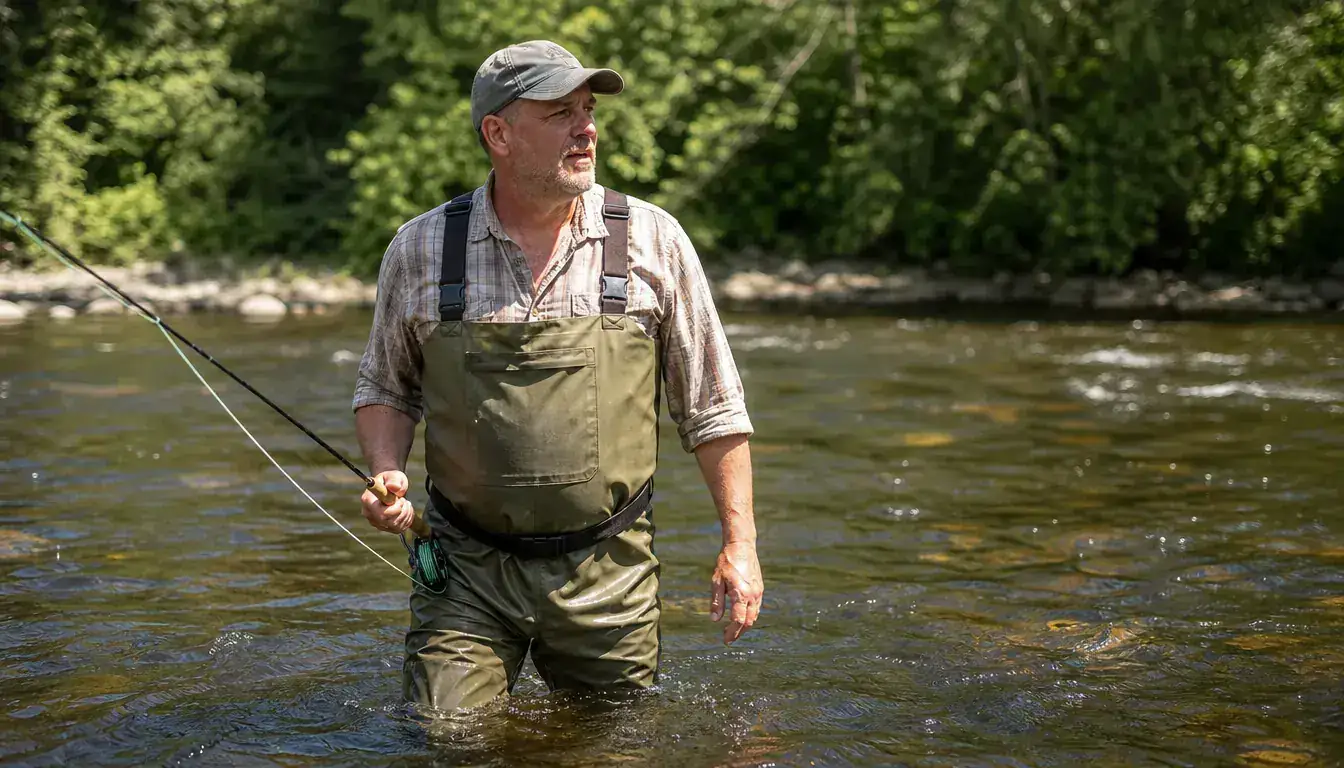
This wader is for the weekend angler who wades rivers and rocky shorelines often enough to want real ankle support, who's willing to buy a separate pair of wading boots and treat that as part of the real cost, and who's fine repairing a leak with a ten-minute patch rather than expecting a decade of trouble-free use out of a hundred-dollar wader. If that's you, and you size up to account for layers, the Frogg Toggs Hellbender does the job well, and it has for both me and Ray across plenty of Saturdays on the Merrimack and around Winnipesaukee.
Who Should Skip It
If you fish mostly from a boat and only wade the last few feet to shore, or you mostly stand on soft pond bottom without much need for ankle support, a bootfoot wader will save you the extra boot purchase and the hassle, and you won't miss what the stockingfoot setup offers. And if you're chasing a wader you'll genuinely never have to patch, this isn't that wader at this price, and no wader is at this price, so save yourself the disappointment and either budget more or adjust the expectation now.
Know what you're actually buying before the box shows up.
Between the boot decision, the sizing, and budgeting for an eventual patch, the Frogg Toggs Hellbender is still a fair deal for a weekend angler who goes in with eyes open. Check today's price on Amazon and decide for yourself.
Amazon Check Today's Price on Amazon →