
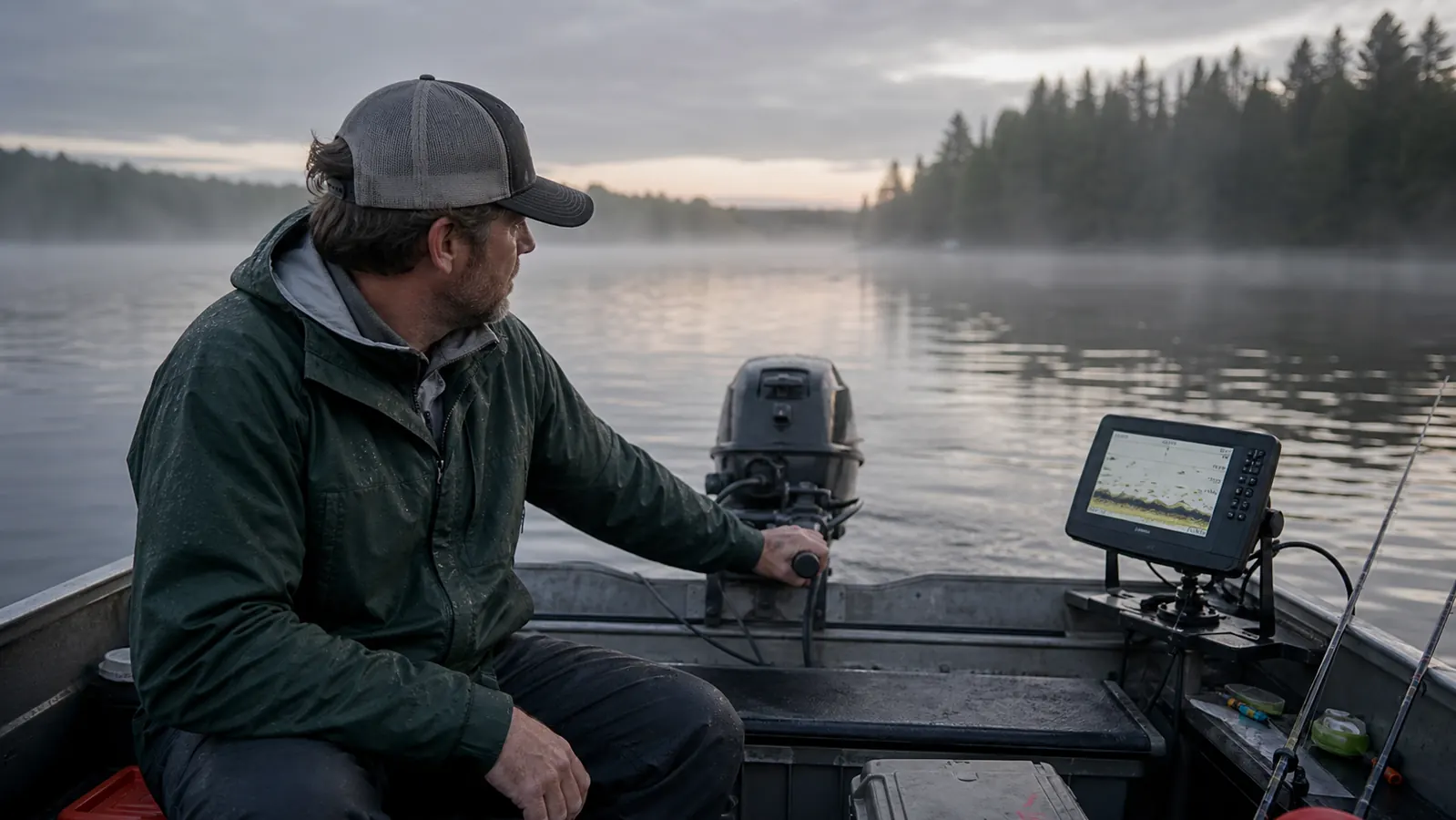
I spent close to fifteen years fishing Lake Winnipesaukee and the Merrimack River without a fish finder mounted anywhere on my boat, telling myself I already knew the water well enough. I know that ledge off the point, I'd say to Ray. A few years back I finally bolted a basic fish finder onto the console of my 16-foot aluminum boat, mostly because Ray wouldn't quit bringing it up, and it took maybe three trips before I realized how many mornings I'd wasted staring at water that looked promising but was actually flat, empty bottom the whole time.
This isn't a list about money made, because a fish finder doesn't put a dollar in anyone's pocket. What it does is save you time on the water, and for a guy who fishes weekends around a job and a family, saved time is worth almost as much. The unit bolted to my transom is a Garmin Striker 4, a basic CHIRP fish finder that costs less than a couple of decent rods, and five seasons in I can point to specific mornings it earned its keep. Here are ten of them, in no particular order.
Still guessing where the fish actually are?
I fished twenty years on memory alone before I put a screen in front of me and saw how much of that memory was wrong. See today's price on the Garmin Striker 4 fish finder and stop idling over dead water.
Amazon Check Today's Price on Amazon →It Showed Me the Drop-off I'd Been Casting Past for Years
There's a spot on Winnipesaukee I fished for close to a decade, always casting toward the shoreline because that's where I assumed the structure sat. The first week I ran a fish finder, I idled out past my usual range just to see what was under me, and there it was: a hard ledge dropping from eight feet to twenty-two feet, thirty yards farther out than I'd ever fished. A fish finder doesn't guess at contour the way you do at the tiller trying to remember where the bottom drops off. It shows the real shape of the lake bed.
It Keeps You From Wasting a Whole Morning Over Dead, Flat Bottom
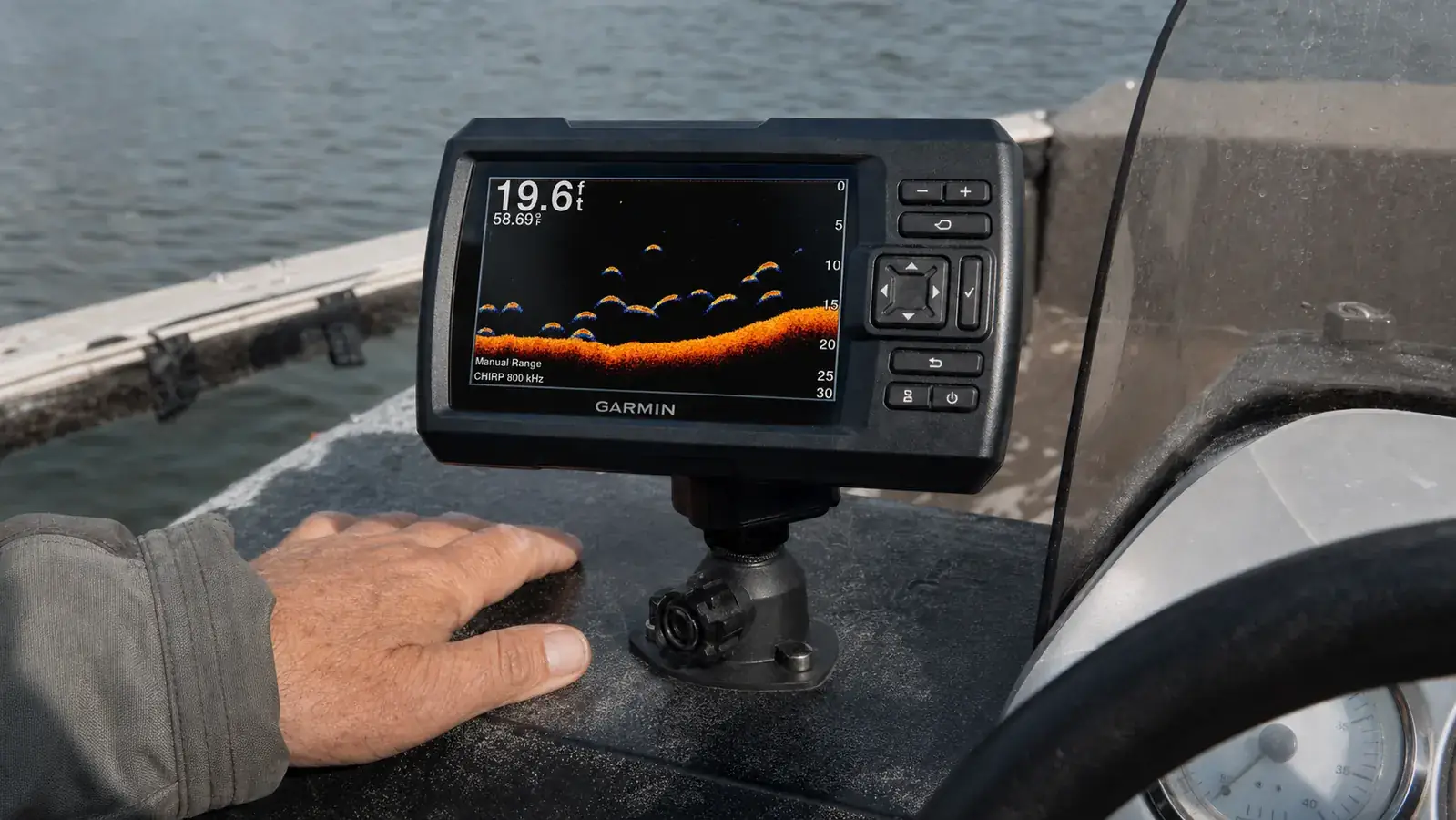
Not every quiet cove is holding fish, and a fish finder is honest about that in a way your gut isn't. I've idled into spots that looked perfect, calm water, some shade, a little current, and watched the screen show nothing but flat, featureless bottom for fifteen minutes straight. No structure, no bait, no arches. Instead of burning an hour on water with nothing living on it, I've learned to trust the screen and move on faster. That's real time back in a short weekend morning.
It Lets You Mark a Spot So You Can Actually Find It Again
Ray and I found a rock pile off one of the islands a few summers back, loaded with fish, the kind of spot you tell yourself you'll never forget. I forgot it anyway, twice, before I started dropping a waypoint on the fish finder the moment we found anything worth remembering. That pile is one of maybe eight or nine marked spots I actually return to. A fish finder with basic GPS turns a lucky afternoon into a spot you can fish again on purpose.
It Tells You Whether the Bottom Is Rock, Sand, or Mud
A soft return on the screen usually means mud or silt, and a hard, sharp return usually means rock or gravel, and that difference matters more than most weekend anglers realize. Soft bottom in a lot of my local coves holds almost nothing worth casting to, while hard bottom near a drop-off is where I mark most of my good spots. Before I ran my Garmin fish finder I judged bottom type by how a jig felt coming back up, which is slow and imprecise next to just reading it off the screen.
It Keeps You From Running Aground in a Cove You Don't Know
Down on the coast, running an aluminum boat into an unfamiliar cove around low tide is a good way to put your lower unit into something you didn't see. A fish finder has shown me a shoal rising up fast in water I would have run through blind, more than once fishing new stretches of the New Hampshire and southern Maine coast. Watching depth in real time as you idle into new water is the difference between a good afternoon and a long call to a tow service.
It Reads Water Temperature Right at Ice-Out
Early spring on the Merrimack, a few degrees of water temperature decides where fish are staging and where they aren't. A basic fish finder reads surface temperature constantly, and I've used that at ice-out to find the one shallow, sun-warmed flat that was three or four degrees ahead of the main lake, exactly where fish tend to bunch up. Without a temperature readout you're guessing off air temperature and gut feel, which rarely matches what's happening under the surface.
It Shows You Bait Before You Commit to a Spot
Structure without bait is just an empty address. I've learned to look for a scattered cloud of small marks near the bottom or suspended over a drop-off before I commit a whole morning to a spot, because that cloud is usually baitfish, and baitfish is why anything bigger showed up. A fish finder shows that cloud clearly enough to tell it apart from weeds once you've looked at the screen a few dozen times. Without it, I used to fish good-looking structure with nothing living around it.
It Gets You Back to a Spot in Fog Without Guessing
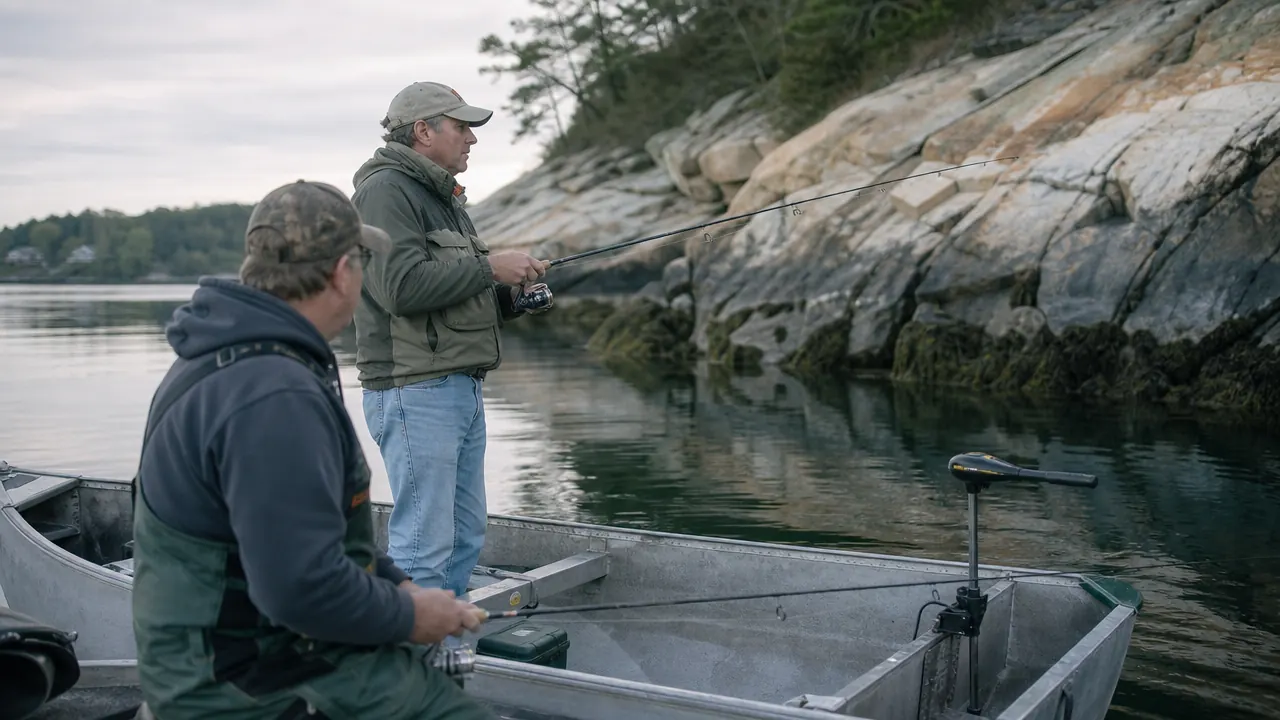
There's a rock pile off one of the Winnipesaukee islands that's nearly impossible to eyeball without landmarks, and on a foggy morning with the shoreline hidden, triangulating off a tree line isn't an option. Idling straight back to a marked waypoint on the fish finder instead of feeling around blind has probably saved me a dozen wasted mornings, mornings that would otherwise have ended with me giving up and heading to open water I already knew.
It Ends the Arguments With Your Fishing Partner About Where to Try
Ray and I used to burn ten or fifteen minutes most mornings just deciding where to start, him leaning on years of reading current seams the old way, me leaning on my own memory of what worked last time. Neither of us was wrong exactly, but the back and forth cost fishing time. Now we idle over a stretch, look at the fish finder together, and decide off what's actually under the boat instead of what either of us remembers.
It Builds a Mental Map of Home Water One Season at a Time
The biggest thing a fish finder has done for me isn't any one trip, it's the slow accumulation of contour knowledge over a full season of running the same lake. Every pass over a stretch of Winnipesaukee adds to what I actually know about that bottom, instead of what I've assumed about it for years. By the end of a season I've got a real, tested picture of where the drop-offs, humps, and dead zones actually sit. That's the quiet payoff nobody talks about: every future trip on the same water gets a little faster than the last.
What I'd Skip
I wouldn't spend real money on a fish finder with features you'll never open, side-scanning detail meant for boats that troll offshore structure all day, or a screen so small it's unreadable in midday coastal glare. For the kind of fishing most weekend anglers actually do, a basic CHIRP fish finder like the Garmin Striker 4 covers the ten reasons above without asking you to learn a manual. Anything fancier than that is solving a problem most of us don't have.
It didn't make me a better angler so much as it stopped me from arguing with water that had nothing under it anyway.
Ten reasons, one small unit, a lot of mornings not wasted.
None of this is about catching more fish than you used to, it's about spending less of a short weekend morning guessing. See today's price on the Garmin Striker 4 fish finder and current availability.
Amazon Check Today's Price on Amazon →