
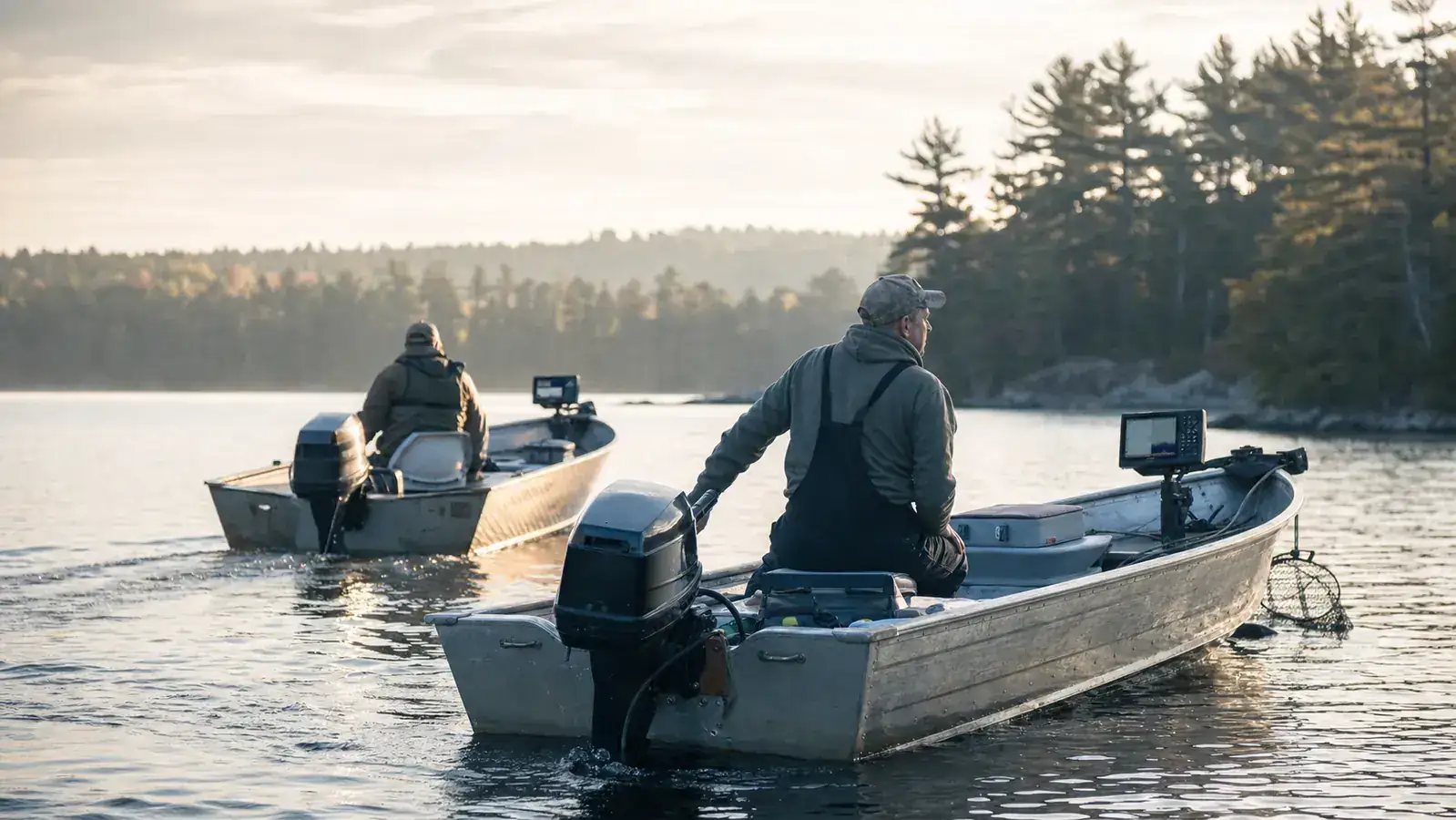
Every summer I get some version of the same question at the boat ramp on Lake Winnipesaukee: should I spend the extra money on a Humminbird Helix, or is the Garmin Striker 4 I've had bolted to my 16-foot aluminum boat for five seasons good enough for someone who fishes most weekends and isn't chasing a tournament trail. I ran that Garmin Striker 4 through five full seasons on Winnipesaukee and the Merrimack River, plus a handful of inshore striper trips off the New Hampshire and southern Maine coast every summer, and my brother-in-law Ray ran a Humminbird Helix on his own boat for a full season last year so the two of us could actually compare real hours on the water instead of guessing off a spec sheet at the tackle shop counter. Short answer first, since I know most of you are standing in a parking lot with your phone out right now trying to decide before you walk inside: for a weekend angler on local water, the Garmin Striker 4 is the one I'd point you toward, and it's the unit linked throughout the rest of this article.
That doesn't mean the Helix is a bad buy, and I want to be straight with you about that instead of just picking a side and cherry-picking the numbers that support it. The Humminbird Helix is a bigger, more capable unit in almost every way that shows up on a spec sheet, a larger screen, sharper resolution, preloaded mapping on most models, and side imaging that the Garmin simply doesn't offer at any price. It should be better. It costs a good deal more too, and depending on the model you're comparing against, sometimes several times more. What this comparison is really about isn't which unit wins on paper, it's whether that extra capability changes anything for how you actually fish a local lake most Saturday mornings, or whether you'd be paying for features that end up sitting unused on a small aluminum boat that mostly sees the same twenty miles of shoreline year after year.
| Garmin Striker 4 | Humminbird Helix | |
|---|---|---|
| Screen Size | 3.5-inch color display | 5- to 7-inch color display depending on model |
| Screen Resolution | 480 x 320 pixels | 800 x 480 pixels or higher on most models |
| Sonar Type | CHIRP sonar with a few adjustable frequencies | CHIRP sonar plus MEGA Down Imaging and MEGA Side Imaging on most models |
| Built-In Mapping / Charts | No preloaded charts, waypoint marking only | Preloaded lake and coastal contour maps on most models |
| GPS Waypointing | Basic GPS waypoint marking and simple routes | GPS waypointing plus a full chartplotter with published lake maps |
| Typical Price Band | Around $130 to $150 | Often $300 to $600 or more depending on model |
| Ease of Install on a Small Aluminum Boat | Compact head unit and transducer, mounts easily on a tiller boat's tight console space | Larger housing and transducer need more console room and more wiring to route |
What the Table Doesn't Tell You
Ray put his Humminbird Helix on a boat almost identical to mine, a similar-sized aluminum hull with a tiller outboard, so this wasn't an apples-to-oranges comparison between a small skiff and a bigger center console with a dedicated helm. His unit genuinely does show more detail than mine, and I don't want to undersell that. When we ran both boats over the same rock pile off one of the islands on Winnipesaukee last August, his Helix screen showed individual rocks in the pile with more separation than my Garmin Striker 4 gave me, and the side imaging picked up a second smaller pile off to the side that my unit simply can't see because it doesn't have that capability built in at all, no matter how you adjust the settings.
But here's the part the spec sheet leaves out. Ray spent most of that first season learning the Helix's menus, figuring out which imaging mode to run in which depth of water, switching between down and side views, and occasionally missing a good stretch of structure because he was still looking down at the screen sorting through settings instead of watching his line or reading the surface for signs of bait. My Garmin Striker 4 has exactly one job, show depth, show fish arches, mark a waypoint, and it does that job without ever asking me to think about it first. For someone who fishes forty or fifty weekends a year and mostly wants confirmation of what's under the boat, that kind of simplicity is worth something the spec table above just can't capture.
There's also the matter of what happens when something goes wrong out on the water. Ray's Helix locked up on him once mid-season, screen frozen on a depth reading from ten minutes earlier, and it took a full power cycle at the dock to sort out. My Garmin has never done that across five seasons, though I'll admit a simpler unit with fewer features has less to go wrong in the first place. Neither of us lost a day of fishing over it, but it's the kind of thing that only shows up after real hours on the water, not in a showroom or a five-minute demo at the counter.
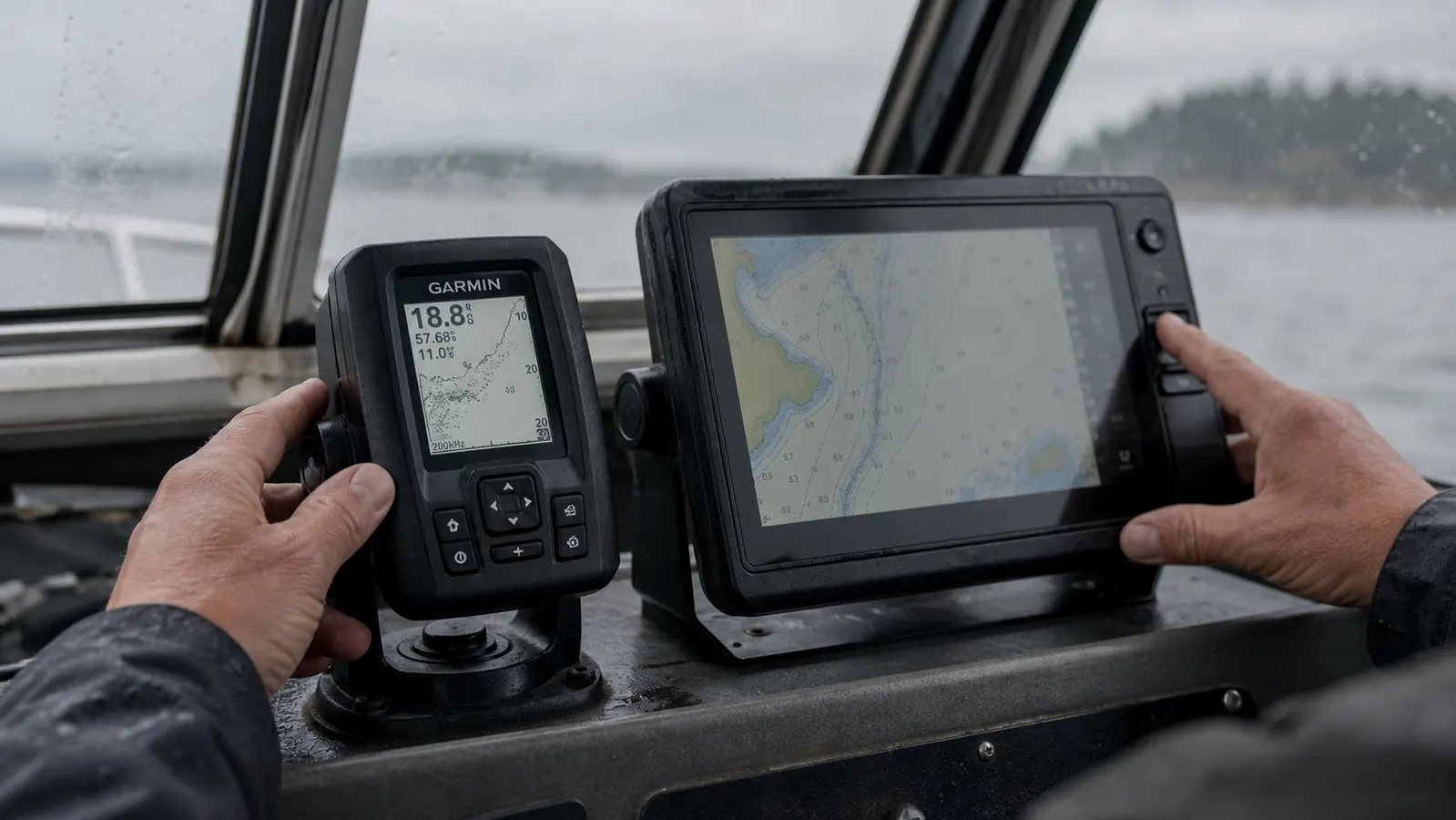
Where the Garmin Striker 4 Wins
Price is the obvious one. A Garmin Striker 4 typically runs somewhere in the ballpark of $130 to $150, which is real money but not the kind of purchase that makes you hesitate before bolting it to a boat you also use for hauling gear, running the dog out to the point, and letting your nephew try casting off the bow without you flinching every time he swings a rod near the console. The Helix, depending on the model, can run two to four times that, sometimes more once you add a card for extra mapping regions. For a weekend angler who fishes local water and doesn't need chart detail on unfamiliar lakes every trip, that price gap buys a lot of gas, tackle, and time on the water instead of sitting in a box on the console.
The second win is install footprint, and this matters more than people expect until they're actually drilling holes in their own boat on a Sunday afternoon. My Garmin Striker 4's head unit and transducer are compact enough that they fit the tight console space on a 16-foot aluminum boat without forcing me to rearrange anything else. Ray had to move a rod holder and reroute a wiring run to fit the Helix's bigger housing and transducer cable on a boat roughly the same size as mine, and he ended up drilling a second hole in the console he hadn't planned on. Neither problem is a dealbreaker for someone who's handy, but if you're working with limited console real estate on a small tiller boat, the Garmin goes in with a lot less fuss and fewer surprises along the way.
Where the Humminbird Helix Wins
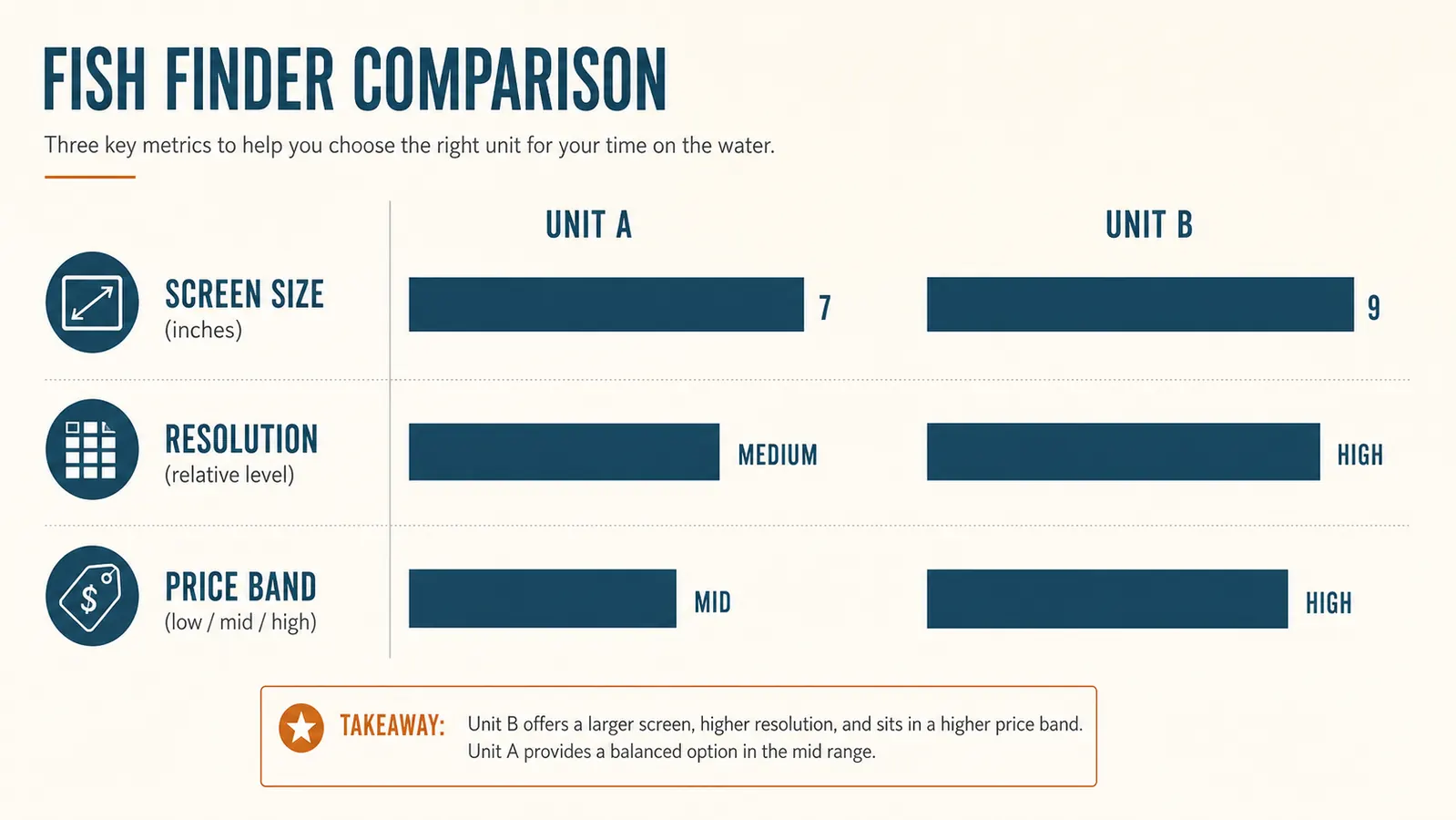
Screen size and resolution are the Helix's biggest advantages, and I'm not going to pretend otherwise just to keep this comparison closer than it actually is. A 5- to 7-inch display with 800 x 480 resolution or better shows fish arches, bottom contour, and structure with a clarity my 3.5-inch Garmin screen just can't match, especially at a glance from across the boat while you've still got a rod in your other hand. If you fish with more than one person aboard regularly, or if you rely on the screen more than I do to actually decide where to cast next, that bigger, sharper display earns its keep on nearly every single trip you take.
The Helix also wins on mapping and imaging, and this is the honest heart of the comparison, the part I'd tell you about even if I weren't writing a full article on it. Most Helix models come with preloaded lake and coastal contour maps, real chartplotting you didn't have to build yourself over years of trial and error, and MEGA Side Imaging that lets you scan structure off to either side of the boat instead of only straight down beneath the hull. On unfamiliar water, especially the kind of coastal striper water Ray and I fish in summer where we don't have twenty years of memory to lean on, having published charts and side imaging is a genuine, meaningful advantage over my Garmin, which only marks waypoints on blank water I have to learn myself, one trip at a time, the slow way.
If Ray and I fished mostly new lakes every weekend, or if we ran a coastal boat that spent whole days scouting water neither of us had ever seen before, I'd probably tell you to skip straight past this Garmin and save up for the Helix instead. Preloaded contour maps save real time on unfamiliar water, and side imaging shortens the guesswork of finding structure you'd otherwise stumble onto by accident. That's a legitimate reason to spend the extra money, and I don't want this comparison to read like I'm talking anyone out of a purchase that genuinely fits how they fish.
Want the simpler, cheaper unit that still finds the fish?
I've run this exact Garmin Striker 4 through five seasons of lake and coastal abuse and it's still bolted to my transom. No menus to fight, no console to rebuild, just a screen that shows you what's under the boat. Check today's price and see what's currently available.
Amazon Check Today's Price on Amazon →
Who Should Buy Which
If you fish local lakes, ponds, and rivers most weekends, run a small aluminum or fiberglass boat with a tiller outboard, and mostly want confirmation of depth, bottom contour, and fish arches without a learning curve eating into your Saturday morning, the Garmin Striker 4 is the sensible buy. It's also a reasonable pick for the kind of light inshore saltwater trips Ray and I make most summers, as long as you're realistic about a small screen in bright glare and no side imaging to lean on when the water gets less familiar. It won't out-spec a bigger unit, and to its credit, it isn't trying to.
If you want a large, sharp screen you can read at a glance from the tiller, published lake or coastal charts you didn't have to build yourself over a decade of fishing, or side imaging to pick apart structure in unfamiliar water, buy the Humminbird Helix and don't feel bad about the extra cost. That's exactly what it's built for, and Ray doesn't regret his purchase one bit, even after the console rewiring and the season it took him to learn the menus. But if you're a weekend angler on water you already know reasonably well, working with a small aluminum boat's tight console space, and you'd rather spend the difference on tackle, gas, and time on the water instead of features you'll rarely open, the Garmin Striker 4 is the one I'd bolt to your transom, and it's the one I keep coming back to season after season.
One last thing worth saying plainly: neither of these units will catch fish for you. Ray still reads current seams and watches for birds working bait the same way he always has, and I still idle out to spots I've fished for twenty years before I even glance at the screen. The Garmin and the Helix both just answer one question a little more precisely than your eyes alone can, what's actually under the boat right now. Pick the one that answers that question in a way that fits your boat, your budget, and how much fiddling with menus you're willing to do on a Saturday morning you'd rather spend fishing.
Simple, affordable, and still bolted to my transom five seasons later.
It won't give you side imaging or a chartplotter's screen, but for a weekend angler on local water it does the one job that matters without asking much in return. See today's price and current availability.
Amazon Check Today's Price on Amazon →