
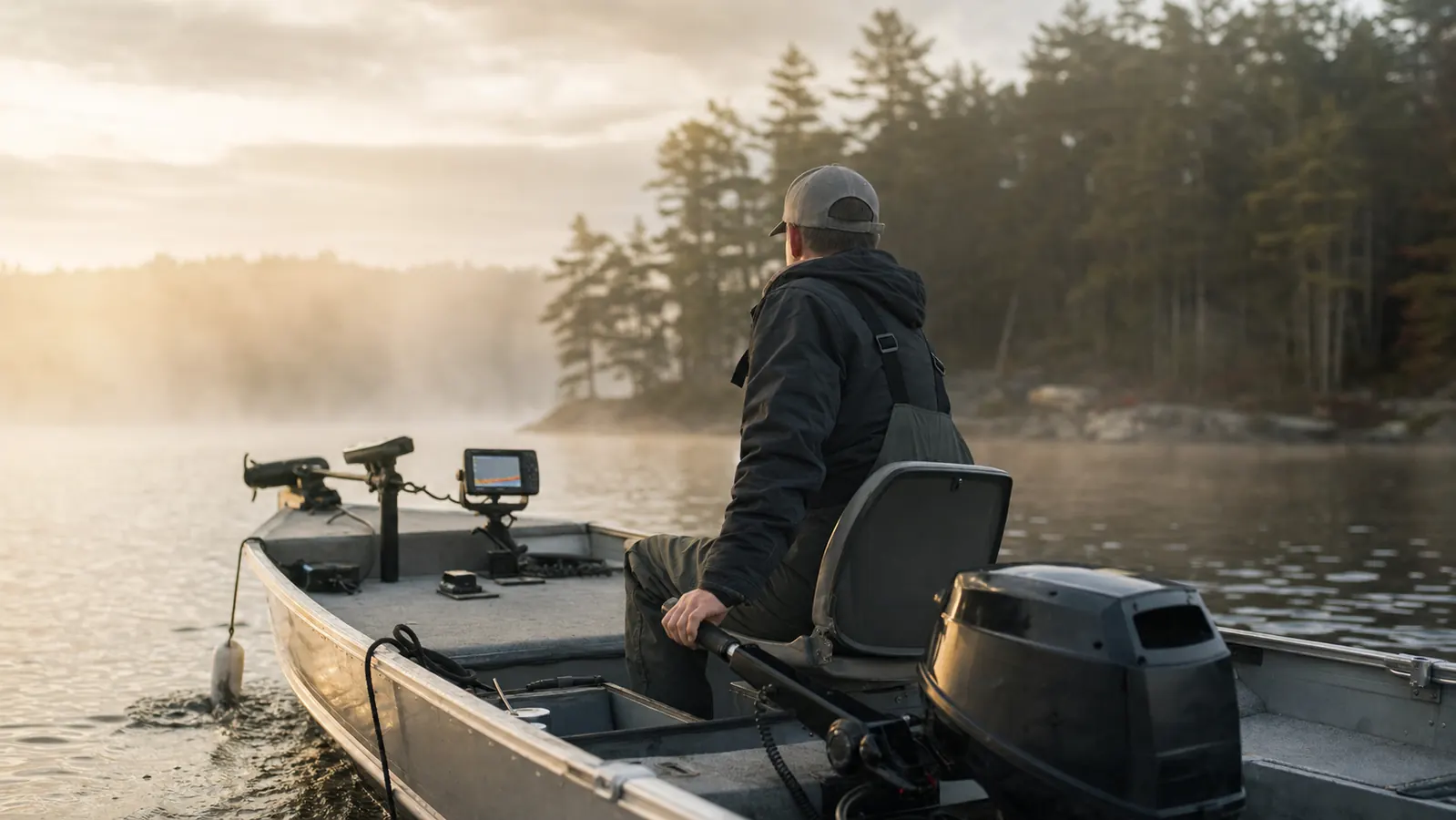
I bolted my first fish finder to the transom of my 16-foot aluminum boat back in 2019, and it lasted about a season and a half before the screen started going dim in the corners and the buttons quit responding half the time. So when I mounted a new unit on that same boat in the spring of 2021, I didn't expect a whole lot from it. Cheap electronics on a small open boat take a beating, between the vibration off the tiller outboard, the spray that comes over the gunwale on Lake Winnipesaukee in any kind of chop, and the fact that it sits in an unheated garage every winter because I don't have anywhere better to store it.
This isn't a review written after a weekend with the box still on the porch. I've run this exact Garmin Striker 4 through five open-water seasons on Winnipesaukee and the Merrimack River, plus a handful of inshore striper trips off the New Hampshire and southern Maine coast every summer with my brother-in-law Ray. What follows is the long version, the kind of thing I'd actually tell Ray if he was starting from scratch: how the transducer mount held up, what the screen does in real glare instead of showroom light, what it pulls off my battery over a full day, whether I used the GPS waypoints for anything beyond marking the boat ramp, and what corroded or cracked along the way.
The Quick Verdict
A basic CHIRP fish finder that does what it says and has survived five real seasons of lake and coastal abuse without babying. Not fancy, but honest.
Amazon Check Today's Price →Tired of guessing where the drop-off actually is?
I spent two seasons idling over water I'd fished for twenty years before I put a screen in front of me and finally saw the ledge I'd been casting past the whole time. Check today's price on the Garmin Striker 4 and see what's actually under your boat.
Amazon Check Today's Price on Amazon →How I've Used It
The unit went on the console of my aluminum boat in April of 2021, wired to a small sealed marine battery I keep dedicated to electronics so I'm never worried about it competing with the starter battery on the outboard. Most of the use is exactly what you'd expect from a weekend angler: Saturday mornings on Winnipesaukee, sometimes a Sunday evening trip if the wind lays down, and June through August a handful of trips out to the coast for striped bass where the water gets a lot less forgiving than a calm New Hampshire lake. Over five seasons that adds up to somewhere around forty to fifty outings a year, which is enough time on the water for the small failures to show up honestly instead of getting hidden inside a single good weekend.
Ray runs the same boat with me most weekends, and he was skeptical of putting a screen between us and the fish. He grew up reading water the old way, current seams, birds working, structure you learn by losing lures on it. I get that. But five seasons in, he's the one who reminds me to charge the battery before we head out, so something changed his mind. He'll never admit the screen taught him anything, but I've watched him glance at it more than he lets on, especially on unfamiliar water down at the coast where neither of us has twenty years of memory to lean on.
I use it the same way every trip. Idle out to a spot I know, watch the bottom contour and the arches for a minute before I even pick up a rod, mark anything that looks promising, then fish it. It's a simple routine, and honestly the screen has changed less about how I fish than I expected. It mostly confirmed things I already suspected about certain drop-offs on the lake, and occasionally showed me I was wrong.
Mounting the Transducer, and What I'd Do Differently
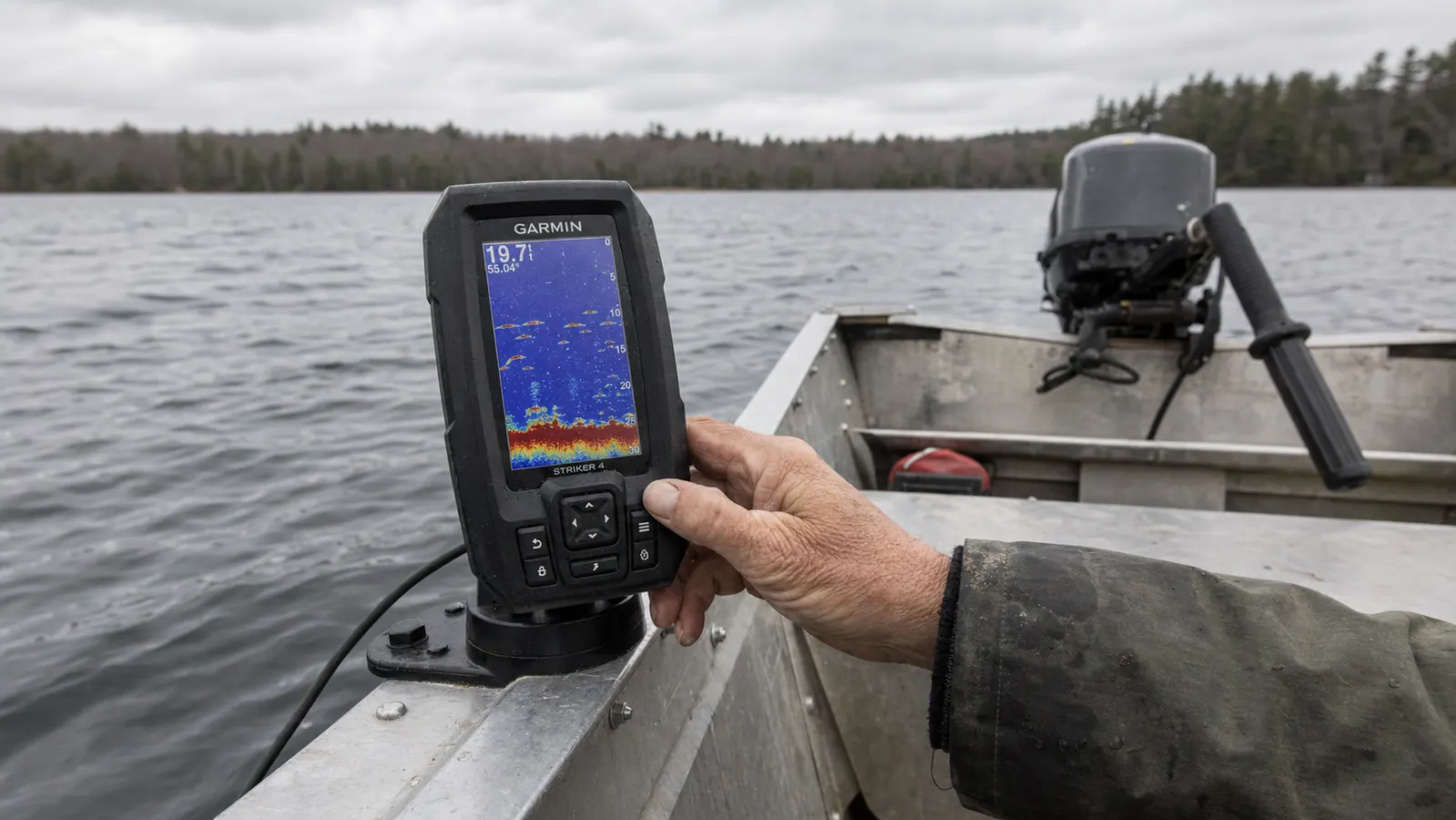
I mounted the transducer on a transom bracket, off to the side of the outboard, which is the standard setup for a small tiller boat like mine. It worked fine at trolling speed and anything under about 15 miles an hour. Push the boat faster than that, especially in any chop, and I'd get intermittent cavitation, a broken-up signal that would clear itself once I slowed back down. That's not a Garmin problem specifically, it's a transducer placement problem, and it's common on small aluminum hulls where there just isn't a lot of real estate to work with.
If I were mounting it again, I'd move the transducer a few inches closer to centerline and slightly higher, and I'd add a second bracket bolt instead of relying on the single-point clamp that came with it. That clamp loosened twice in the first two seasons, once enough that the transducer was aimed at a slight angle for most of a trip before I noticed the readings looked off. Nothing broke, but it's the kind of thing that would frustrate someone who assumes it's set-and-forget.
The cable routing is also worth thinking through before you start drilling anything. I ran mine along the inside of the gunwale and zip-tied it every foot or so, and that's held up fine. The one spot I didn't secure well, near the transom, is where the cable jacket first started to show wear from rubbing against the hull.
Screen Readability in Real Glare, Not Showroom Light
The 3.5 inch screen is small, and I want to be upfront about that instead of pretending it's not a factor. In overcast conditions or early morning light, which is honestly most of my time on the water, it's plenty readable at arm's length from the tiller. Where it struggles is midday sun on Winnipesaukee in July, especially with any glare bouncing off chop. I have to cup a hand over it or angle the mount down slightly to cut the reflection, and even then the colors wash out some.
On the coast it's a similar story but worse, because saltwater glare off open water is a different animal than lake glare. On a bright August afternoon looking for stripers off the Maine coast, I've had stretches where I was basically running blind on the screen and just fishing structure I already knew. I bumped the brightness to max and it helps some, but it also burns through battery faster, which matters over a full day trip.
Battery Draw Over a Full Day on the Water
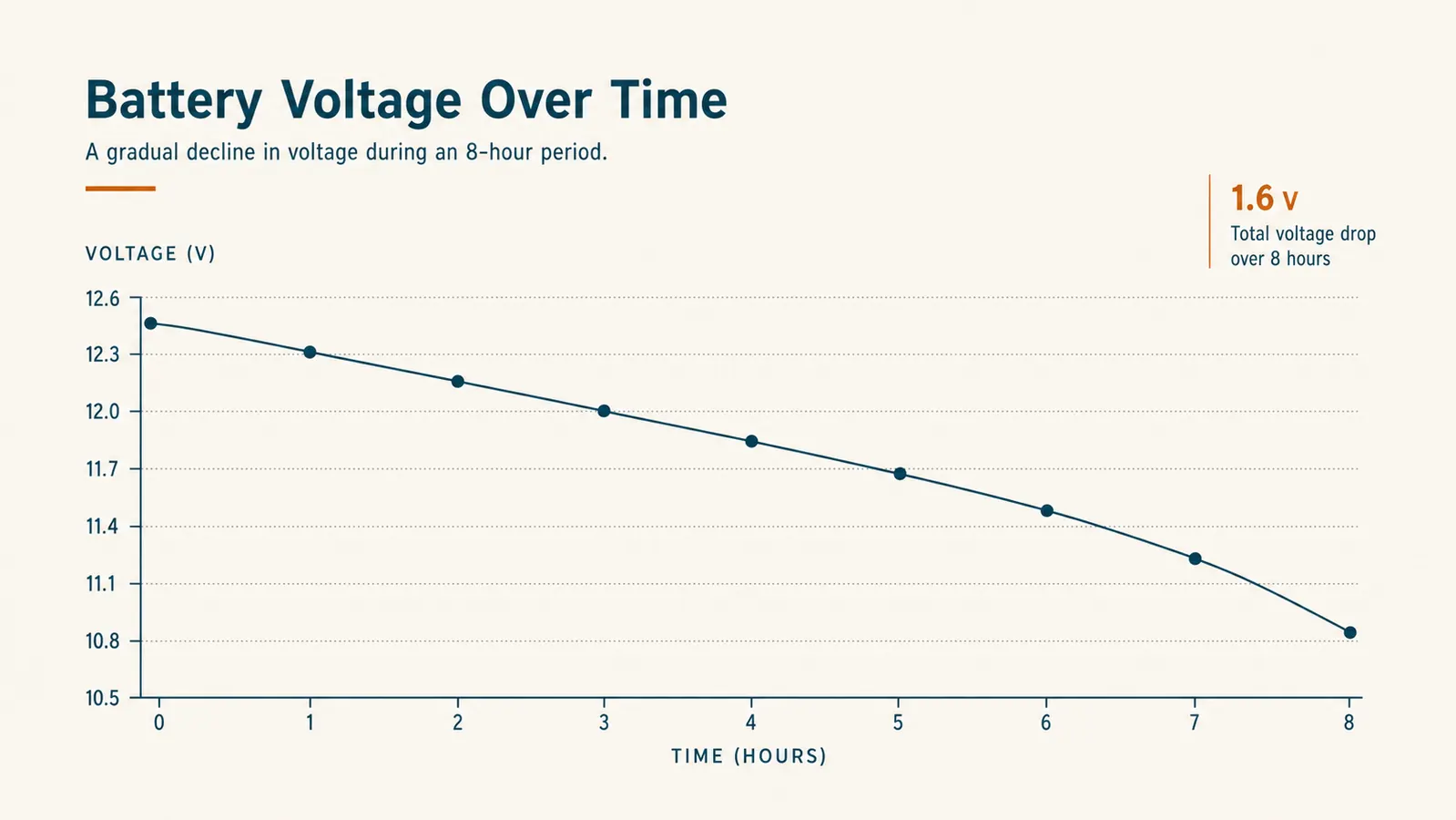
I run the unit off a small sealed 12 volt marine battery, nothing fancy, maybe 20 amp hours. On a typical 6 to 8 hour day with the screen on the whole time and brightness set around three quarters, I'll see the voltage sag noticeably by the end but it's never left me without power. On the coastal trips where I run it at full brightness to fight the glare, I've had it drop enough by hour six that I started rationing screen time, switching it off between spots instead of leaving it running.
Cold weather changes this math. Early spring trips on the Merrimack when the air is still in the 40s, the battery just doesn't hold the same charge, and I've learned to bring a second battery along for those trips rather than get caught with a dead screen an hour from the launch. None of this is unique to this particular fish finder, it's just how small sealed batteries behave, but it's worth planning around if you're used to running electronics off a bigger boat's system.
How the GPS Waypoints Actually Got Used
This is the part I was most curious about myself when I started using the Garmin, because I wondered if I'd actually use the mapping and waypoint features or just let them sit there unused. The honest answer is somewhere in between. I've marked maybe forty waypoints on Winnipesaukee over five seasons, a mix of drop-offs, submerged rock piles, and a couple of spots where Ray and I found fish stacked up on a specific outside bend of a channel.
Of those forty, I probably return to eight or nine of them regularly. The rest were marked in the moment, in that excited way you mark a spot right after a good fish, and then never revisited because the conditions that made it good that day didn't repeat, or because I just forgot they were there. That's not a knock on the Garmin unit, it's just honest about how fishing memory actually works for a weekend angler. The waypoints that stuck were the ones tied to permanent structure, not the ones tied to a good afternoon.
Where the GPS earned its keep was actually relocating spots in low visibility. There's a rock pile off one of the islands on Winnipesaukee that's nearly impossible to eyeball without landmarks, and being able to idle straight back to it on a foggy morning instead of triangulating off a tree line has probably saved me a dozen wasted mornings.
What Corroded, What Failed, What I Replaced
Five seasons of saltwater trips mixed with freshwater storage is not a gentle combination for marine electronics, and this unit shows it a little. The transducer cable connector at the back of the head unit developed some green corrosion by year three, visible but not yet affecting the connection. I've since started pulling the connector apart and cleaning it with contact cleaner every spring before the first trip, which has kept it from getting worse.
The transducer mounting bracket itself is the one piece I actually replaced, in year four, after a winter in the garage left it seized up and one of the wing knobs snapped when I tried to adjust the angle. A new bracket was cheap and easy to find, so it wasn't a big deal, but it's the one part of the whole setup I'd call a genuine weak point after long-term use. The screen itself, the housing, and the actual electronics inside have had zero issues, no dead pixels, no moisture inside the display, nothing. I've dropped the head unit once, off the console onto the aluminum floor of the boat, and the only damage was a small scuff on the corner of the housing that hasn't spread or cracked further in the two seasons since.
What I Liked
- Screen and internal electronics have had zero failures across five seasons
- Simple enough that Ray, who isn't a gadget guy, uses it without a manual
- GPS waypoints genuinely helped relocate structure in fog and low light
- Handles both lake and light coastal saltwater use without complaint
- Affordable enough that replacing the one weak part didn't sting
Where It Falls Short
- 3.5 inch screen washes out badly in bright midday glare, especially on the coast
- Stock transducer mount loosened twice and eventually needed replacement
- Cavitation at higher boat speeds on a small aluminum hull
- Battery drains faster than expected at full brightness on long saltwater days
It didn't change how I fish so much as it confirmed twenty years of guessing, and occasionally proved me wrong about a drop-off I'd been casting past the whole time.
Who This Is For
If you fish local lakes and rivers most weekends, run a small aluminum or fiberglass boat, and want to actually see what's under you without spending real money on a big multi-function display, this is a sensible entry point. It's also a reasonable choice for someone who splits time between freshwater and the kind of light inshore saltwater trips Ray and I make every summer, as long as you're realistic about the small screen in bright sun.
Who Should Skip It
If you fish mostly in bright, open, glare-heavy conditions, run a boat fast enough that transducer placement is going to be a constant fight, or you want side-scanning detail to pick apart structure precisely, look at something with a bigger screen and a more forgiving mounting setup. This unit does the basics honestly, but it isn't trying to be more than that, and forcing it into a role it wasn't built for is where I'd expect people to end up disappointed.
Five seasons later, mine is still bolted to the transom.
It won't fix bad transducer placement and the screen isn't built for noon glare on open saltwater, but for a weekend angler on local water, it's held up longer than the electronics it replaced. See today's price and current availability.
Amazon Check Today's Price on Amazon →