
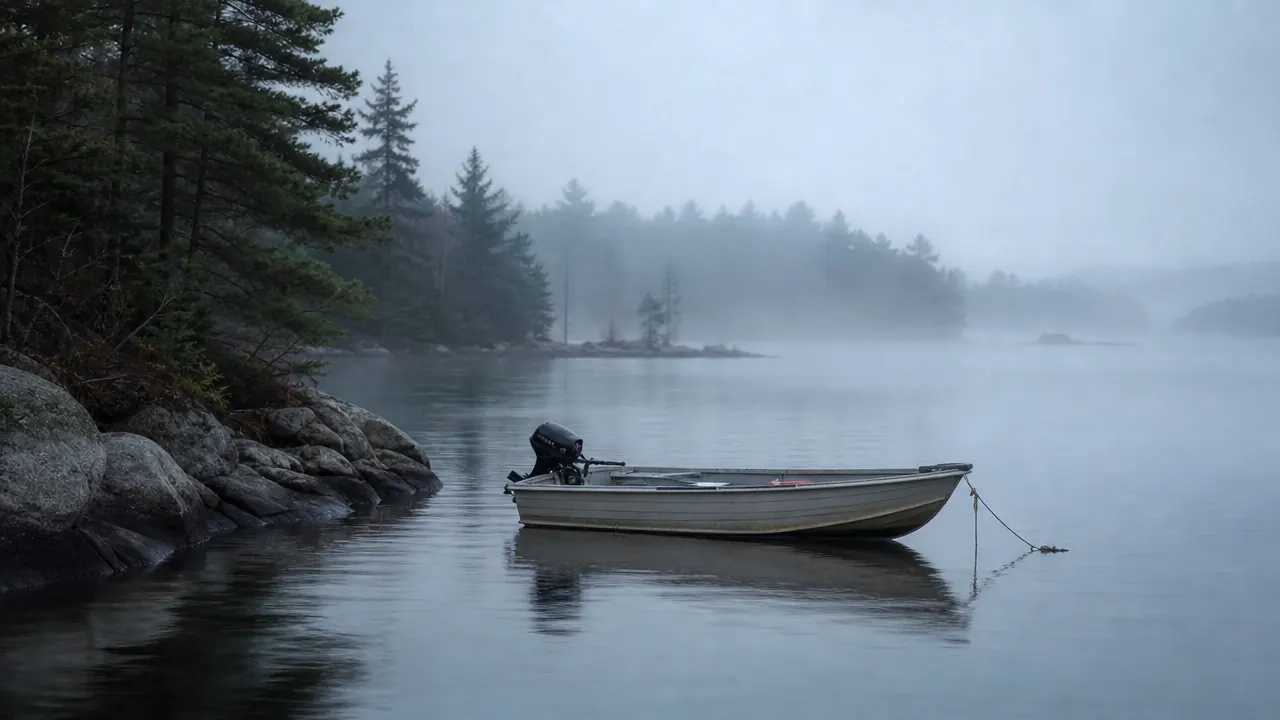
Fog was still sitting on Winnipesaukee the morning I finally admitted something to myself. I was anchored off a cove I've fished every May for better than twenty years, coffee gone cold in the cup holder, my line hanging straight down into water I would have sworn on a Bible I knew. I did not know it. I had a name for that spot and a story about why fish supposedly held there, and not one real fact behind either. That morning it just sat there, flat and quiet, and so did I.
That wasn't a bad morning. It was an ordinary one, and I'd had dozens like it going back to when my father first ran a boat on this lake. I'd built a private geography out of memory alone, none of it measured, all of it inherited instead of earned, and most mornings my faith in it went unrewarded and I blamed the weather or the moon instead.
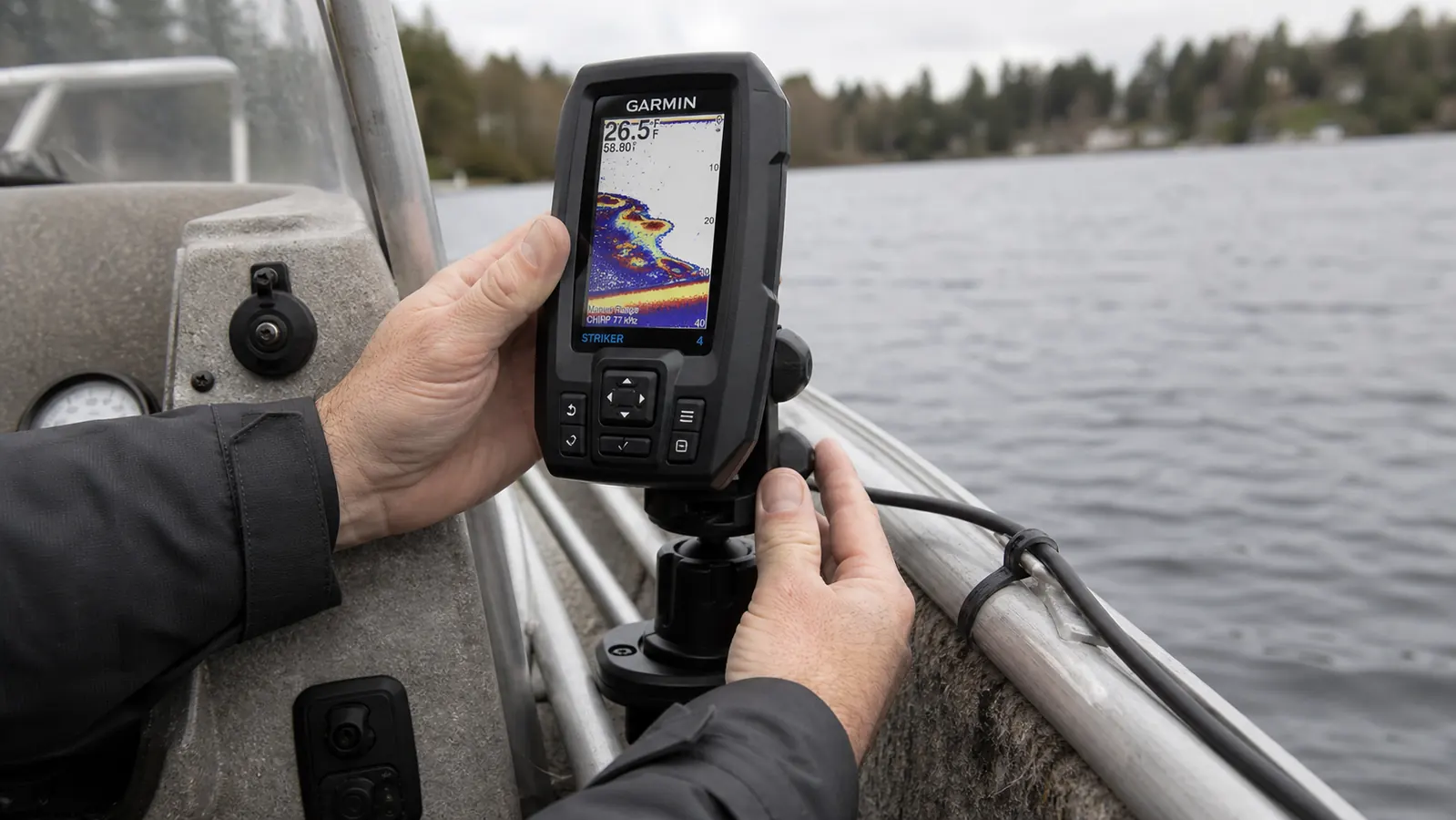
Ray, my brother-in-law, fishes with me most Saturdays, and he'd been running a Garmin Striker 4 on his own boat for a season already, a little GPS fish finder with a transducer that mounts to a transom in about twenty minutes. He kept saying some version of the same thing every week. You're not fishing this water, he'd tell me, you're fishing a story about this water. I finally borrowed his old unit for a weekend, and by August I'd put my own Garmin on the tiller boat for good.
The first time I actually looked at the screen and matched it against what I thought I knew, I felt something closer to embarrassment than excitement. The ledge I'd feathered around for two decades wasn't where I thought it was. It dropped ten feet further out, and the real break in the bottom sat almost thirty yards from where I'd anchored every single May of my adult life.
I'd been fishing the edge of my own imagination the whole time, not the edge of the lake.
If You've Fished the Same Water for Years Without Really Knowing It, Start Here
See today's price and current availability for the Garmin Striker 4 before your next trip out.
Amazon Check Today's Price on Amazon →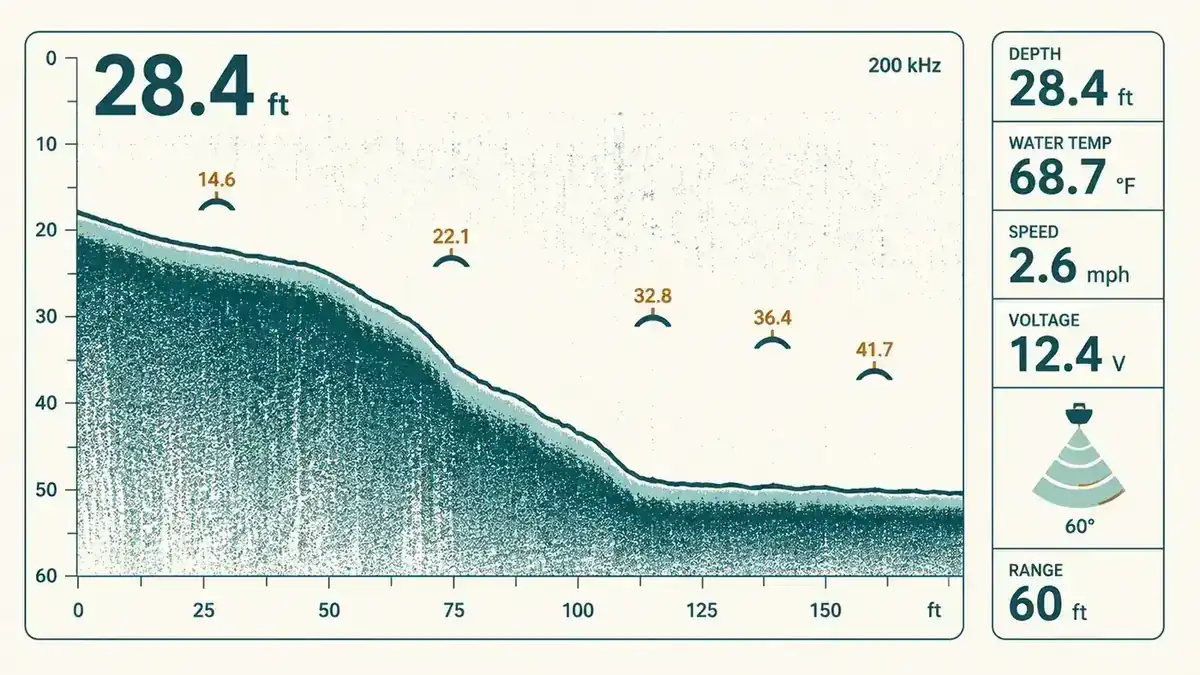
It took most of June to learn to read the thing properly. Ray walked me through the difference between a hard bottom return and a soft one, showed me how the CHIRP sonar drew a cleaner line through the thermocline than his old flasher ever managed, and I spent more than one evening at the kitchen table with the manual open, matching arches on the screen to fish I'd actually felt come up on a line. A bobber teaches you nothing. A screen full of moving lines teaches you constantly, if you're patient enough to sit with it.
By July I wasn't marking spots by the shoreline anymore. I was marking actual structure. A rock pile here, an old stump field there, a drop from eighteen feet to thirty-four that ran nearly the length of a football field and that I had crossed a thousand times without ever knowing it existed. Some mornings were still blank. That part never fully went away, and I want to be honest about that, because plenty of days the fish just weren't there no matter what the screen showed. But blank mornings started meaning something different. I wasn't wondering if I'd picked the wrong spot. I knew I hadn't, and that the fish simply weren't home that day.
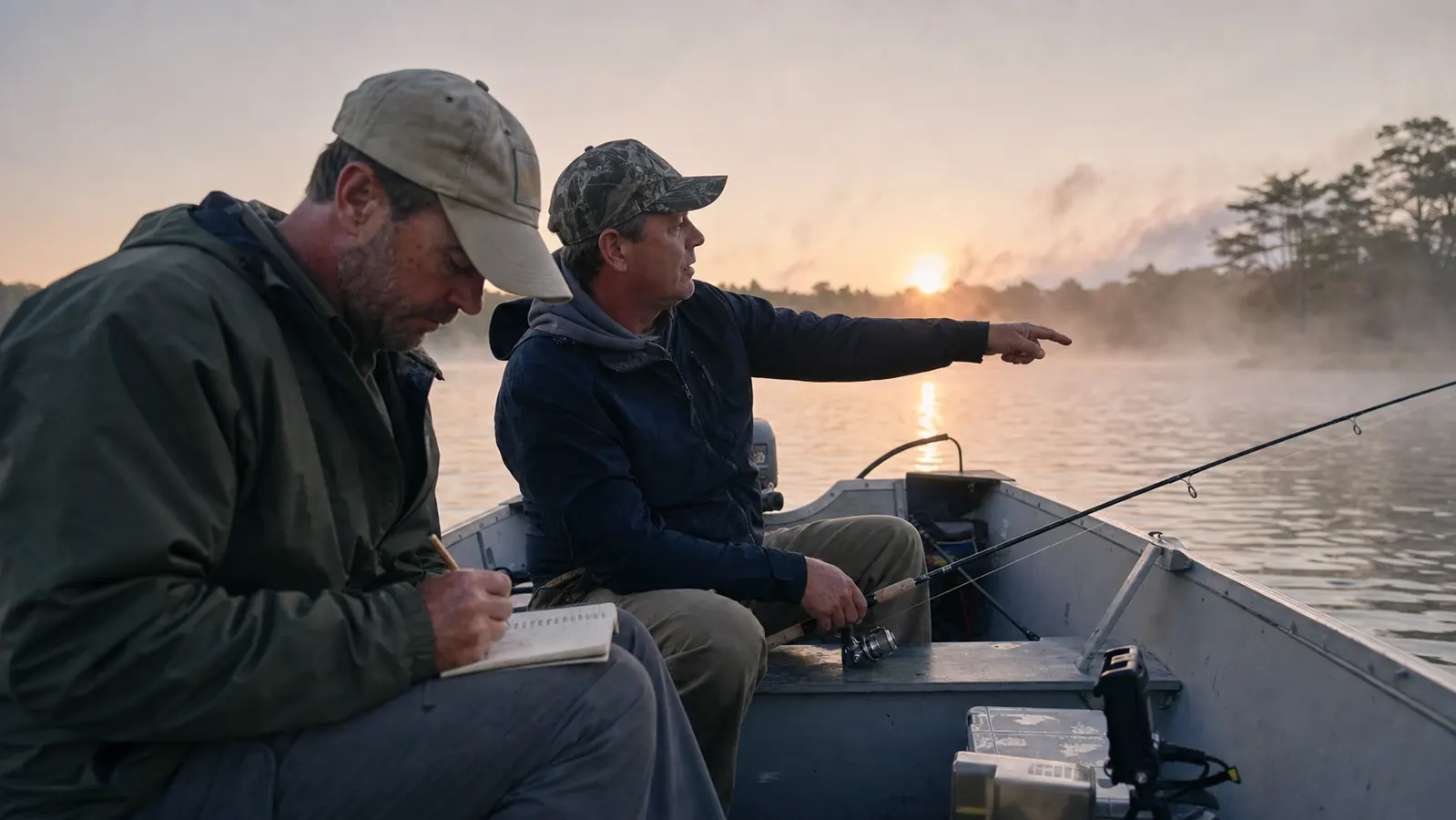
Somewhere around the middle of that summer I stopped thinking of the Garmin as an accessory bolted to my transom and started thinking of it as the thing that finally let me see the lake instead of guess at it. It isn't fancy. It's a small screen, a transducer, and GPS that drops a waypoint the second you find something worth remembering. After twenty years of fishing on faith, having an honest picture of what was under the boat felt less like new gear and more like getting my eyes checked after squinting for two decades.
I didn't land some monster that summer. That's not really the story here. What changed was quieter than that. I started understanding Winnipesaukee the way I'd always assumed I already did, the actual shape of the bottom under water I'd fished since I was a kid, the real reason certain coves held fish and others never did. Ray still teases me about the notebook, the one with two decades of blank mornings logged in it like evidence. I keep it in the dry box now, next to the manual, less a record of failure and more proof of how much I never knew.
What I'd Tell You If We Were Sitting at My Kitchen Table
If you asked me over coffee whether a fish finder is worth it, I wouldn't tell you it catches fish for you, because it doesn't. What I'd tell you is that it ends the guessing, and guessing is expensive in ways you don't notice until you stop doing it. Twenty years of assuming I knew a lake taught me less than one honest season of looking at what was actually down there. If you've fished the same water for years and never really seen it, a Garmin Striker 4 won't turn you into a better angler overnight. It'll just finally show you the lake you've been fishing the whole time.
See the Water You've Been Guessing At
Check today's price on the Garmin Striker 4 and get an honest look at what's under your own boat.
Amazon Check Today's Price on Amazon →