
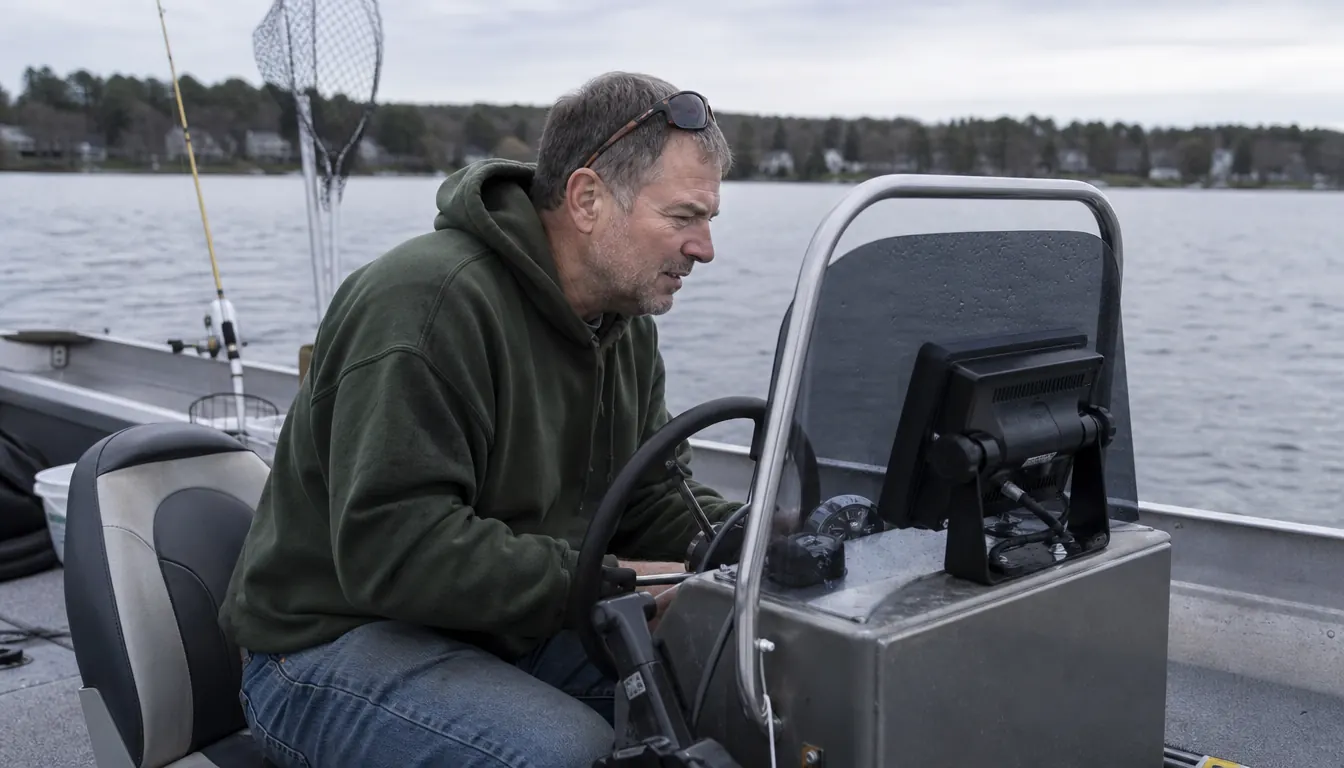
My Garmin Striker 4 has been bolted to two different boats now, and both times I made the same mistake before I bought it. I looked at the box in the store, saw the screen looked plenty bright under the fluorescent lights, saw GPS printed near the top of the packaging, and figured I basically understood what I was getting. I didn't read a single review that mentioned anything past shipping times and battery life estimates. The unit itself is fine, more than fine for what it costs, but there are a handful of things about actually running this fish finder that nobody tells you until it's already mounted on your transom and you're squinting at it on a Tuesday morning.
This isn't the story of five seasons of wear and corrosion. I've already told that one elsewhere. This is the stuff that surprised me and my brother-in-law Ray in the first few weeks, before the unit had a chance to prove itself one way or the other. Ray runs a Garmin unit of his own now too, on a smaller boat he trailers around the Lakes Region, and between the two of us we've fielded enough questions from other guys at the launch to know these same surprises hit almost everyone who buys a Garmin Striker 4 expecting it to behave like the bigger units they've seen on other people's boats.
The Quick Verdict
Solid value if you understand exactly what you're buying: a basic CHIRP sonar and waypoint GPS, not a mapping chartplotter, on a screen smaller than most phones.
Amazon Check Today's Price →Before You Buy the Striker 4, Know What's Actually in the Box
It's a genuinely useful unit for the price, but the listing photos don't show you the screen size in your hand or the wiring you'll need to add. Check today's price and read on before you decide.
Amazon Check Today's Price on Amazon →How I Actually Use Mine Out on the Water
I run mine off the console of my 16-foot aluminum boat, the same rig I've used on Winnipesaukee for years, and Ray runs his off a smaller boat he keeps on a trailer near the Merrimack. Most weekends that means marking depth changes and watching for arches while we idle out to a spot, then switching over to actual fishing once we've picked one. In summer I bring mine along on inshore striper trips off the New Hampshire and southern Maine coast too, where the water changes fast enough that having eyes under the boat matters more than it does on a lake I've fished for twenty years.
None of that is complicated, and if all you want is a straightforward sonar screen showing depth and fish activity, this unit does that part well right out of the box. Where things get more complicated is everything I didn't understand going in, and that's really the point of this review. The long-term wear story is a different article. This one is about the parts of owning a Garmin Striker 4 that only become obvious once it's actually mounted and you're out past the no-wake buoy trying to make sense of what's on the screen.
The 3.5 Inch Screen Is Smaller Than People Expect, and That Matters More Than You'd Think
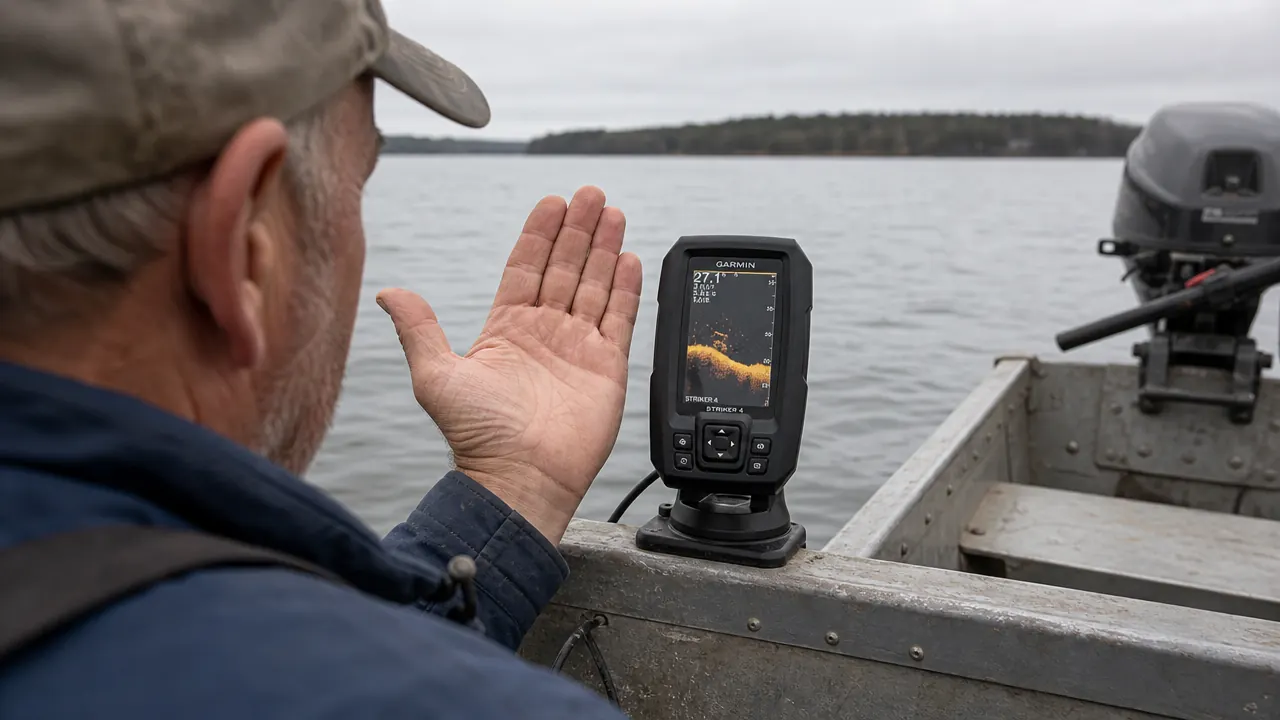
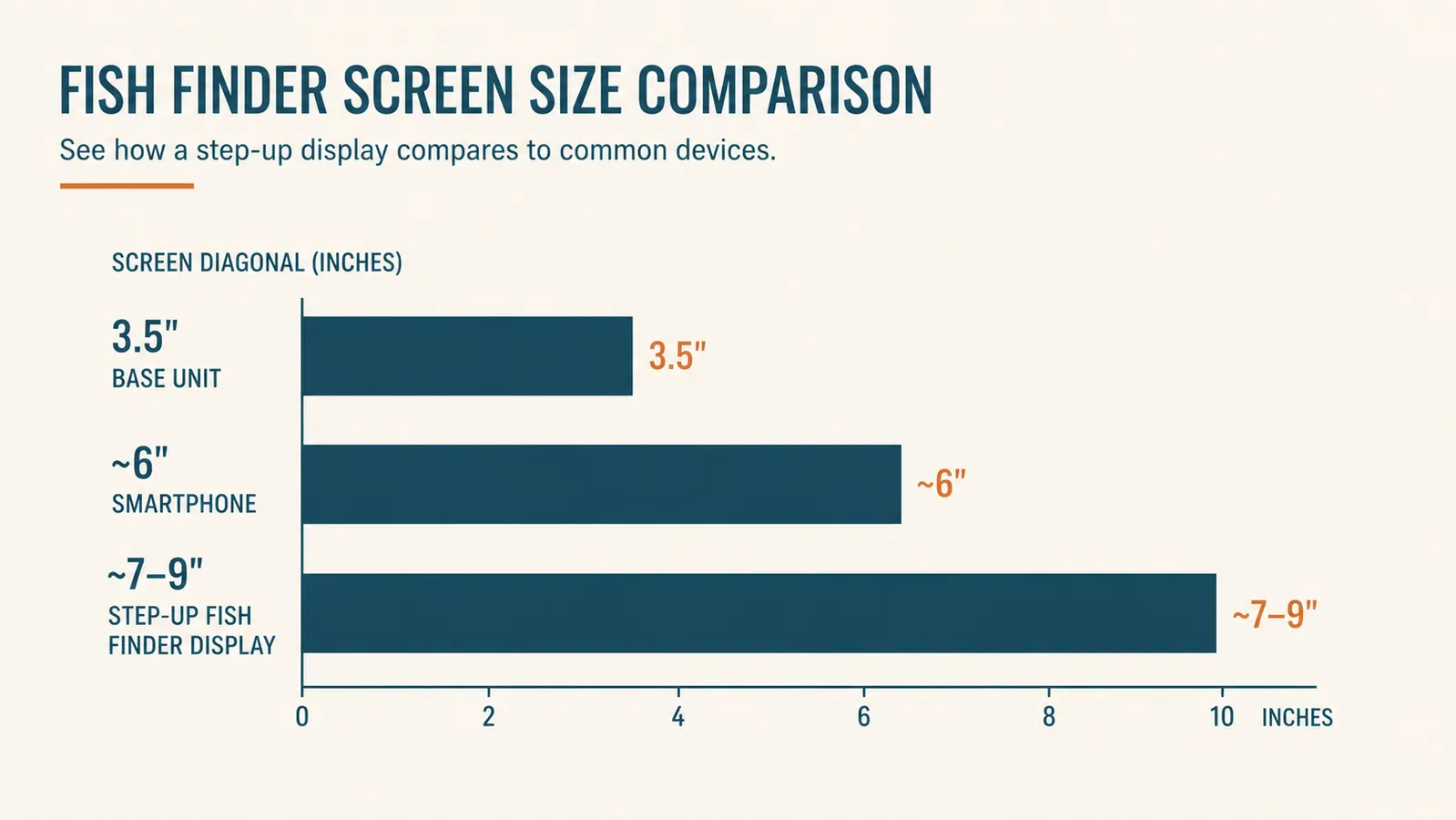
The screen measures 3.5 inches diagonally, and on paper that number doesn't mean much until you're actually trying to read depth numbers and a sonar return at the same time while running a tiller with your other hand. It is genuinely small, smaller than most phones people carry around now, and a fair bit smaller than the display on the step-up Garmin models that sit one shelf over at the same store.
For me, at fifty-something with reading glasses I sometimes remember to bring on the boat and sometimes don't, that size becomes a real factor by midday. I've squinted at it more than I'd like to admit trying to tell a small baitfish return from a scrap of interference. Ray, who's a few years younger and doesn't wear glasses yet, doesn't have the same problem, but even he agrees the numbers along the edge of the screen get cramped once you've got the depth reading, water temperature, and GPS speed all displayed at once.
If you fish with more than one person aboard trying to read the same screen from different seats, or you're the kind of angler who wants to glance at the unit from a few feet away while working a rod, the size is going to frustrate you. This isn't a problem unique to a cheap unit either, it's just physics. A 3.5 inch screen is a 3.5 inch screen no matter how good the software running on it is.
No Charts, No Mapping, and What New Buyers Get Wrong
The single biggest misunderstanding I hear at the boat launch is buyers assuming the GPS on this unit means it comes with lake maps, contour lines, or anything resembling a chartplotter. It does not. The Garmin has GPS for one purpose: marking waypoints and giving you speed and a basic plotter trail so you can find your way back to a spot or retrace where you've already fished. That's genuinely useful, but it is not the same thing as opening a map of a lake's underwater contours and seeing where the channel drops off before you've ever idled over it.
I made this mistake myself the first week I owned mine, expecting some baseline shading that would show deep water versus shallow before I'd ever passed over it. There isn't any. You build your own picture of the lake bottom over time, one pass at a time, by watching the sonar and marking what you find. It's slower than a mapping unit, and if you're coming from a boat that had one, or you've seen a buddy's pricier fish finder with real chart data loaded in, this will feel like a step backward at first.
Once I adjusted my expectations, it stopped bothering me. Most of my fishing happens on water I already know reasonably well, so building my own waypoint history over a season or two was never a huge burden. But if you're planning to run this on new water every weekend and expecting it to hand you a map, that's the wrong expectation to walk in with, and it's the number one reason I see people call this unit a disappointment when the real issue is what they assumed it did.
The Power Setup Nobody Mentions at This Price
The unit itself is affordable, but nothing in the box tells you it needs its own dedicated power source, and that detail changes the real cost of getting this thing running. There's no built-in battery. You need a 12 volt source wired to it, which for most small aluminum or jon boats means either tapping into your existing marine battery or, better, running a small separate sealed battery just for electronics the way I do on mine.
That second battery, the mounting hardware, wire, connectors, and a little marine-grade wire loom if you want it to look clean instead of a rat's nest under the console, adds real money and real time to the setup that the sticker price on the Garmin doesn't hint at. For Ray, it also meant an extra trip to the hardware store he hadn't planned on, because his trailer boat didn't have a dedicated 12 volt circuit for anything beyond the bilge pump.
None of this is a mark against the unit. Every fish finder at this price point works the same way. But if you're budgeting for one and only pricing the head unit and transducer, you're going to come up short. Plan on a battery, wiring, and an hour or two of actual install work before you ever get it on the water, or you'll be standing at the launch with a unit you can't turn on.
Reading Sonar Takes Longer to Learn Than the Box Implies
This is the part that surprised me most, and it has nothing to do with this brand specifically. Reading a sonar screen and actually knowing what you're looking at is its own skill, and it takes longer than a weekend to develop. My first few trips, I marked things that turned out to be nothing and idled right past what I later learned were genuine fish arches, because I hadn't trained my eye yet to tell the difference between a return caused by baitfish, structure, or my own boat's wake bouncing back.
CHIRP sonar, which is what this unit runs, gives you a sharper, more defined return than the older broadband units I grew up with, but sharper still means you have to interpret it. Nobody hands you a key that says this shape is a fish and this shape is a rock. You learn it the same way you learned to read water without electronics in the first place, by being wrong a bunch of times and slowly getting less wrong.
If you're expecting to mount this unit and immediately start marking fish with confidence, adjust that expectation now. Give yourself a full season of paying attention before you trust your own reads. Ray still asks me to confirm what he's looking at more often than either of us would like to admit, and he's not new to fishing, just new to fishing with a screen in front of him.

The Honest Case for Stepping Up a Model, or Not
People ask me fairly often whether they should skip the Garmin Striker 4 entirely and spend more on one of the step-up models with a bigger screen or built-in mapping. My honest answer depends entirely on what water you fish and how you fish it. If you're mostly on familiar local lakes and rivers, fishing the same handful of spots most weekends the way I do on Winnipesaukee and the Merrimack, the money spent on a bigger screen or preloaded charts buys you comfort, not results. You'll build the same knowledge of your water either way, one season at a time.
Where I'd actually tell someone to spend the extra money is if you fish a lot of unfamiliar water, run a boat fast enough that the smaller screen becomes a real strain at speed, or you're regularly out on bigger, glarier water like open coastal trips, where a bigger, brighter display earns its keep. Ray and I talked about upgrading his unit before this last season and decided against it, because neither of us fishes far enough from home water to need what the pricier models offer. But I wouldn't talk someone out of spending more if their situation is genuinely different from ours.
The honest middle ground is this. The Garmin Striker 4 is not a compromise you'll regret if you fish like we do. It becomes a compromise only if you're buying it hoping it'll behave like a unit twice its price, and that mismatch in expectations, more than anything actually wrong with the unit itself, is what leads to the disappointed one-star reviews you'll find online.
What I Liked
- CHIRP sonar gives a genuinely sharp, usable return once you learn to read it
- GPS waypoints are simple and reliable for relocating spots on familiar water
- Setup and wiring, while an added cost, is straightforward for anyone comfortable with basic tools
- Honest value for anglers who fish local water most weekends and aren't chasing mapping features
- Small enough to mount on boats with very little console real estate
Where It Falls Short
- 3.5 inch screen is genuinely small and gets cramped with depth, speed, and temperature all displayed at once
- No built-in lake maps or contour charts, despite GPS being on the spec sheet
- Needs its own dedicated 12 volt power source, which adds cost and install time the sticker price doesn't reflect
- Sonar reading is a real skill with a real learning curve, not something you master in a weekend
- Midday glare on bright water, especially coastal trips, makes the screen hard to read without shading it
It isn't a chartplotter and it doesn't pretend to be. The trouble starts the moment you expect it to act like one.
Who This Is For
This unit is for the weekend angler who fishes local lakes, ponds, and rivers most Saturdays, wants an honest sonar picture instead of guessing, and is willing to spend a season or two learning to read what the screen is actually showing. It's also fine for the occasional coastal trip like the ones Ray and I make each summer, as long as you're realistic about glare and screen size in open saltwater sun.
Who Should Skip It
If you fish new water constantly and want mapping to shortcut the learning curve, or you run a boat fast enough that a bigger, brighter screen is closer to a safety feature than a convenience, spend the extra money and step up a model. Buying this one while expecting it to behave like a chartplotter is the fastest way to end up writing a one-star review that isn't really about the unit at all.
Know What You're Buying, and It's Hard to Be Disappointed
The Garmin Striker 4 does exactly what a basic CHIRP sonar and GPS unit is supposed to do, nothing more, nothing dressed up. For local water and honest expectations, it's held up for Ray and me both. Check today's price and current availability.
Amazon Check Today's Price on Amazon →