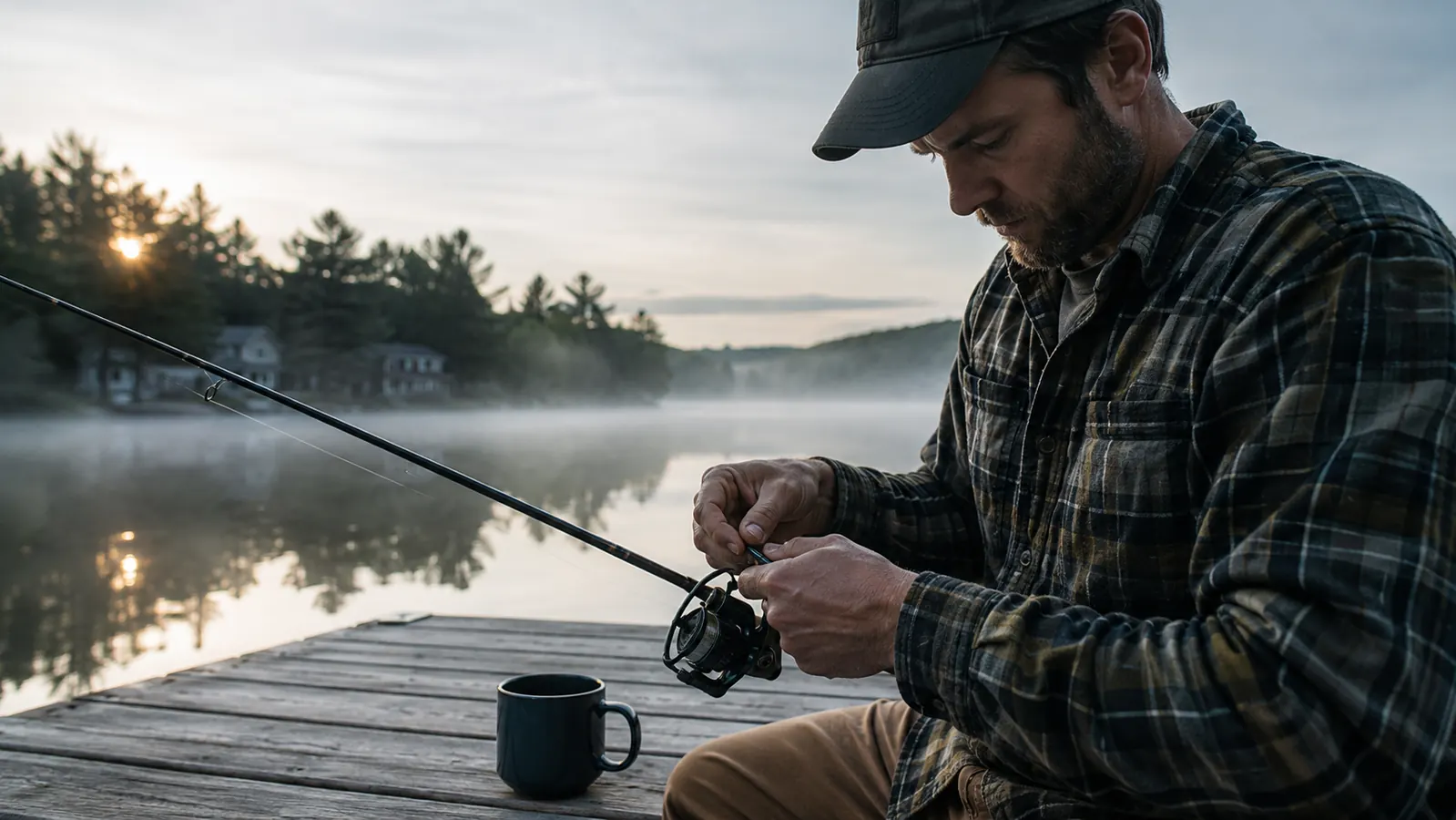
Ray and I spooled up four reels the same Saturday morning in April, out on the dock behind my place on Winnipesaukee, coffee going cold in the console cup holder. Two of us were switching from straight monofilament to braid for the first time in a serious way, not just the odd twenty-pound test tied on for a jig rod. What nobody tells you when that spool shows up is how much of the real learning happens before you ever tie on a hook. The label says one thing, the reel says another, and the first time you try to snug a knot down, braid has opinions your old mono line never had.
That spool ends up mattering here specifically. This isn't the long-haul, does-it-fade, does-it-dig-into-the-spool story, I've told that one already elsewhere on this site. This is what I wish somebody had told me before I ever cut the wrapper off the first spool of the KastKing Superpower braid I ended up running through most of a season on both lake bass and the light inshore striper trips I make each summer on the New Hampshire coast: the diameter number is optimistic, you need backing whether anyone mentions it or not, some knots that work fine on mono will quietly let go on braid, and the true cost only shows up once you do the math against mono over a full season.
The Quick Verdict
Genuinely good braid for the price, but only once you fix your spool fill, your knots, and your expectations to match how it actually behaves.
Amazon Check Today's Price →Braid Punishes Guesswork, This Spool Rewards Getting It Right
Before you spool up, check today's price on the KastKing Superpower and see what current buyers are saying.
Amazon Check Today's Price on Amazon →How I've Used It
I spooled the KastKing Superpower onto two rods back in early spring, a medium spinning setup I use for smallmouth and largemouth on Winnipesaukee and the Merrimack, and a heavier baitcaster I keep for the handful of striper trips Ray and I make down to the New Hampshire and southern Maine coast most summers. Both reels see weekend use, which on my calendar means close to forty outings across a full season, not a handful of trips squeezed in around somebody's tournament schedule.
The setup itself is nothing special, on purpose. My spinning reel is an ordinary 2500-size with a smooth front drag, the same kind of rig most weekend anglers already have in the garage. I didn't buy new hardware just to run this line. Most of us aren't rebuilding a whole rod locker to try a new braid, we're spooling it onto what we already own and finding out how it behaves under real conditions, and that's the lens this whole review comes from.
This piece isn't about how the line held up over months, I already wrote that story. What I'm covering here is everything that happened in the first few weeks, spooling day, the first dozen knots, the first fish that really loaded up the rod, because that's the stretch where most first-time braid buyers get frustrated enough to give up on it before they ever see why people like it.
What the Diameter Number Doesn't Tell You
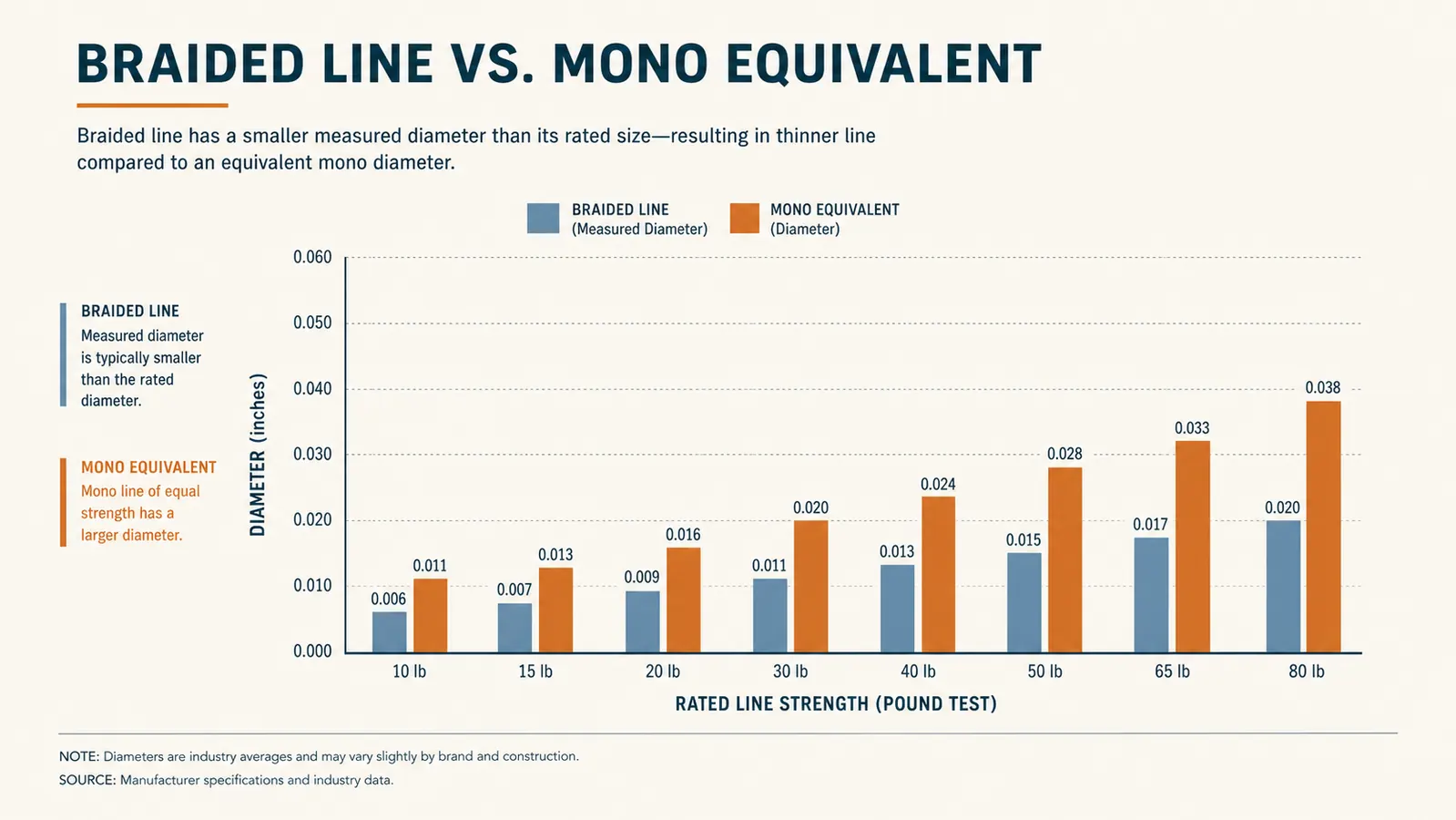
Every braid on the market prints a diameter number on the spool that's supposed to match a mono-equivalent test, and KastKing does the same thing the rest of the industry does, rounds a hair generous. The 10 lb test Superpower I spooled onto my Centron measured closer to what most 12 lb mono actually runs. Not a huge gap, but enough that when I filled the reel to the lip the way I'd fill it with mono, I ended up with more line on there than I needed and a spool packed tighter than I'd have liked.
I didn't just eyeball this either. I ran a cheap set of digital calipers over a stretch of the 10 lb Superpower and got readings in the 0.011 to 0.012 inch range depending on where I measured, which lines up closer to what most makers list for 12 to 14 lb monofilament. That's not a defect, it's just how braid diameter claims get marketed across the whole category, and KastKing isn't unusual in that regard. Knowing the real number ahead of time would have saved me a re-spool that first week, when I filled the reel expecting mono-style capacity and ended up with line piled almost to the bail.
That matters for two practical reasons. First, reel capacity numbers printed by reel makers are almost always calculated against mono diameter, so if you spool braid to that same fill line, you're loading on more actual yardage than the spec sheet assumes, sometimes 20 to 30 percent more. Second, a reel packed too full with thin braid can shed loops on a hard cast, which shows up as a tangle at the worst possible moment, usually right as a fish is taking line. I now fill to about a sixteenth of an inch below the spool lip instead of flush, and the wind knots I used to fight through basically stopped.
Backing or Tape, Pick One, But Don't Skip It
Braid is limp and slick enough that it will spin freely around a bare aluminum or graphite spool arbor under hard drag pressure, especially on a spinning reel. Nobody printed a warning on the KastKing packaging about this, and I don't fault them for it, PowerPro and every other major braid maker leaves it out too. But if you tie braid straight onto a bare spool and skip this step, the first big fish that makes a real run can spin the whole spool of line loose around the arbor while the reel handle keeps turning and nothing happens.
I actually watched this happen to Ray before I fixed my own reels. He hooked into a decent smallmouth off a rocky point, the fish made one hard run, and the whole spool of braid spun loose around the arbor while his handle kept cranking and nothing came back. He lost the fish and spent ten minutes at the dock re-tying the whole spool with backing before we went back out. It's a fixable mistake, but it's the kind of thing that can ruin the first good fish of the day if you don't know to check for it ahead of time.
The fix is cheap and takes five extra minutes. I either wind on twenty or so yards of old mono as backing before tying the braid on with a double uni knot, or I run a strip of electrical tape around the bare spool first so the braid has something to bite into. Either one works. Ray uses the tape method because he's impatient and it takes about ninety seconds. I still prefer mono backing on my baitcasters because it also fills capacity closer to where the reel actually wants it.
The Knots That Let Go, and the Ones That Hold
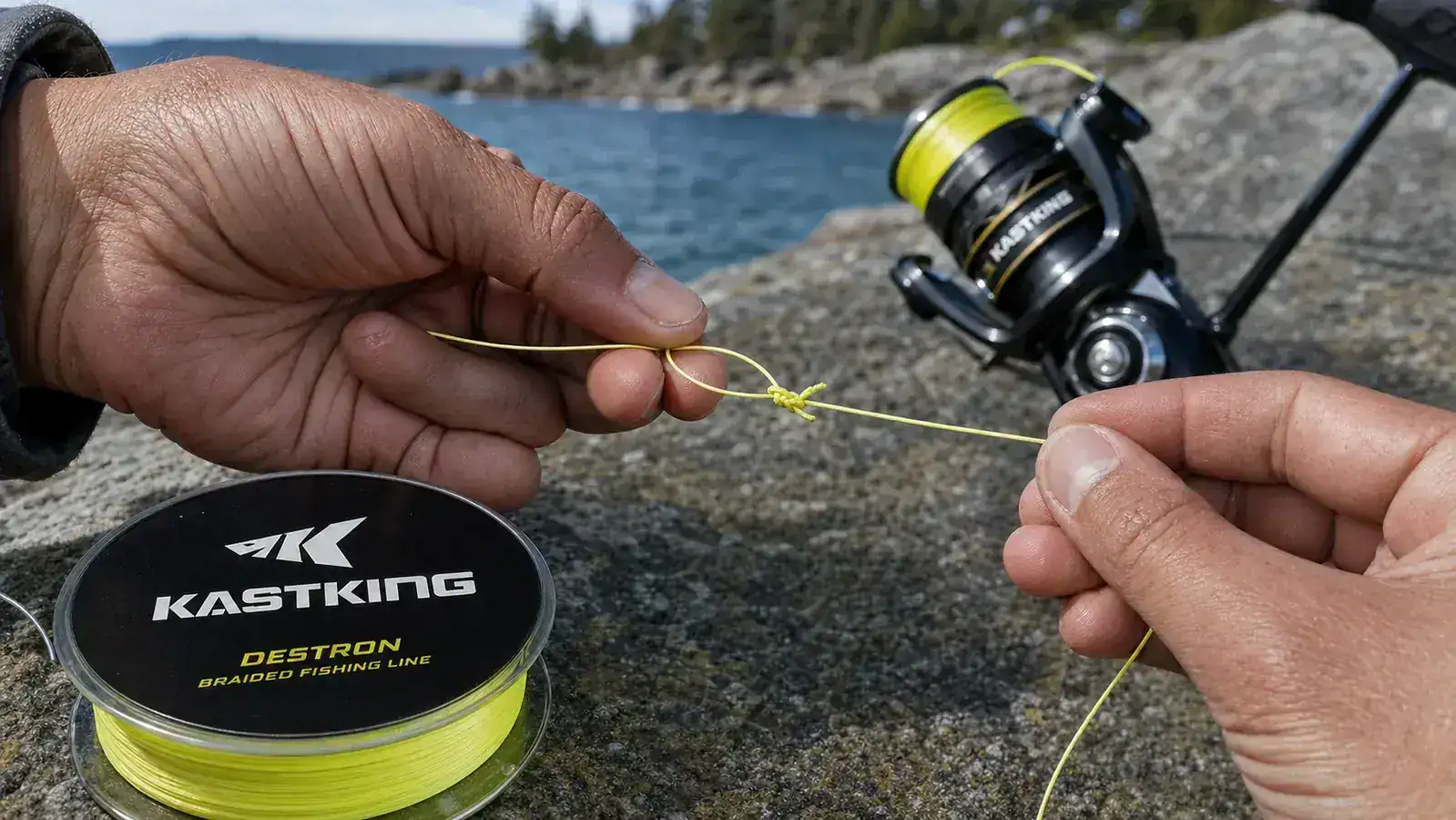
This is the part that cost me two good bass before I sorted it out. An improved clinch knot, the one every one of us ties in our sleep after thirty years of mono, does not reliably hold on braid. The line is too slick and too round, and under sudden pressure the wraps can slip and cinch down to nothing, or the tag end just pulls straight through. I lost a solid three and a half pound largemouth right at the boat that way in my second week on braid, the knot simply let go with no warning at all.
What actually holds: a Palomar knot for tying straight to a hook or lure, and a double uni knot or an Albright for joining braid to a mono or fluorocarbon leader. Both wrap the line back on itself enough times that the slickness stops being a liability. I switched to Palomar knots exclusively for terminal tackle once I made the change and haven't had a knot failure since, going on a full season now.
One more thing nobody mentioned to me, wet the knot before you cinch it down, every time, no exceptions. Braid generates friction heat fast when you pull a dry knot tight, and that heat can weaken the line right where you need it strongest.
Wind Knots, and When I'd Reach for Mono Instead
Braid's total lack of stretch and memory is exactly why people love it for sensitivity, but that same limpness is what causes wind knots, those tiny overhand loops that form on the spool during the cast and tighten into a knot you don't notice until your next cast snaps off at half the distance. I get maybe one or two a trip now that I've dialed in my spool fill and my casting stroke, down from nearly one every outing when I first started.
A few small habits cut my wind knot count down further. I close the bail by hand instead of cranking the handle, which keeps the line from catching a stray loop on the way in. I also slow my cast down slightly on breezy days, since a rushed forward stroke on light braid is where most of my tangles used to start. None of this is complicated, it's just the kind of adjustment that only becomes obvious after you've fought through a dozen frustrating tangles out on the water.
There are also situations where I just don't reach for braid anymore, honestly. Vertical jigging in current with a lot of structure nearby, sure, braid's sensitivity wins there. But for light finesse presentations on calm ponds where a fish can see the line, or for casting small crankbaits on a spinning setup where I want a little stretch to keep from pulling hooks on a hard strike, mono or fluorocarbon still does the job better. Braid is a tool for certain situations, not an upgrade for every rod on the boat.
Visibility, Leaders, and the Real Cost Per Season
The KastKing Superpower I run comes in a hi-vis yellow that I actually like, I can watch it on the surface and see a subtle take before I'd ever feel it. But that visibility is a real tradeoff underwater on clear lake water, and especially on the sand flats I fish for striper along the coast in July. Fish see it. I tie on four to six feet of fluorocarbon leader with an Albright knot on nearly every setup now, and I've watched my hookup rate on wary lake bass improve since I started doing that consistently.
I noticed the visibility issue most clearly on a bright, dead-calm afternoon on a clear pond south of the lake, sight-fishing to bedding bass in three feet of water. Twice I watched a fish flare off before it ever touched the lure, something that almost never happened with clear mono in that same spot. Once I added the fluorocarbon leader, that stopped almost entirely. It's a small change, but on ultra-clear water it's the difference between a fish following your lure and a fish spooking off it before you ever get a bite.
On the cost side, here's the honest math. A 500 yard spool of Superpower runs a little over what I'd pay for two spools of decent mono, but I used to re-spool mono two, sometimes three times a season on my most-used rods because it takes a set and starts coiling off the reel on its own. That same spool of braid has outlasted an entire season on my primary bass rod with only the top ten or fifteen feet clipped back after abrasion. Once you add up the mono I used to buy in May, July, and September, braid actually comes out even or slightly ahead per season, it just front-loads the cost into one bigger purchase instead of three small ones.
What I Liked
- Real zero-stretch sensitivity once you dial in the knots and spool fill
- Hi-vis yellow is easy to track on the water
- Abrasion resistance held up fine around dock pilings and submerged brush
- Cost per season is roughly a wash against mono once you count re-spooling
- Handles well on both spinning and baitcasting reels
Where It Falls Short
- Diameter rating runs optimistic, plan your reel capacity accordingly
- Needs mono backing or tape on the spool, that's an extra step nobody warns you about
- Standard clinch knots fail on this line, you have to relearn knots
- Visible underwater on clear water, a leader is basically mandatory
- Wind knots still happen more than with mono if your spool fill or cast is sloppy
The line itself is good. What nobody tells you is everything you have to change around it before it acts that way.
Who This Is For
This line is for anglers who fish enough to justify the small learning curve, weekend regulars who are already tying their own leaders and re-spooling their own reels a couple times a year. If you fish structure, docks, submerged brush, or current seams where sensitivity and abrasion resistance actually pay off, the Superpower earns a spot on at least one or two rods in your rotation once you've got the backing and the knots sorted out. Ray's come around on it too, once he started backing his spools properly.
Who Should Skip It
If you fish maybe six times a season, mostly casting light stuff off a dock or a canoe, and you don't want to deal with backing your spool or relearning knots, stick with a quality mono and save yourself the hassle. Braid rewards anglers who fish it enough to get past the first few knot failures and the first tangled cast. If you're not on the water that often, the learning curve isn't worth it yet, and a fresh spool of mono every spring will serve you just as well.
Ready to Retire the Re-Spooling Habit?
If the math above made sense to you, check today's price on the KastKing Superpower and get it on the reel before your next trip.
Amazon Check Today's Price on Amazon →