
Every spring I respool at least four reels before the ice is fully off Winnipesaukee, and for the last several years two lines have fought it out for space in my tackle bag: KastKing Superpower and PowerPro. My brother-in-law Ray swears by PowerPro because it's what his dad ran on the Merrimack back in the nineties, and for a long time I ran it too out of habit more than anything else. Somewhere around 2019 I started buying KastKing Superpower instead, mostly because it was sitting on the shelf at the bait shop for a lot less money and I wanted to see if it would actually hold up or if I'd be back at the counter by July. It has held up, more often than not, and after running both lines side by side on the same rods, in the same water, on the same species, I think I can give you a straight answer instead of a marketing pitch.
If you want the short version: for the way most weekend anglers fish, spinning gear, moderate drags, casting off a boat or the bank, I give the nod to KastKing Superpower. That's not because PowerPro is a bad line. It's a genuinely good one, and old-timers like Ray's father didn't pick it by accident. But Superpower gets you close to the same real-world performance for a lot less per yard, and for someone who respools two or three reels a season that difference adds up fast. Where PowerPro pulls ahead is round profile consistency and how well it holds its color through a long season, and I won't pretend otherwise. Keep reading, because which one actually belongs on your reel depends on how and where you fish.
| KastKing Superpower | PowerPro | |
|---|---|---|
| Price per yard (based on a common spool size) | $11.03 for 500 yd, about $0.022 per yard | roughly $19.99 for 300 yd, about $0.067 per yard |
| Diameter at 15 lb test | about 0.011 in | about 0.013 in |
| Strand construction | 4-strand round braid | 4-carrier round-weave Spectra fiber |
| Abrasion resistance on rock, shell, and dock pilings | held up through repeated seasons on NH rock ledges with only light fraying | wore visibly faster over the same structure, needed retying about twice as often |
| Color retention after a full season of sun exposure | moss green fades to a duller straw shade by late summer | keeps its hi-vis color noticeably longer |
| Casting smoothness straight off a fresh spool | a touch of fuzz for the first handful of casts, then settles in | consistently smooth and quiet through the guides from the first cast |
| Spool sizes and color options available | wide range from 100 to 1000+ yards, several color choices at each test weight | fewer budget spool sizes, color options more limited at the lower test weights |
How I Put These Two Braids Through Their Paces
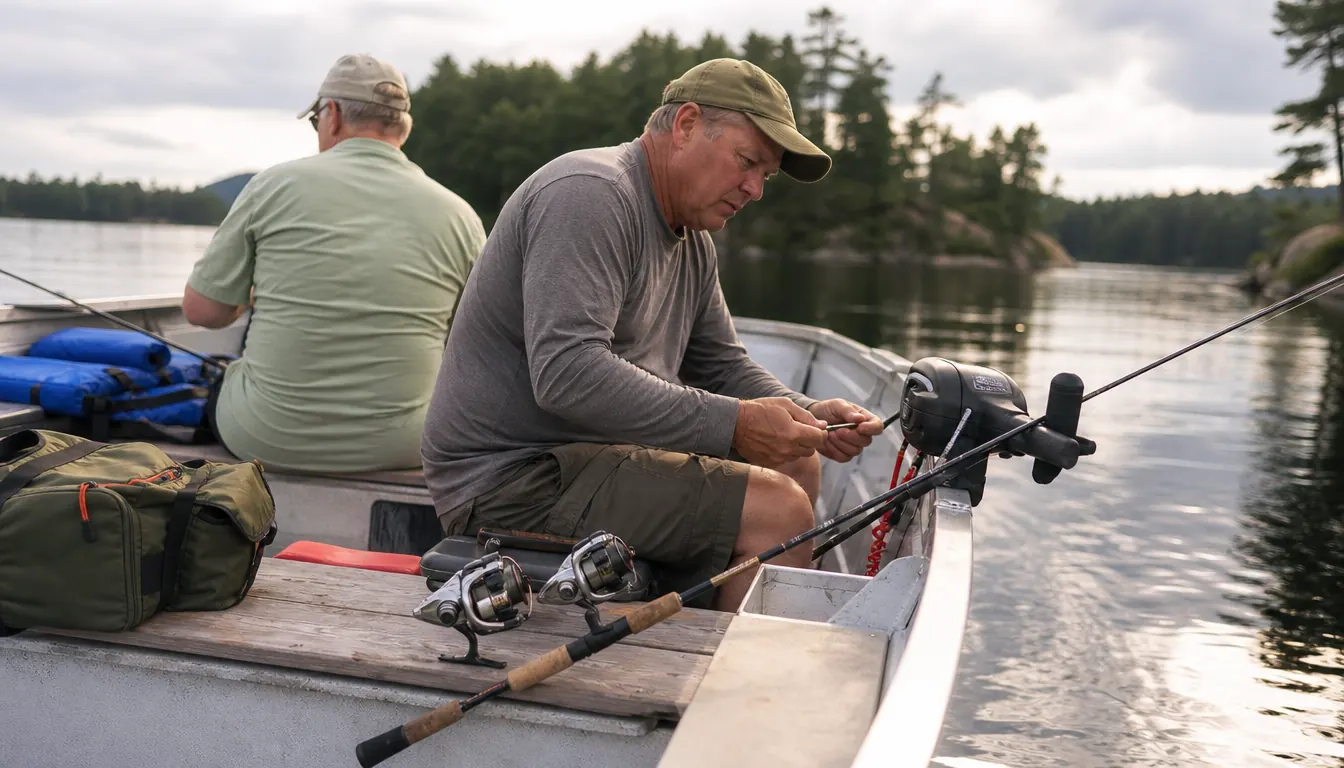
My home water is Lake Winnipesaukee and the stretch of the Merrimack River near where I keep my 16-foot aluminum boat, the one with the tiller outboard that's older than some of the guys I fish with. I'm out most weekends, usually with Ray riding along, chasing smallmouth off rocky points, largemouth in the weed lines, and the occasional pike that decides to show up near the drop-offs. Come July and August I get in a few inshore striper trips along the New Hampshire and southern Maine coast, and that's a different animal entirely, since saltwater and structure chew through line a lot faster than a quiet cove ever will.
To make this a fair fight, I spooled one spinning reel with KastKing Superpower and an identical reel with PowerPro on the same weekend, same test weight, and fished them back to back for most of a season. Same rods, same lures where I could manage it, same stretches of rocky shoreline and the same dock pilings on the river. I kept rough notes on casting distance, how each line felt coming off the spool after a few weeks of sun, and how each one held up when I dragged a fish through structure it had no business being dragged through. It's not a laboratory test, but it's a real season of fishing, which tells you more than a spec sheet ever will.
I ran the comparison across two full seasons instead of one, because a single stretch of good or bad weather can skew results more than people admit. The first season ran unusually hot and dry, which is tough on any line since UV exposure is relentless when the boat sits out on a trailer between trips instead of in a covered slip. The second season was cooler and wetter, more rain, more overcast days, and both lines behaved a little differently under those conditions. That gave me a broader picture than a single April-to-October stretch would have, and it's part of why I feel comfortable putting a real recommendation behind this instead of a first-impressions writeup.
Where KastKing Superpower Wins
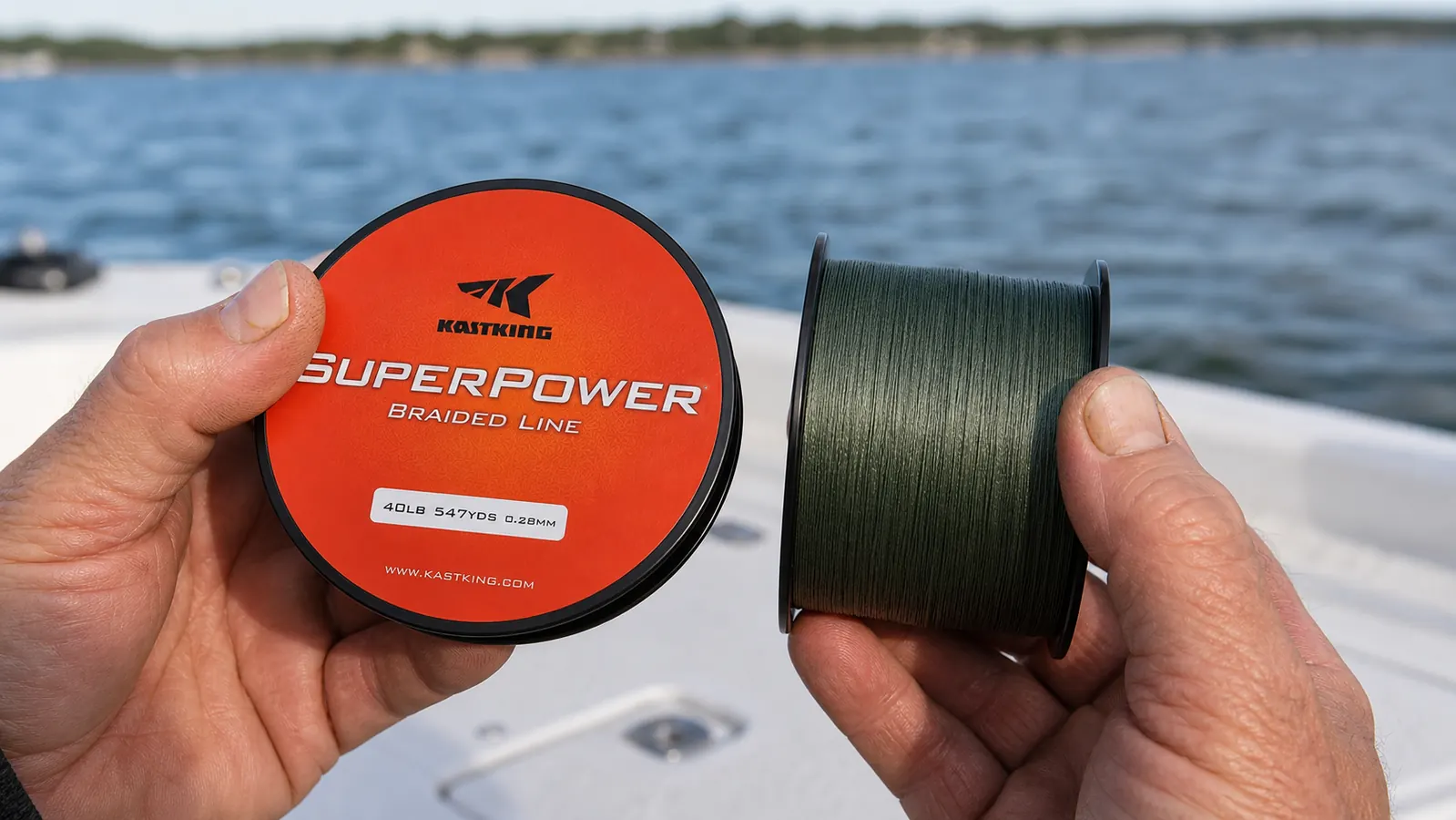
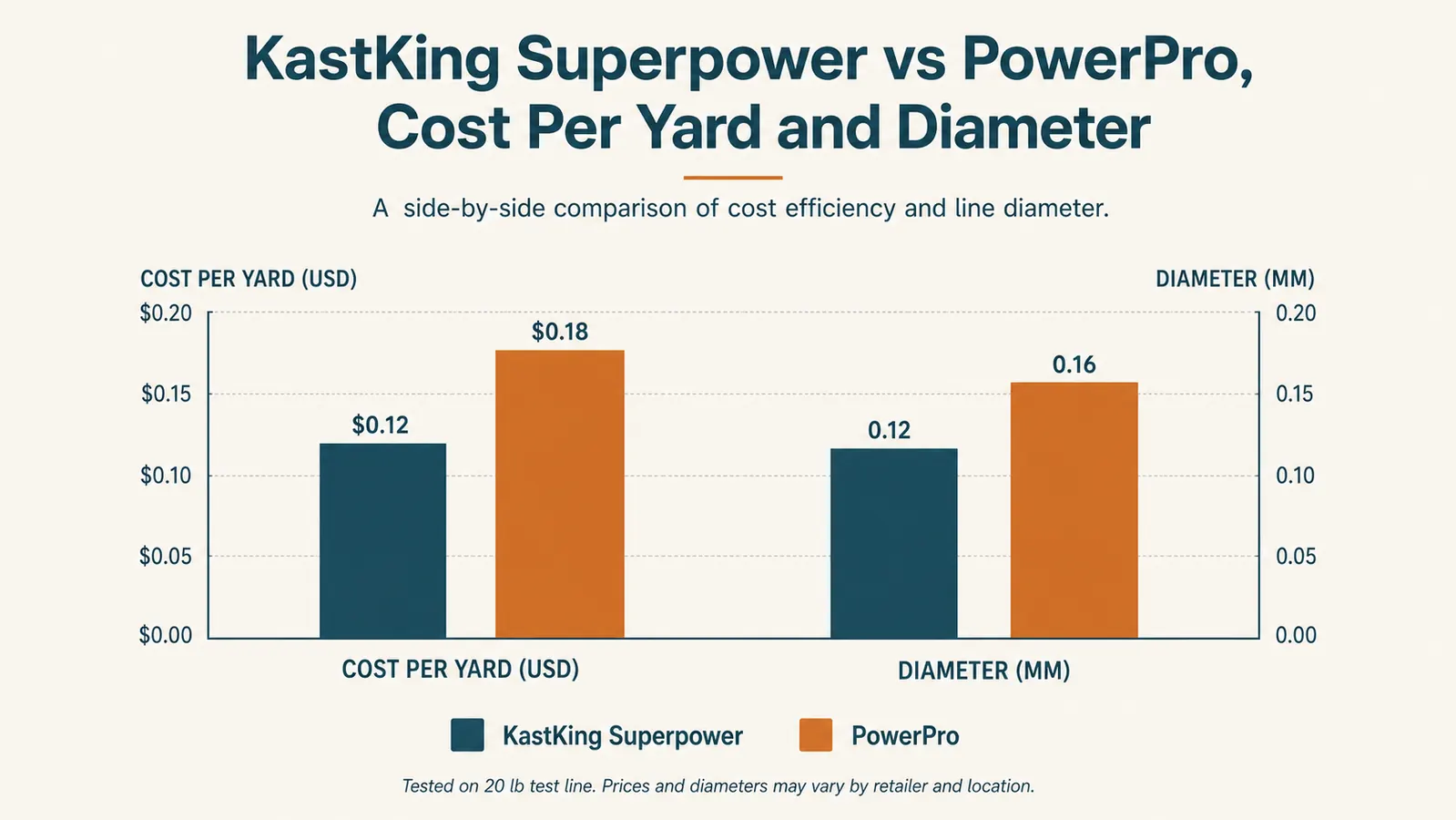
The math is the first thing that got my attention. KastKing Superpower runs close to a third of the cost per yard of PowerPro at comparable test weights, and that's not a small thing if you're the kind of angler who respools every year instead of squeezing one spool through three seasons. I fish most weekends, and between abrasion, sun, and the occasional line-digging-into-itself headache, I'm realistically buying new braid every year regardless of brand. KastKing lets me do that without wincing at the register, and the money I save covers a decent chunk of the gas for a summer of striper trips.
The other place KastKing pulled ahead was abrasion resistance against the kind of structure I actually fish. Winnipesaukee has plenty of submerged boulders and rocky points, and the wooden dock pilings along the Merrimack have chewed through more cheap monofilament than I care to admit over the years. When I dragged both lines across the same rock ledge repeatedly over a season, the KastKing showed less fraying and needed fewer precautionary retie sessions than the PowerPro spool running right alongside it. It also comes in a wider range of spool sizes and colors at every test weight I looked at, which matters if you like to match your line to stained water on one lake and clearer water on another without buying a specialty spool every time.
Knot performance was close enough that I'd call it a wash for most anglers, but KastKing had a slight edge when I retied late in the season after weeks of sun and repeated wetting. Both lines cinch down fine with a Palomar or an improved clinch when they're fresh. After a few months of hard use, I found the KastKing seated a little more predictably without needing an extra firm cinch, which matters more than people think when you're retying a leader in low light with cold fingers and a fish already circling the boat.
Where PowerPro Wins
I'd be lying if I told you PowerPro doesn't have real advantages, because it does. The color held up noticeably better through a full season of sun exposure. By August, my KastKing spool had faded from a solid moss green to something closer to pale straw in the sections that saw the most casting, while the PowerPro next to it on the reel rack still looked close to fresh out of the box. If you like being able to watch your line for subtle bites, or you just prefer gear that looks sharp all season, that's a legitimate point in PowerPro's favor.
PowerPro also comes off the spool smoother right out of the gate. The round-weave construction feels a little more consistent through the guides on the first dozen casts, with less of the light fuzzing I noticed on a fresh KastKing spool before it settled in. Ray, who's fished PowerPro almost exclusively since his father handed him a spool of it years ago, will tell you it's the reason he's never bothered switching, and honestly I understand the loyalty. If you're not price sensitive and you want a line with a long track record among anglers who fish heavy saltwater structure for a living, PowerPro earns its reputation.
There's also a sensitivity edge with PowerPro that shows up on light bites, the kind of soft tick you get from a smallmouth mouthing a tube jig on a cold front day rather than crushing it. The tighter, rounder weave seems to transmit that vibration a shade more clearly through the rod tip. It's a subtle difference, not something I'd build a whole buying decision around, but if you fish finesse presentations often and live for feeling the bite rather than seeing the line jump, it's worth knowing about.
Same performance where it counts, for a lot less per spool
If you respool every season anyway, there's no reason to pay double for marginal gains you won't notice on a lake or river most weekends. This is the braid I keep coming back to for that reason.
Amazon Check Today's Price on Amazon →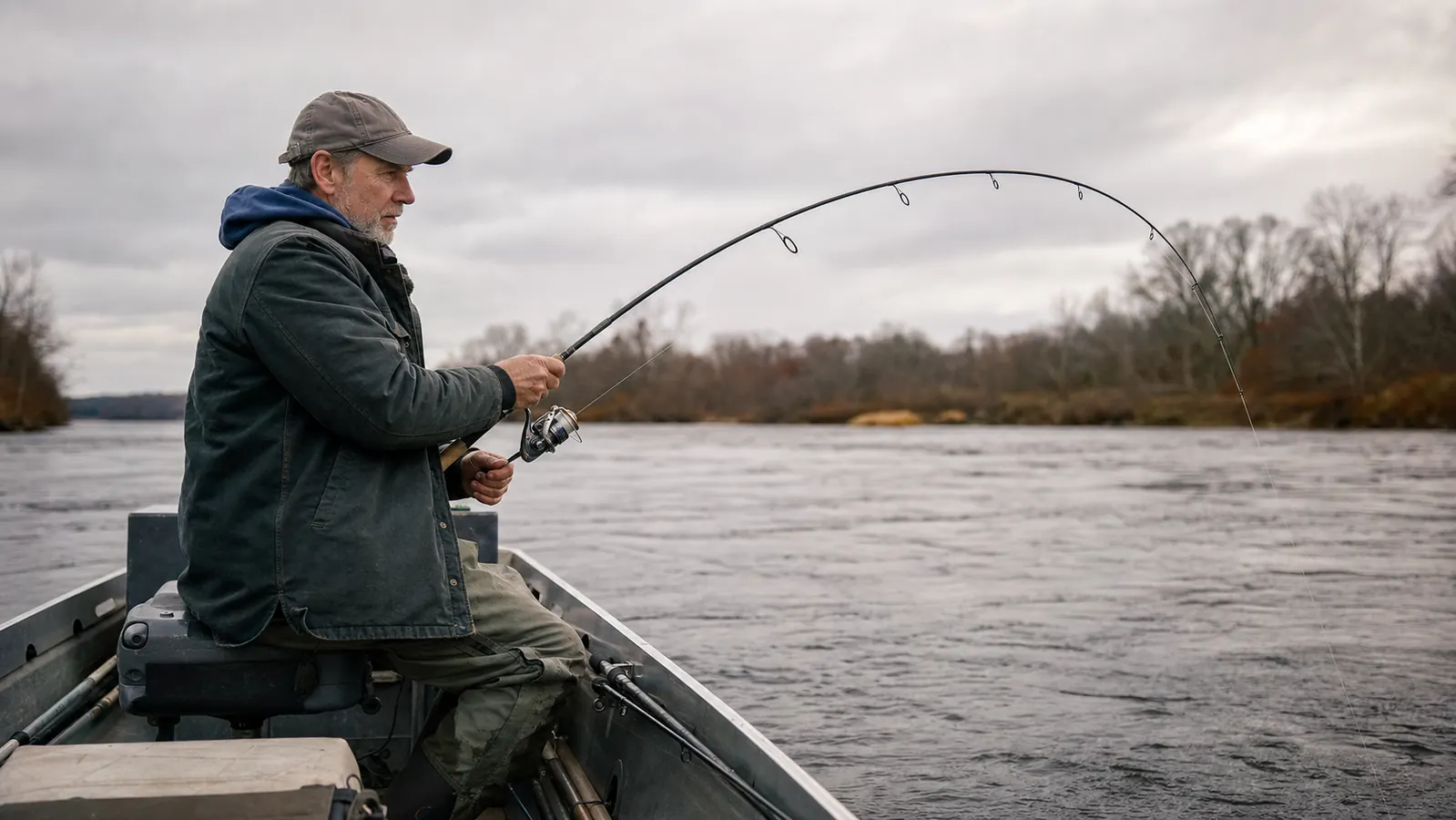
What the Diameter Numbers Actually Mean on the Water
A thinner diameter at the same test weight sounds like a clear win on paper, since it means more line on the spool and less water resistance on a cast. In practice, the difference between these two lines is small enough that I couldn't reliably feel it casting a typical jig or crankbait from the boat. Where it mattered more was on the inshore trips, fighting a striper that pulls a lot harder and a lot longer than a lake smallmouth ever will. There, every bit of extra line capacity and reduced drag through the water helps, and it's part of why I don't fully write off PowerPro for that specific kind of fishing even though I run KastKing on my everyday reels.
Ray ran his PowerPro spool through a whole striper season on the Maine coast last summer with only one retie, mostly because he keeps a closer eye on his gear than either of us likes to admit. I ran KastKing on the same trips and got through fine too, but I trimmed back the working end more often just to be safe, which is a small extra chore that PowerPro users tend to skip. It's not a dealbreaker, but it's the kind of maintenance difference that adds up if you're out on the water three or four times a week instead of on weekends like me.
One evening off the Rye harbor jetty, I had a striper take a topwater plug and immediately bury itself toward a piling. My reel was spooled with KastKing that trip, and it held through the initial run, but I could feel more resistance grinding through the guides than I'd expect from a thinner, rounder line. Ray, twenty feet down the jetty with his PowerPro rig, landed a similar-sized fish out of the same structure with noticeably less drama. That single moment probably sums up the tradeoff better than any spec sheet could.
I've never fished a line that didn't eventually let me down somehow. The real question is how long it takes, and what it costs you to find out.
Who Should Buy Which
If you're fishing lakes, ponds, and rivers most weekends, respooling once or twice a year, and you'd rather spend the savings on gas or lures than on premium braid, KastKing Superpower is the smarter buy. It handled everything I threw at it on Winnipesaukee and the Merrimack, and it did fine on a handful of inshore trips too, as long as I stayed on top of retying after rough structure. For that kind of everyday fishing, the price gap between these two lines isn't buying you enough extra performance to justify it.
If you're chasing stripers or bluefish around barnacle-covered structure several times a week all summer, or you're just particular about your line looking fresh and holding its color deep into the season, PowerPro is a legitimate choice and I won't argue you out of it. That's the fishing Ray does more of than I do, and it's why his reel still wears PowerPro while mine wears KastKing. Buy the line that matches how often you're actually on the water and what that water is doing to your gear, not just the name on the spool your buddy swears by.
The braid I respool with, weekend after weekend
For most of the fishing I do, and most of the fishing you're probably doing too, this is the one that earns its keep without draining the tackle budget. See the current price on Amazon.
Amazon Check Today's Price on Amazon →